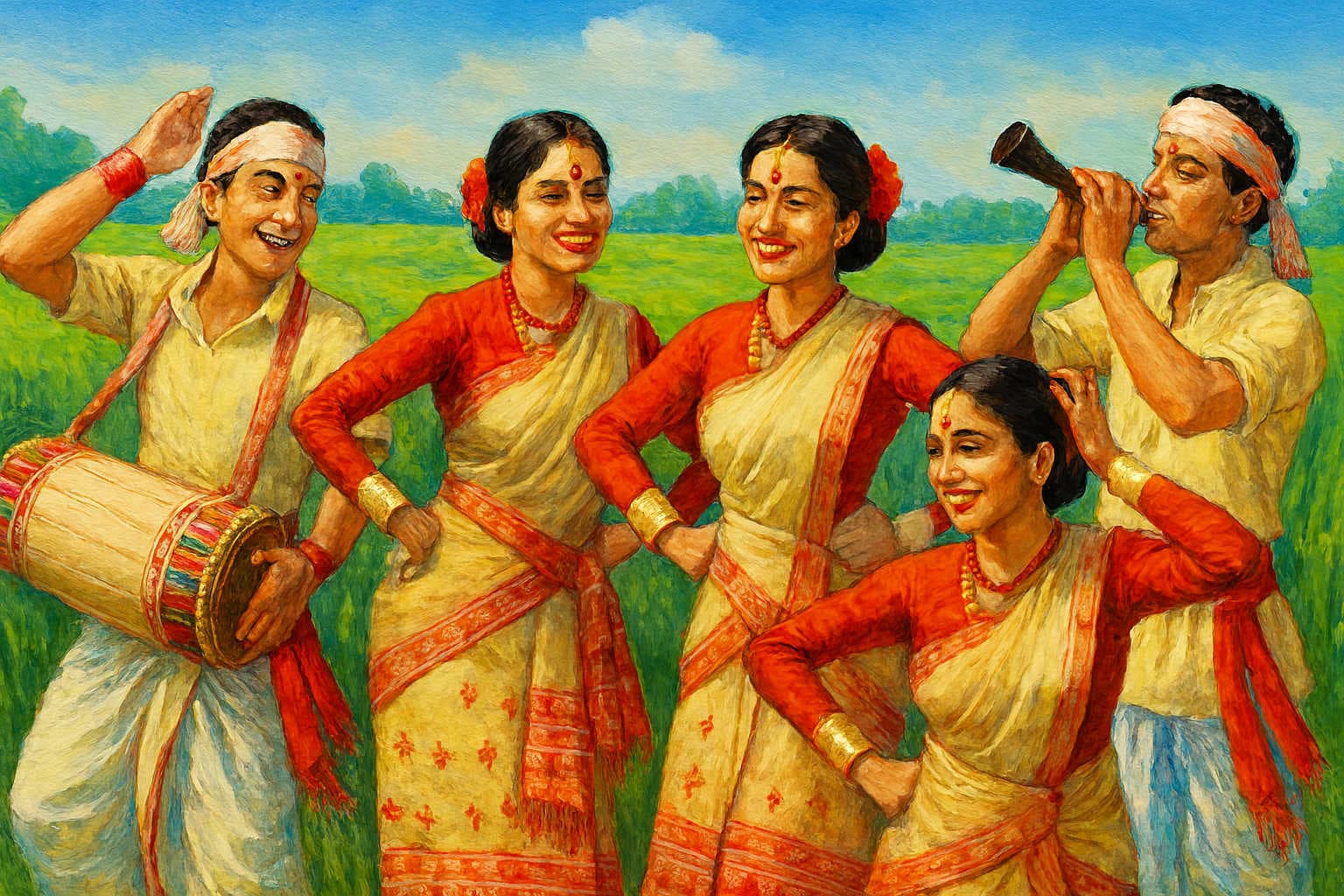
Bihu Festival – Hindu New Year in Assam
India is known for its cultural diversity, where each state celebrates the cycle of seasons and the New Year in its own unique way. In Assam, this celebration is called Bihu—a festival that marks the Hindu New Year, the arrival of spring, and the joy of harvest. Bihu is more than just one event; it is a series of three festivals celebrated across the year: Rongali Bihu (Bohag Bihu) in April, Kongali Bihu (Kati Bihu) in October, and Bhogali Bihu (Magh Bihu) in January. Of these, Rongali Bihu is the grandest, coinciding with the Assamese New Year.
Bihu is not only a time of merriment, dance, and feasting, but also a reflection of Assamese identity and its deep connection with nature, agriculture, and community bonding.
The Three Types of Bihu
Although Bihu is often spoken of as one festival, it is actually a cycle of three celebrations spread across the year, each representing a different aspect of agricultural life.
1. Rongali or Bohag Bihu – The Assamese New Year
-
Celebrated in mid-April, Rongali Bihu marks the beginning of the Assamese New Year and the arrival of spring.
-
It coincides with other regional New Year festivals like Puthandu in Tamil Nadu, Vishu in Kerala, Pohela Boishakh in Bengal, and Baisakhi in Punjab.
-
Rongali Bihu is a festival of joy, dance, music, and feasting. People wear new clothes, exchange gifts, and perform Bihu dances accompanied by the dhol (drum), pepa (horn), and gogona (bamboo instrument).
-
Homes are cleaned and decorated, and special dishes like pitha (rice cakes) and laru (sweets) are prepared.
2. Kongali or Kati Bihu – The Festival of Lights and Prayers
-
Observed in mid-October, Kati Bihu is a more austere festival, focusing on prayers for a good harvest and protection from pests.
-
Farmers light earthen lamps (saki) in paddy fields and under the sacred Tulsi plant to seek divine blessings.
-
It symbolizes hope and spiritual devotion rather than merriment.
3. Bhogali or Magh Bihu – The Harvest Festival
-
Celebrated in January, Bhogali Bihu is a festival of abundance after the harvest.
-
Communities build mejis (bonfires) and feast together on rice, fish, meat, and traditional sweets.
-
It is marked by community gatherings, games, and traditional sports like buffalo fights in rural areas.
Rongali Bihu – The Heart of Celebrations
Since Rongali Bihu coincides with the Assamese New Year, it holds the most cultural and emotional significance among the three. It is celebrated for seven days, each with special rituals:
-
Goru Bihu – Dedicated to cattle, where cows are bathed, worshipped, and decorated with garlands.
-
Manuh Bihu – The New Year’s Day, when people wear new clothes, exchange gifts, and seek blessings from elders.
-
Gosai Bihu – Worship of household deities and seeking their blessings for prosperity.
-
Kutum Bihu – Visiting friends and relatives, reinforcing bonds.
-
Mela Bihu – Community fairs, dances, and cultural performances.
-
Raati Bihu – Traditional folk songs and dances performed at night.
-
Cheira Bihu – Marking the end of celebrations with symbolic rituals.
This seven-day celebration reflects the cultural richness of Assam, blending devotion, community spirit, and joy.
Bihu Dance and Music
The highlight of Rongali Bihu is the Bihu dance, performed in groups, where young men and women express joy and vitality through rhythmic movements. The dance is accompanied by lively folk music using instruments like:
-
Dhol – Traditional Assamese drum.
-
Pepa – A bamboo horn often made from buffalo horn.
-
Gogona – A bamboo instrument producing unique sounds.
The songs sung during Bihu are often playful, romantic, and full of references to nature, reflecting the youthful spirit of spring.
Traditional Foods of Bihu
Food plays a central role in Bihu celebrations. During Rongali Bihu, families prepare:
-
Pitha – Rice cakes made with sesame, coconut, or jaggery.
-
Laru – Sweet balls made of rice, coconut, and jaggery.
-
Fish and meat dishes – Special delicacies marking prosperity.
-
Curd and rice – Symbolizing freshness and purity.
These dishes not only delight the palate but also carry symbolic meanings of abundance and fertility.
Cultural and Spiritual Significance of Bihu
-
Celebration of Agriculture – Bihu revolves around the sowing and harvesting cycle, honoring farmers and their hard work.
-
Unity and Community Spirit – It brings together people of all religions, castes, and ages, transcending social barriers.
-
Renewal and Prosperity – Rongali Bihu, in particular, signifies new beginnings, joy, and hope.
-
Preservation of Assamese Identity – Dance, music, and rituals keep Assamese culture alive across generations.
Bihu in Modern Times
Today, Bihu is celebrated not just in Assam but also by Assamese communities worldwide. While modern music and cultural shows have become part of the festivities, the essence of community, dance, and joy remains unchanged. Government and cultural organizations also promote Bihu through festivals and stage performances, showcasing it as a symbol of Assam’s heritage.
Conclusion
The Bihu festival is more than just a New Year celebration in Assam—it is the soul of Assamese culture, combining agriculture, devotion, art, and community spirit. Whether it is the vibrant Rongali Bihu, the hopeful Kongali Bihu, or the abundant Bhogali Bihu, each festival reflects the close relationship between nature and human life.
By marking the Hindu New Year in Assam, Rongali Bihu highlights the renewal of life, love, and togetherness. As the drums beat and the fields bloom, Bihu reminds us of the timeless joy of celebrating with nature, community, and tradition.