Karma Yoga – Selfless Action as Worship
Karma Yoga, one of the four major paths of Yoga described in the Bhagavad Gita and Upanishads, teaches the art of acting without attachment. It is the path of selfless action, where one performs duties with sincerity while surrendering the results to the Divine. Far from being passive or ascetic, Karma Yoga is intensely practical—it spiritualizes everyday life and transforms ordinary work into worship.
1. What Is Karma Yoga?
The Sanskrit word “Karma” means action, and “Yoga” means union. Karma Yoga, therefore, is the discipline of attaining union with the Divine through right action. It does not ask us to withdraw from life but to live with deeper awareness and purity. According to Lord Krishna in the Gita, no one can remain inactive even for a moment; thus, the goal is not to avoid action but to act without selfish desires, ego, or expectation.
Karma Yoga dissolves the sense of “I am the doer” and replaces it with “I am an instrument.” When action flows from this attitude, it ceases to bind and instead liberates.
2. The Essence of Karma Yoga According to the Gita
The Bhagavad Gita offers a profound explanation of Karma Yoga. At the heart of this teaching lies a simple yet transformative principle:
-
“Do your duty, but do not claim the results.”
-
“Act without attachment.”
-
“Offer all actions to the Supreme.”
Krishna explains that every action done with ego creates karmic impressions. However, actions performed selflessly purify the mind and lead one closer to enlightenment. Karma Yoga is not about abandoning ambition but about removing self-centered motivation. It means working with full dedication, but with inner detachment.
3. How Karma Yoga Purifies the Mind
Karma binds only when performed with attachment. When actions are done without craving for reward, they lose their binding power. The Upanishads compare this to a lotus leaf that stays untouched by water—similarly, a Karma Yogi remains untouched by the impurities of action.
Selfless work reduces the ego, removes selfish tendencies, and promotes compassion and humility. These qualities are essential for higher spiritual practices like meditation and Self-Inquiry. Therefore, Karma Yoga is often considered a foundation for Jnana Yoga.
4. Characteristics of a Karma Yogi
A true Karma Yogi embodies certain attitudes:
-
Detachment from outcomes – Success or failure does not shake their inner peace.
-
Dedication to the task – They work with excellence and sincerity.
-
Purity of intention – Every action stems from dharma and compassion.
-
Egolessness – They do not boast or seek praise.
-
Equanimity – They remain balanced in gain and loss.
-
Gratitude – They see work as a divine opportunity, not a burden.
Karma Yoga transforms the inner landscape. When actions become an offering, the ego naturally dissolves.
5. Action Without Attachment vs. Inaction
Some misunderstand Karma Yoga as a philosophy that discourages ambition or worldly success. On the contrary, Krishna explicitly rejects inaction. He encourages disciplined effort rooted in dharma, without anxiety over results.
Inaction can sometimes be escapism, while action done with detachment is strength. Karma Yoga maintains momentum, creativity, and progress, but frees the mind from stress, fear, and disappointment.
6. Work as Worship
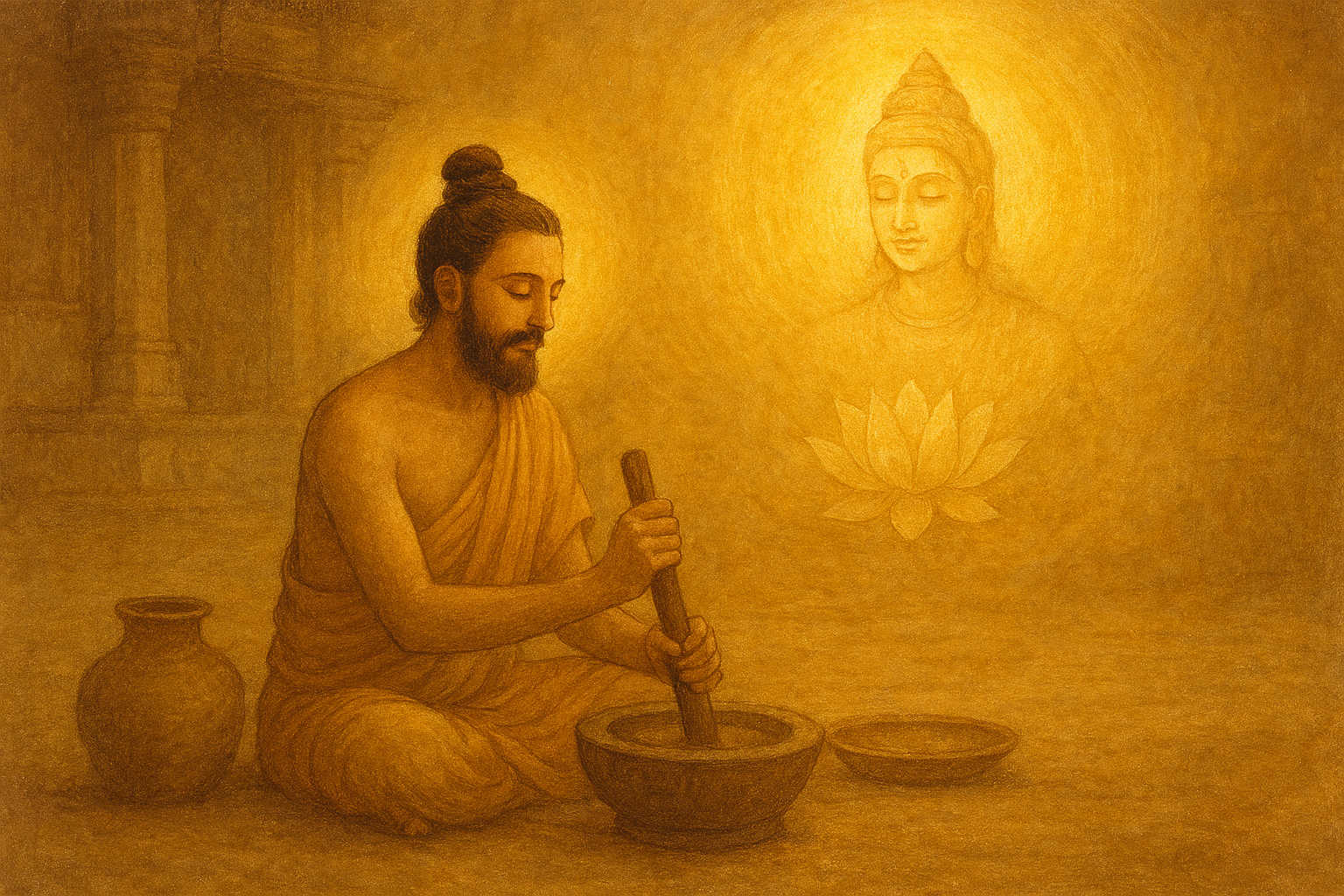
Karma Yoga teaches that every task—whether simple or grand—can be sacred. Cooking, cleaning, teaching, business, caregiving, or leadership becomes worship when performed with devotion and purity. The distinction between spiritual and worldly life blurs. Life becomes meditation in action.
When the ego steps back, the Divine works through us. This is why Karma Yogis radiate peace, humility, and effectiveness simultaneously.
7. The Role of Surrender
At the heart of Karma Yoga lies Ishvara Pranidhana—offering one’s actions to the Supreme. This surrender does not weaken one’s effort; instead, it enhances clarity and courage. When the burden of results is removed, work becomes joyful. There is no fear of failure, no craving for success, only a quiet commitment to doing one’s best.
Surrender also brings acceptance. Karma Yogis trust that whatever result comes is aligned with the Divine plan and their spiritual growth.
8. Practical Ways to Practice Karma Yoga Today
You do not have to live in an ashram to practice Karma Yoga. Here are simple ways to integrate it into daily life:
-
Set pure intentions before starting any task.
-
Perform actions mindfully, without rushing.
-
Dedicate your work to something higher—God, humanity, your guru, or the welfare of the world.
-
Avoid obsessing over results; focus on effort.
-
Serve others selflessly—help, support, and uplift without expecting appreciation.
-
Let go of the sense of doership—see yourself as a channel.
-
Accept outcomes gracefully, learning from them without attachment.
Even small acts—smiling at someone, helping a colleague, or cooking for family—become powerful when done with love and humility.
9. The Ultimate Goal of Karma Yoga
Karma Yoga gradually leads a seeker from action to purity, from purity to devotion, and from devotion to the realization of the Self. When the ego dissolves, the individual discovers a deep inner stillness—the witnessing consciousness that is untouched by action.
This is the gateway to liberation. In this sense, Karma Yoga is not merely a moral teaching but a profound spiritual path leading to the highest truth