The Essence of Gita in 5 Key Lessons
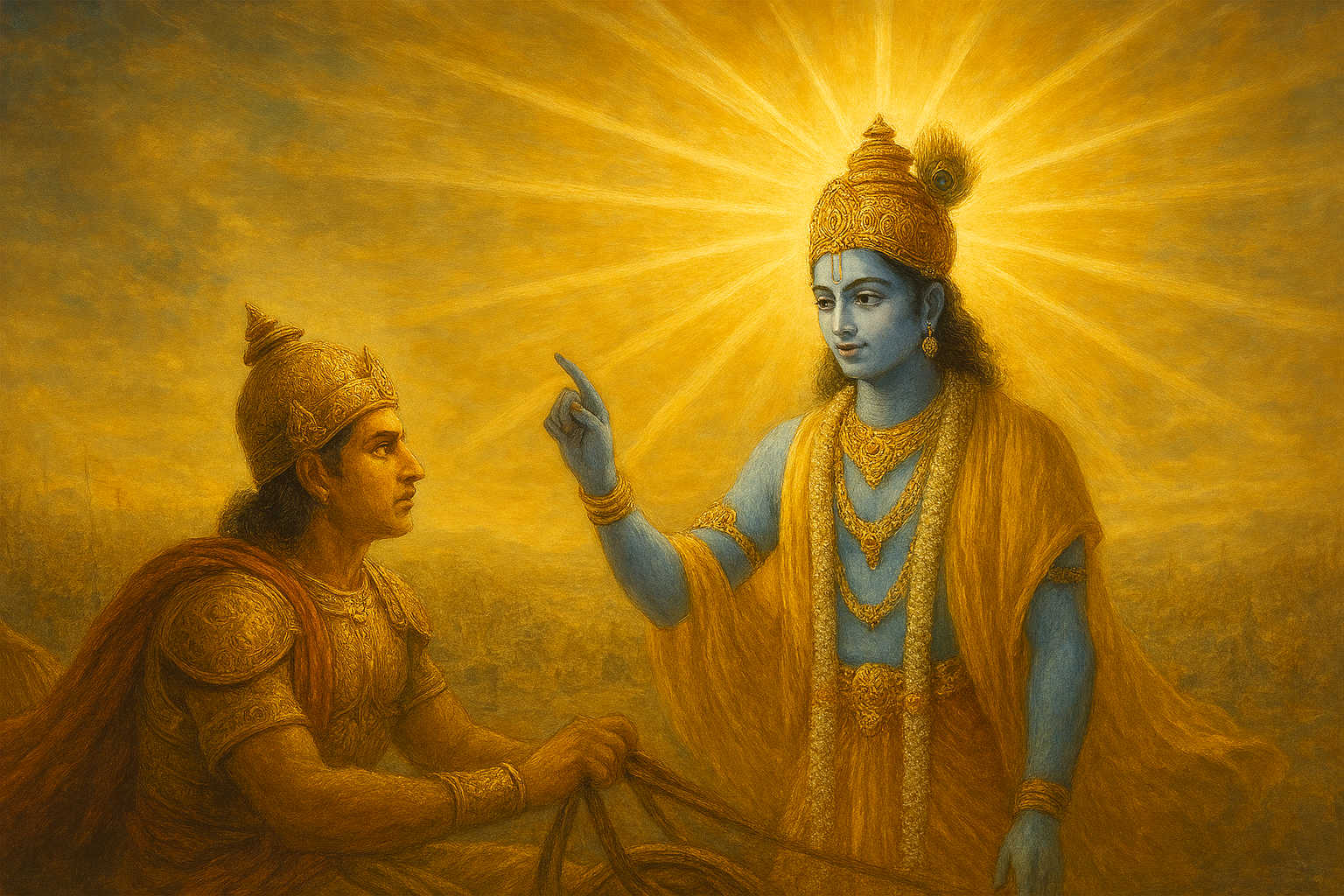
The Bhagavad Gita, one of the most revered scriptures of Sanatan Dharma, is not merely a philosophical text—it is a manual for life. Spoken by Lord Krishna to Arjuna on the battlefield of Kurukshetra, the Gita addresses the eternal struggle faced by every human being: How should one live in this world while walking the path to inner freedom?
The Gita distills profound wisdom about duty, the nature of the self, the mind, and liberation. Although the text has 18 chapters and 700 verses, its essence can be beautifully captured in five transformational lessons that remain timeless and universally relevant.
1. Do Your Duty Without Attachment (Karma Yoga)
One of the central teachings of the Gita is Nishkama Karma—action without attachment to results. Krishna tells Arjuna:
“You have the right to perform your actions, but not to the fruits thereof.”
What It Means
-
Perform your responsibilities sincerely.
-
Do not obsess over success or failure.
-
Let go of anxiety about outcomes.
-
Dedicate your actions to a higher principle.
Why This Matters
Attachment to results creates worry, fear, disappointment, and ego.
Freedom from attachment brings clarity, calmness, and effectiveness.
This teaching does not promote laziness; it encourages focused action with an undisturbed mind.
Modern Relevance
Whether it’s work, relationships, or personal goals, this lesson teaches us to act with integrity and leave the rest to the divine order.
2. Control the Mind to Control Your Life
Krishna acknowledges the difficulty of controlling the mind—Arjuna compares it to “controlling the wind.” But Krishna assures him that with practice and detachment, mastery is possible.
Key Insights
-
The mind creates suffering when it is restless and uncontrolled.
-
A disciplined mind becomes your greatest ally.
-
Meditation, breath regulation, and self-awareness are essential tools.
A peaceful mind can face challenges without fear and respond wisely rather than react emotionally.
Spiritual Significance
A controlled mind becomes fit for knowledge, devotion, and meditation. Without mental discipline, spiritual growth is impossible.
3. Know Your True Self (Jnana Yoga)
At the heart of the Gita lies the teaching that you are not the body or the mind, but the eternal, indestructible Atman.
Krishna declares:
“The Self is unborn, eternal, changeless, and beyond destruction.”
What This Means
-
The body changes, but the Self is timeless.
-
Emotions arise and fade, but the Self is constant.
-
You are pure awareness, not the roles you play.
Impact on Life
Understanding your true nature dissolves fear, especially fear of loss and death.
It brings serenity, clarity, and freedom from unnecessary suffering.
Practical Implication
When you stop identifying with passing thoughts and emotions, life becomes lighter, and your responses become wiser.
4. Surrender to the Divine (Bhakti Yoga)
A major teaching of the Gita is that surrendering to the Divine brings protection, freedom, and peace. Krishna says:
“Take refuge in Me alone; I shall liberate you from all sins.”
Meaning of Surrender
Surrender is not weakness; it is inner strength.
It means:
-
Trusting divine intelligence.
-
Letting go of egoistic control.
-
Maintaining devotion through all circumstances.
Benefits
-
Fear and anxiety dissolve.
-
Life becomes harmonious.
-
The heart becomes purified.
Where the intellect reaches its limit, devotion carries the seeker further.
5. Balance Material Life and Spiritual Growth
The Gita teaches a middle path—neither running away from the world nor being enslaved by it. Krishna teaches Arjuna to fight the battle of life while staying inwardly free.
Key Insights
-
True spirituality is not escapism.
-
One can walk the spiritual path while living a household, professional, or social life.
-
Dharma—right action—is the foundation of a meaningful life.
Harmony of the Inner and Outer
Krishna encourages a life where:
-
You work without attachment (Karma Yoga)
-
You cultivate wisdom (Jnana Yoga)
-
You keep the heart pure through devotion (Bhakti Yoga)
This integrated lifestyle leads to holistic growth.
The Gita’s Vision in a Single Statement
The essence of the Gita can be summed up in these principles:
-
Act without attachment.
-
Control and purify the mind.
-
Realize your true divine nature.
-
Surrender to the higher consciousness.
-
Live a balanced, dharmic life.
These five lessons are not merely philosophical—they are actionable, life-transforming practices. Anyone who contemplates and applies them will find strength, peace, purpose, and inner liberation.