Ahoi Ashtami – Fast for Children's Well-being
In the colorful tapestry of Hindu festivals, there are celebrations for every stage of life and every relationship. Among them, Ahoi Ashtami holds a special place as a festival that highlights the deep bond between a mother and her child. Celebrated on the eighth day (Ashtami) of the Krishna Paksha (waning moon) in the Kartik month (October–November), this vrat (fast) is observed by mothers for the health, longevity, and prosperity of their children.
Ahoi Ashtami is sometimes considered a preparatory festival before Diwali, as it falls just a few days ahead of the grand festival of lights. The rituals, stories, and faith associated with this vrat emphasize the value of selfless love, sacrifice, and maternal devotion.
The Meaning of Ahoi Ashtami
The word Ahoi refers to Ahoi Mata, a manifestation of Goddess Parvati who is revered as the protector of children. Ashtami denotes the eighth day of the lunar cycle, the chosen day for the observance.
Thus, Ahoi Ashtami is essentially a festival where mothers honor Ahoi Mata, seeking her blessings for the well-being of their children. Traditionally, even women desiring children observe this fast, praying for fertility and blessings of motherhood.
Mythological Story (Katha) of Ahoi Ashtami
Every Hindu vrat is tied to a legend that provides moral and spiritual meaning. The Ahoi Ashtami Katha tells the story of a woman who accidentally caused the death of a lion cub while digging soil. Soon after, she faced misfortunes and the untimely death of her children. Stricken with grief, she prayed sincerely to Goddess Parvati, who appeared as Ahoi Mata. The goddess advised her to observe a fast on Ashtami and worship her with devotion. When the woman followed this, her lost blessings were restored, and her children’s well-being was protected.
This legend symbolizes how sincere penance, devotion, and prayer can overcome past mistakes and ensure protection for one’s family.
Rituals of Ahoi Ashtami
The rituals of Ahoi Ashtami are simple but deeply meaningful, combining fasting, drawing sacred images, and offering prayers:
-
Morning Sankalp (Vow): Mothers begin the day with a vow to observe the fast for their children’s well-being. Traditionally, this is a nirjala vrat (without food and water) until evening.
-
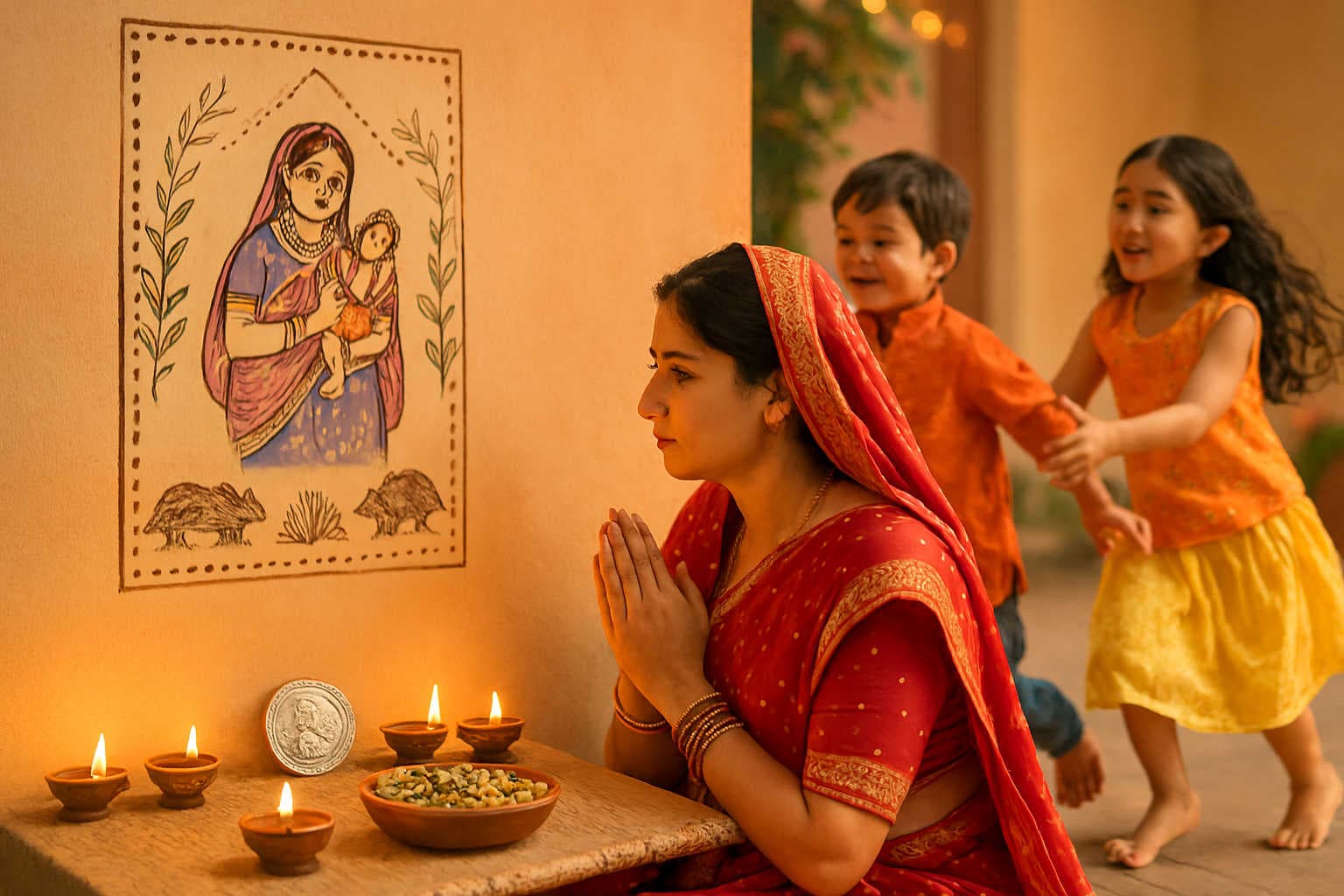
Drawing Ahoi Mata: A picture of Ahoi Mata, often represented as a womb-shaped figure with seven sons and wild animals, is drawn on the wall with natural colors or engraved on silver plates.
-
Offering Grains and Water: Sathiya (seven types of grains) are placed before the deity along with water, symbolizing nourishment and fertility.
-
Puja at Sunset: After seeing the stars or the moon, women perform the puja by lighting diyas, offering water, and reciting the Ahoi Ashtami Vrat Katha.
-
Use of Silver Ahoi Coin: In many families, a silver pendant or coin engraved with Ahoi Mata is worshipped and later tied to a necklace worn by mothers during Diwali.
-
Breaking the Fast: The fast is broken after sighting the stars, symbolizing hope and blessings descending from the heavens.
Spiritual Significance of the Festival
The rituals and symbolism of Ahoi Ashtami extend beyond motherhood:
-
Maternal Devotion: It highlights the power of a mother’s prayer and her willingness to sacrifice comfort for her children.
-
Karmic Balance: The legend teaches that sincere repentance and faith can neutralize past mistakes.
-
Fertility and Protection: The womb-shaped drawing of Ahoi Mata signifies creation, fertility, and divine guardianship.
-
Cosmic Connection: Observing the stars before breaking the fast symbolizes connection with the universal forces that guide life and protect children.
Regional Celebrations of Ahoi Ashtami
-
North India (Delhi, UP, Haryana, Punjab): The festival is observed widely, with women gathering in groups to narrate the Ahoi Mata katha together.
-
Maharashtra & Gujarat: Linked with Ahoi Aathe, where women fast for child protection, though rituals may slightly differ.
-
Modern Urban Families: Many women now use printed calendars or framed images of Ahoi Mata for puja but retain the traditional fasting practices.
Modern Relevance of Ahoi Ashtami
In today’s times, where life is fast-paced and uncertain, festivals like Ahoi Ashtami provide spiritual reassurance and emotional strength to parents. It reminds mothers that beyond medical care and practical efforts, there is also the power of prayer, intention, and divine blessings for their children.
It also fosters family bonding, as children witness their mother’s devotion and learn about the cultural values of sacrifice, faith, and gratitude.
Conclusion
Ahoi Ashtami is not just a fast; it is a festival that celebrates motherhood, sacrifice, and unconditional love. By observing this vrat, women express their eternal wish for their children’s well-being, happiness, and longevity.
The festival beautifully combines spiritual faith with the nurturing instincts of a mother, reinforcing the timeless truth that a mother’s prayers hold immense power in protecting her family.
As families continue to observe Ahoi Ashtami, they carry forward a tradition that honors the divine energy of motherhood and the eternal bond between mother and child.