Why We Worship the Cow on Govatsa Dwadashi
India is a land where every festival carries a deeper spiritual and cultural meaning, and among them, Govatsa Dwadashi, also known as Vasu Baras, holds a unique place. Celebrated two days before Diwali in many parts of India, particularly in Maharashtra and Gujarat, this festival is dedicated to worshipping the cow and her calf.
The cow is revered in Hinduism as a symbol of motherhood, nourishment, and selfless giving. On Govatsa Dwadashi, women fast and perform rituals to honor cows, seeking blessings for the well-being of their children and family. This observance not only highlights the religious significance of the cow but also reinforces the timeless bond between humans and animals in Indian culture.
The Sacredness of the Cow in Hinduism
In Hindu tradition, the cow is regarded as a manifestation of divine qualities. She is often addressed as Gomata (Mother Cow) because of her nurturing nature. From ancient Vedic times, cows have been considered symbols of wealth, fertility, and purity.
-
The cow is associated with Kamadhenu, the wish-fulfilling celestial cow who grants prosperity.
-
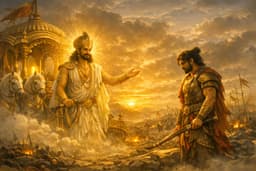
Lord Krishna, often called Govinda or Gopala, spent his youth tending cows, emphasizing their sacred connection to dharma and devotion.
-
The cow is believed to embody all deities within her, making her worship an act of universal reverence.
Thus, on Govatsa Dwadashi, this divinity is celebrated with devotion and gratitude.
Mythological Background of Govatsa Dwadashi
According to Hindu scriptures, Govatsa Dwadashi is tied to the legend of Nanda (Lord Krishna’s foster father). It is believed that Nanda once performed this vrat (fast) and ritual for the well-being of his son Krishna. Since then, it became a sacred observance for mothers seeking protection and prosperity for their children.
Another legend connects the day with Vasubaras, where women pray to Vasus (deities of nature and wealth) by worshipping cows, symbolizing the prosperity they bring to households.
When and How Govatsa Dwadashi is Celebrated
Govatsa Dwadashi is observed on the 12th day (Dwadashi) of the Krishna Paksha in the Hindu month of Kartika (October–November). Its rituals vary regionally but the core essence remains the same.
1. Fasting and Rituals
-
Married women, especially mothers, observe a strict fast on this day.
-
Many avoid consuming milk, curd, ghee, or any dairy product to honor the cow.
-
They break their fast only after performing puja in the evening.
2. Cow Worship
-
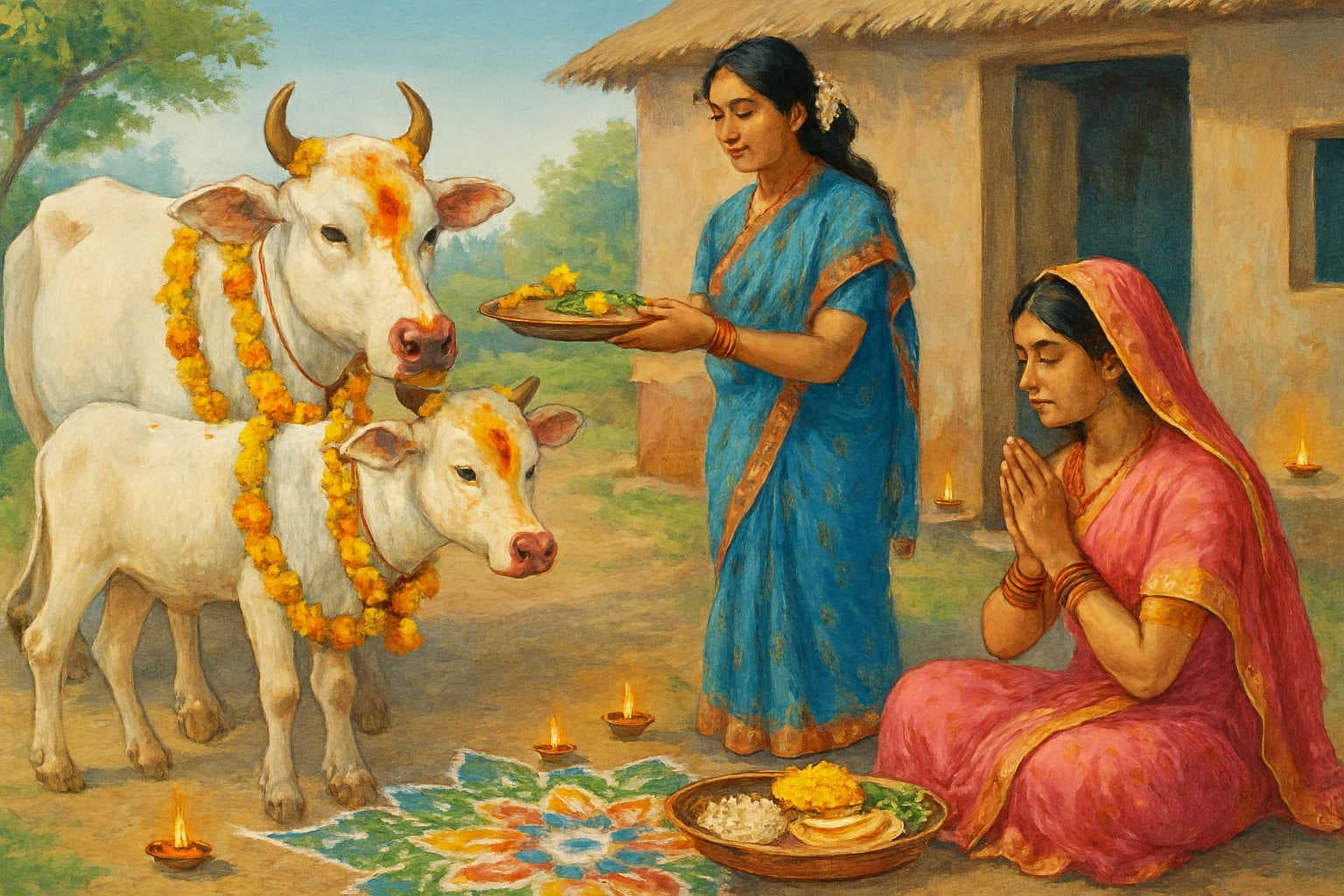
Cows and calves are bathed, adorned with turmeric, vermilion, garlands, and cloth.
-
Their horns are sometimes painted in bright colors.
-
Devotees offer grass, wheat, gram, and special sweets to the cows.
3. Household Rituals
-
In places where cows may not be available, symbolic clay or wooden idols of cows and calves are worshipped.
-
Women prepare rangolis outside their homes and light lamps, creating a festive and devotional atmosphere.
Spiritual Significance of Govatsa Dwadashi
The rituals of Govatsa Dwadashi are deeply symbolic:
-
Motherhood and Nourishment: Just as the cow selflessly provides milk, mothers are honored for their nurturing spirit.
-
Fertility and Prosperity: Worshipping the cow ensures abundance in family and agriculture.
-
Protection of Children: Women pray for the long life, health, and safety of their children.
-
Gratitude for Nature: The festival reminds us to value animals, agriculture, and natural resources that sustain life.
Regional Variations
-
Maharashtra: Govatsa Dwadashi is widely celebrated as Vasu Baras, marking the start of Diwali festivities. Women observe fasts and worship cows with devotion.
-
Gujarat: Similar rituals are performed, often linked to agricultural cycles, thanking cows for their role in farming.
-
Northern India: The day is sometimes associated with Govardhan Puja preparations, tying cow worship to Lord Krishna’s legends.
Govatsa Dwadashi vs. Other Cow Worship Festivals
India has multiple festivals dedicated to cow reverence, such as Gopashtami and Maatu Pongal. While those festivals celebrate the general role of cows in farming and dharma, Govatsa Dwadashi stands apart as a maternal festival, emphasizing the cow’s nurturing role in parallel with a mother’s care.
Modern Relevance of Govatsa Dwadashi
In today’s times, Govatsa Dwadashi carries messages that go beyond ritualistic worship:
-
Animal Respect: It highlights compassion towards animals, reminding us of ethical treatment and care for them.
-
Sustainable Living: By fasting and abstaining from dairy, devotees reflect on mindful consumption.
-
Cultural Continuity: Even in urban spaces where cows may not be present, symbolic worship ensures the tradition lives on.
Conclusion
Govatsa Dwadashi is more than a festival—it is a heartfelt tribute to motherhood, nature, and gratitude. By worshipping the cow and abstaining from her products for a day, devotees acknowledge her role in nurturing humanity.
As rows of lamps glow and families gather in prayer, the festival reminds us of the timeless truth: where there is gratitude and respect for nature’s gifts, there is prosperity and harmony.
In the rhythm of Diwali’s festivities, Govatsa Dwadashi stands out as a day of simplicity, devotion, and respect for the gentle mother who sustains life—the cow.