Importance of Amavasya in Hindu Calendar
In Hinduism, the phases of the moon are deeply connected with timekeeping, rituals, and spirituality. Among them, Amavasya, or the new moon day, holds a special place. Unlike the full moon (Purnima), when the moon shines bright, Amavasya is the day when the moon is not visible in the night sky. Though associated with darkness, it is a time of great spiritual and religious importance in the Hindu calendar.
Amavasya occurs once every lunar month, making it one of the most significant recurring tithis (dates) in Hindu tradition. It is considered both powerful and sensitive—suitable for worship, meditation, and honoring ancestors.
The Meaning of Amavasya
The Sanskrit word Amavasya is derived from Ama (together) and Vasya (to dwell). It refers to the day when the sun and moon occupy the same zodiac sign, resulting in no moonlight. Symbolically, it represents a fresh beginning, as the lunar cycle starts anew after Amavasya.
Spiritually, the absence of the moon reflects the mind’s stillness and introspection. Many devotees consider Amavasya the right time to let go of negativity and seek divine blessings for new ventures.
Mythological Significance
Several stories from Hindu scriptures highlight the importance of Amavasya:
-
Devas and Asuras: It is believed that the Amavasya night gives more power to negative forces (asuras), while devotees counter this with prayers, fasting, and lighting diyas to invite divine energy.
-
Ancestor Worship: According to the Garuda Purana, Amavasya is an ideal time for performing Tarpan and Shraddha for ancestors, ensuring peace for their souls.
-
Goddess Kali and Shiva: In many regions, Amavasya is dedicated to Goddess Kali or Lord Shiva, who are invoked to destroy darkness and grant protection.
Rituals Performed on Amavasya
Different Amavasya days throughout the year have unique significance. However, there are some common practices followed across India:
1. Fasting (Vrat)
Many devotees observe a strict fast on Amavasya, consuming only fruits, milk, or water. Fasting is believed to purify the body, control desires, and strengthen spiritual focus.
2. Pitra Tarpan and Shraddha
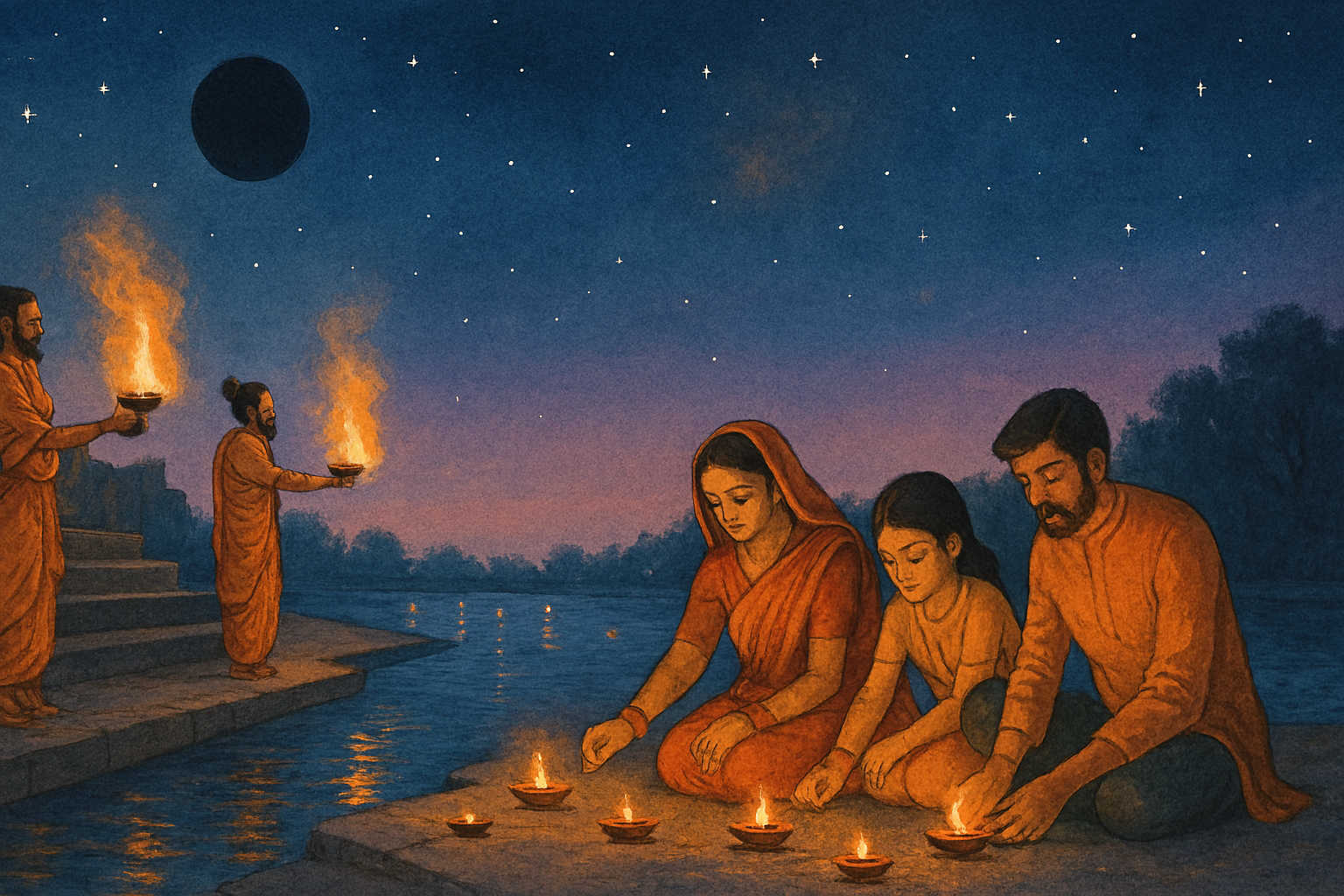
Ancestor rituals are one of the most important aspects of Amavasya. Devotees offer water mixed with sesame seeds and perform Pind Daan to seek blessings and liberation for their departed souls.
3. Temple Visits and Puja
Special pujas are conducted in temples, especially for deities like Lord Shiva, Goddess Kali, or Lord Hanuman. Devotees light lamps and incense sticks to remove darkness and obstacles from life.
4. Charity and Donations
Donating food, clothes, or money to the needy is a common Amavasya ritual. Feeding cows, dogs, and crows is also considered auspicious, as it symbolizes offering food to ancestors.
5. Lighting Diyas
Since Amavasya is a night of darkness, lighting diyas (lamps) is considered highly symbolic. It represents inviting divine light to dispel ignorance and negative energies.
Types of Amavasya and Their Importance
Not all Amavasyas are the same. Some hold special religious significance:
-
Mauni Amavasya (Magha month) – Devotees observe silence (maun vrat) and take holy dips in rivers like the Ganga.
-
Somvati Amavasya – Occurs when Amavasya falls on a Monday. It is especially auspicious for women praying for their husband’s long life.
-
Diwali Amavasya – The most famous Amavasya, marking the worship of Goddess Lakshmi and the return of Lord Rama to Ayodhya.
-
Pitru Amavasya – Observed during Pitru Paksha, when Shraddha and Pind Daan for ancestors are performed.
-
Hariyali Amavasya – Celebrated in the monsoon, with prayers for fertility and prosperity.
Each of these has unique customs but shares the underlying theme of dispelling darkness and invoking blessings.
Astrological and Spiritual Beliefs
From an astrological perspective, Amavasya is seen as a time of heightened energy but also vulnerability. Since the moon represents the mind and emotions, its absence can create a restless atmosphere. Therefore, it is advised to engage in meditation, chanting, and acts of kindness to channel energies positively.
Spiritually, Amavasya is considered a perfect time for introspection and cleansing. Just as the moon begins a new cycle, devotees are encouraged to let go of past burdens and prepare for fresh beginnings.
Do’s and Don’ts on Amavasya
Do’s:
-
Perform Shraddha and Tarpan for ancestors.
-
Light diyas and incense in the evening.
-
Engage in prayer, chanting, and meditation.
-
Donate food, grains, or clothes to the needy.
Don’ts:
-
Avoid starting new ventures (except on Diwali Amavasya, which is considered auspicious).
-
Refrain from negative actions, arguments, or consuming intoxicants.
-
Do not travel unnecessarily, as the day is believed to carry subtle energies.
Why Amavasya Matters Today
Even in the modern age, Amavasya holds relevance. While some may view it as superstition, its underlying practices—such as fasting, meditation, charity, and remembering ancestors—carry deep spiritual and psychological benefits.
It reminds us that darkness is not to be feared but embraced as a moment of pause, reflection, and preparation for light. The rituals encourage gratitude, humility, and balance in life.
Conclusion
Amavasya in the Hindu calendar is not just the absence of the moon but a powerful reminder of cycles, endings, and new beginnings. It connects the living with their ancestors, teaches us to honor tradition, and encourages spiritual cleansing. Whether observed through fasting, prayers, or charity, Amavasya continues to guide millions toward self-awareness and divine grace.
In the silence of the moonless night, devotees find a chance to light the lamp within—transforming darkness into an opportunity for spiritual growth.