Kojagiri Purnima – Night of Blessings from Goddess Lakshmi
The serene beauty of an autumn full moon is enough to enchant anyone, but for devotees across India, the Kojagiri Purnima night holds a deeper spiritual meaning. Celebrated on the full moon day of the Hindu month of Ashwin (September–October), it is a night devoted to Goddess Lakshmi, the goddess of wealth and prosperity, who is believed to descend to earth to bless those who remain awake in devotion.
Also known as Sharad Purnima in many regions, Kojagiri Purnima is especially popular in Maharashtra, Goa, and parts of Gujarat. The festival blends myth, devotion, and community joy under the shimmering glow of the brightest full moon of the year.
Meaning of the Name "Kojagiri"
The word “Kojagiri” comes from the Sanskrit phrase “Ko Jagarti?” which means “Who is awake?” According to legend, on this night Goddess Lakshmi roams the earth, calling out this question. Those found awake and engaged in prayer or worship receive her blessings of wealth, health, and happiness.
This belief forms the core of the tradition of staying up late into the night—or even until dawn—singing bhajans, performing puja, and enjoying moonlit gatherings with friends and family.
Legends Behind Kojagiri Purnima
-
Goddess Lakshmi’s Visit
The most widely told legend says Goddess Lakshmi comes to check on her devotees during Kojagiri Purnima night. Those who are awake, alert, and worshipping her with sincerity are granted prosperity and good fortune. -
Moonlight’s Healing Power
Ancient scriptures mention that the moonlight on this night has special cooling and nourishing properties. It is believed that the rays of the moon can rejuvenate the mind and body, bringing balance and peace. -
Krishna and the Gopis
In Vaishnava traditions, Kojagiri Purnima is also connected to Lord Krishna’s Raas Leela with the gopis in Vrindavan. The divine dance on the full moon night symbolizes eternal love and spiritual bliss.
Rituals of Kojagiri Purnima
-
Fasting and Worship
Many devotees observe a day-long fast, breaking it only after midnight with the consumption of moonlight-blessed kheer. The puja typically involves offering flowers, incense, and lamps to Goddess Lakshmi, along with reciting the Lakshmi Ashtottara Shatanamavali or Vishnu Sahasranama. -
Kheer Under the Moonlight
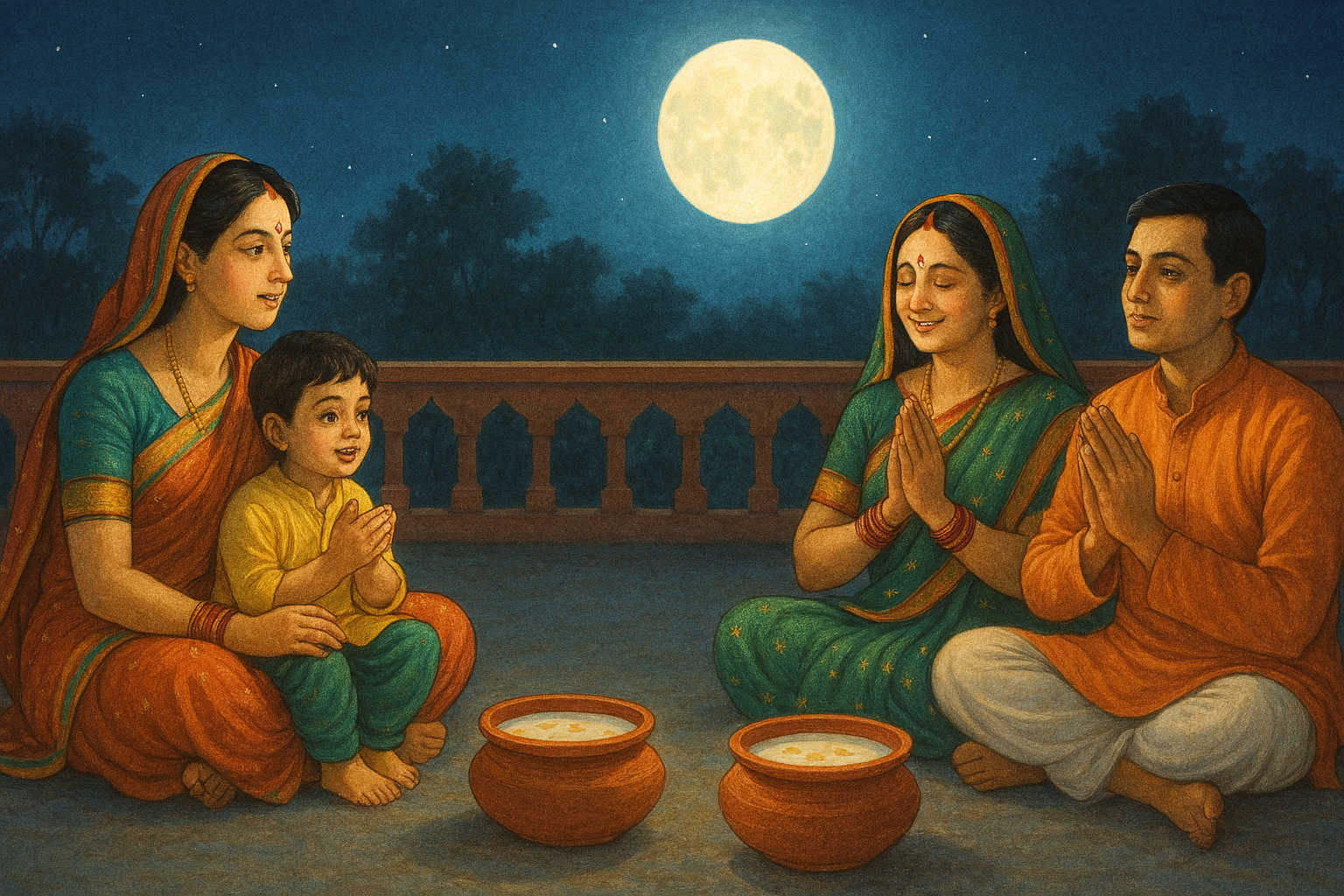
The most popular ritual is preparing kheer (rice pudding made with milk and sugar) and placing it in silver or earthen pots under the open sky. The moonlight is believed to infuse it with health benefits and divine blessings. People consume the kheer after midnight or at dawn the next morning. -
Staying Awake – Jagran
Families and communities gather on terraces, in courtyards, or at temples to spend the night together. Singing devotional songs, telling stories of the Goddess, and sharing laughter keep everyone awake until the moon sets. -
Community Celebrations
In Maharashtra, many housing societies organize Kojagiri Purnima parties with cultural programs, music, and games—while keeping the essence of the festival alive.
Why the Moon is Special on Kojagiri Purnima
Astronomically, the full moon of Ashwin month is the closest to the Earth, making it appear brighter and larger than usual. The clear autumn skies amplify this effect, creating an almost magical silver glow.
From an Ayurvedic perspective, moonlight on this night is said to reduce Pitta dosha (excess heat) in the body, helping to improve digestion, calm the mind, and promote better sleep patterns. This is why drinking moonlight-charged milk or kheer is considered beneficial.
Health and Spiritual Benefits
Spiritual:
-
Deepens devotion to Goddess Lakshmi.
-
Encourages meditation and gratitude.
-
Fosters community bonding through shared rituals.
Health:
-
Cooling moonlight helps relieve stress and tension.
-
Moon-energized milk or kheer aids digestion and boosts immunity.
-
Outdoor gatherings under moonlight promote relaxation and happiness.
Regional Celebrations
-
Maharashtra & Goa – Families gather on terraces, enjoy saffron-flavored milk, and play games late into the night.
-
Gujarat – The festival is tied with Sharad Purnima Garba dances dedicated to Krishna.
-
Odisha (Kumar Purnima) – Young girls pray for good husbands and future prosperity.
-
Braj Region – Celebrations focus on Krishna’s Raas Leela with music and dance.
How to Celebrate Kojagiri Purnima at Home
-
Clean Your Home – Goddess Lakshmi is believed to visit clean and well-lit homes.
-
Set Up a Puja Space – Place an image or idol of Goddess Lakshmi, decorate with flowers, and light a diya.
-
Prepare Fresh Kheer or Milk – Flavor with saffron, cardamom, and nuts for a traditional touch.
-
Place Food in Moonlight – Keep it uncovered with only a fine net cloth to protect from insects.
-
Stay Awake in Devotion – Chant mantras, sing bhajans, or read scriptures.
Conclusion
Kojagiri Purnima is not just a full moon night—it’s a divine opportunity to welcome blessings, health, and joy into our lives. The combination of devotion, community, and nature’s beauty makes this festival truly unique.
As you sit under the silver glow of the moon, sipping warm milk or tasting kheer infused with moonlight, you are connecting to a tradition that spans centuries. It’s a night that reminds us to stay awake—not just in body, but in spirit—ready to receive the abundance the universe offers.
When Goddess Lakshmi asks, “Who is awake?” may your heart and home be ready to answer, “I am.”