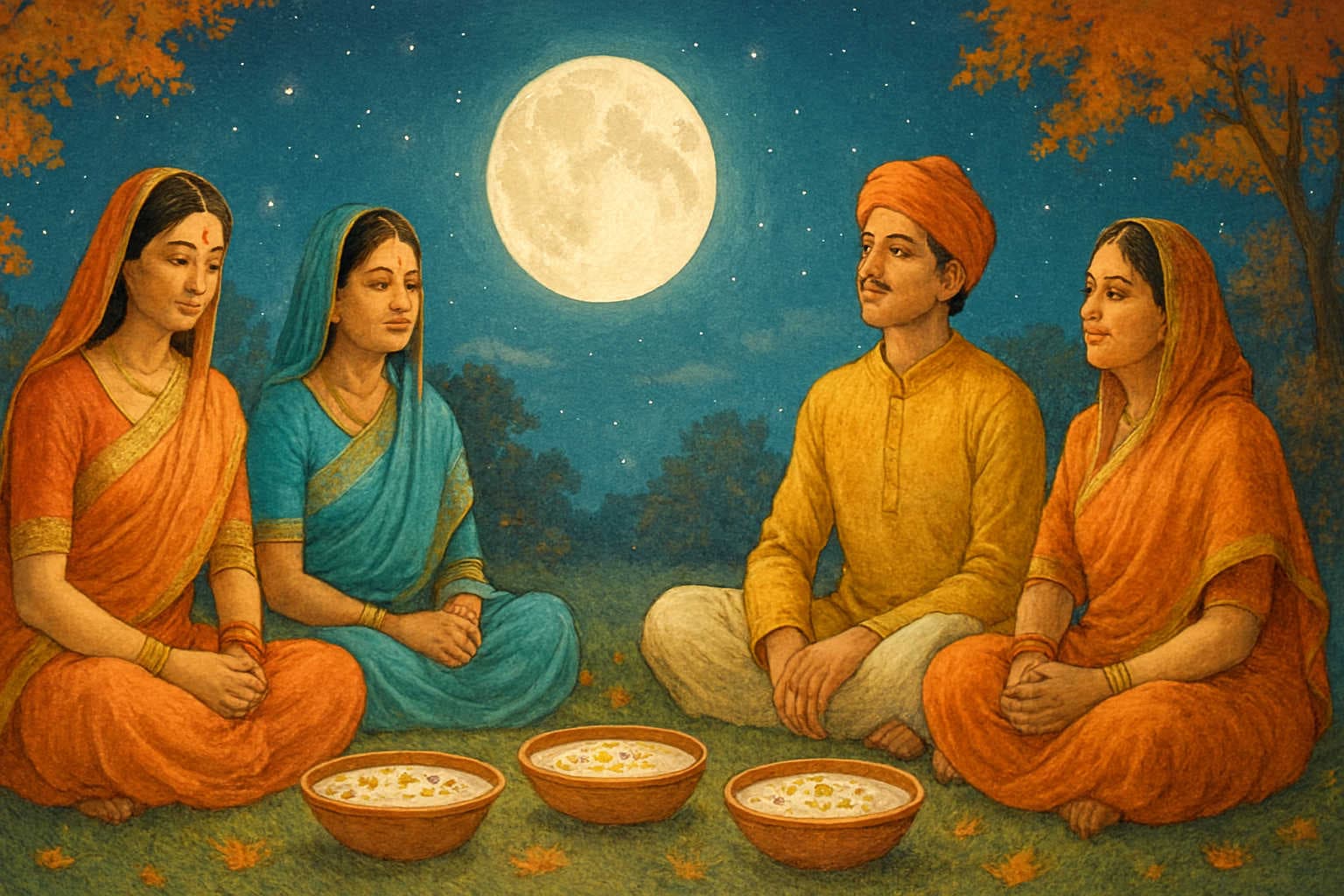
Sharad Purnima – Moonlight and Spiritual Energy
Among the many full moon nights in the Hindu calendar, Sharad Purnima stands out for its beauty, spiritual depth, and unique rituals. Falling on the full moon day of the Hindu month of Ashwin (September–October), it marks the end of the monsoon season and the arrival of the crisp autumn sky. On this night, the moon shines at its brightest and closest to Earth, bathing the world in its cool, silvery glow.
Sharad Purnima is celebrated with a blend of devotion, tradition, and a deep connection to nature. Known in different regions as Kojagiri Purnima, Kumar Purnima, or Raas Purnima, the festival is associated with the blessings of Goddess Lakshmi, the divine love of Radha and Krishna, and the health-giving properties of moonlight.
Mythological Significance
Several legends surround the celebration of Sharad Purnima:
-
Lakshmi’s Blessings – The Kojagiri Vrat
In many parts of India, Sharad Purnima night is believed to be the time when Goddess Lakshmi descends to bless those who remain awake in devotion. The name Kojagiri comes from the Sanskrit “Ko Jagarti?” meaning “Who is awake?” It is said that the Goddess asks this question while roaming the earth and grants prosperity to those engaged in worship. -
Krishna’s Raas Leela
According to the Bhagavata Purana, Sharad Purnima marks the night when Lord Krishna performed the divine Maha Raas with Radha and the gopis of Vrindavan. The moonlight, combined with Krishna’s flute, filled the night with blissful energy, symbolizing the soul’s union with the divine. -
Chandra’s Healing Energy
Hindu belief holds that the moon’s rays on Sharad Purnima have special medicinal and spiritual properties, promoting health and calmness. This belief ties into the tradition of placing food under the moonlight for blessings.
The Special Moon of Sharad Purnima
Astronomically, the moon on Sharad Purnima is closer to the Earth, appearing brighter and larger. It is often considered the most radiant full moon of the year. The clear post-monsoon skies allow the moonlight to shine without obstruction, creating an ethereal white glow over the land.
From an Ayurvedic perspective, the cool moonlight on this night is said to balance Pitta dosha (heat) in the body, reduce stress, and promote emotional well-being.
Rituals of Sharad Purnima
The celebration varies by region but often includes these key traditions:
-
Fasting and Prayer
Many devotees observe a fast during the day, breaking it at night after offering prayers to Goddess Lakshmi or Lord Krishna. -
Keeping Kheer in Moonlight
The most iconic ritual is preparing kheer (sweet rice pudding) made with milk, rice, and sugar. It is placed in silver or earthen pots under the open sky, allowing it to be bathed in moonlight. Devotees believe that the moon’s rays infuse the kheer with healing properties. The blessed kheer is consumed after midnight or the next morning. -
Staying Awake All Night
Known as Jagran, this practice involves singing devotional songs, reciting scriptures, and meditating under the moonlight. Staying awake is believed to attract Goddess Lakshmi’s blessings. -
Raas Leela and Cultural Programs
In Vrindavan and other Krishna temples, enactments of the divine Raas Leela take place, drawing thousands of devotees.
Health and Spiritual Benefits
Spiritual Benefits:
-
Enhances meditation and devotion due to heightened lunar energy.
-
Brings peace and positivity.
-
Attracts the blessings of Goddess Lakshmi for prosperity.
Health Benefits:
-
The moonlight on this night is believed to act as a natural coolant, calming the nervous system.
-
Kheer exposed to moonlight is said to absorb micro-energies that aid digestion and boost immunity.
-
Spending time in nature under moonlight helps reduce stress.
Regional Variations
-
Maharashtra – People enjoy milk-based drinks, often flavored with saffron and nuts, while chatting and singing late into the night.
-
Odisha (Kumar Purnima) – Young unmarried girls worship the Sun in the morning and the moon at night for blessings of a good life partner.
-
Braj Region (Raas Purnima) – Krishna temples host grand celebrations of Raas Leela.
-
West Bengal & Assam – Special Lakshmi Puja is performed on this day.
Tips for Observing Sharad Purnima at Home
-
Cleanse Your Space – Begin with cleaning and decorating your home with flowers and rangoli.
-
Prepare Fresh Kheer – Use pure milk and natural sweeteners if possible.
-
Place Food Outdoors – Keep it covered with a fine cloth to avoid insects but allow moonlight to touch it.
-
Chant and Meditate – Recite Vishnu Sahasranama, Lakshmi Stotra, or Krishna bhajans.
-
Practice Gratitude – Reflect on nature’s beauty and abundance.
Conclusion
Sharad Purnima is more than a night of moon-gazing—it’s a spiritual opportunity to recharge, heal, and connect with divine energies. The moon’s glow on this night is said to be a gift from nature, a reminder that in stillness and light, the soul finds peace. Whether you celebrate by staying awake in devotion, enjoying kheer under the stars, or simply soaking in the moonlight, Sharad Purnima invites you to pause, reflect, and receive blessings.
When the night sky turns silver and the cool light washes over the Earth, you’re not just witnessing a celestial event—you’re participating in a centuries-old tradition of love, prosperity, and spiritual renewal.