Understanding Ekadashi Vrat – The Power of Purity
In Hindu tradition, fasting is not just an act of abstaining from food—it is a sacred discipline meant to cleanse the mind, body, and soul. Among all the fasting days in the Hindu calendar, Ekadashi holds a special place. Occurring twice every lunar month—on the 11th day of both the waxing (Shukla Paksha) and waning (Krishna Paksha) moon phases—Ekadashi is considered one of the most powerful days for spiritual progress. Devotees believe that observing this vrat (fast) pleases Lord Vishnu and washes away sins, paving the way for liberation.
The Meaning of Ekadashi
The word “Ekadashi” comes from Sanskrit—eka meaning “one” and dashi meaning “ten,” signifying the 11th day of the lunar fortnight. In Hinduism, days are often linked to planetary energies and deities, and the 11th day is especially associated with heightened spiritual energy. Scriptures describe Ekadashi as a day when the senses are more easily brought under control, making it ideal for devotion and meditation.
Mythological Significance
According to the Padma Purana, Lord Vishnu created Ekadashi as a divine form to destroy the demon Mura, who represented laziness, ignorance, and sinful tendencies. After defeating Mura, Ekadashi Devi sought a boon from Vishnu—that anyone who observed a fast on this day with devotion would be freed from sins and attain Moksha (liberation).
Different types of Ekadashi have their own legends:
-
Vaikuntha Ekadashi – Celebrated in South India, it marks the day when the gates of Vaikuntha (Vishnu’s abode) are believed to open.
-
Nirjala Ekadashi – Known for its strict waterless fast.
-
Devshayani Ekadashi – Marks the beginning of Lord Vishnu’s four-month rest (Chaturmas).
-
Mokshada Ekadashi – Associated with granting liberation to ancestors.
Types of Ekadashi
There are 24 Ekadashis in a year, sometimes 26 in the case of an extra month (Adhik Maas). Some of the most popular ones include:
-
Putrada Ekadashi – For blessings of children.
-
Jaya Ekadashi – Removes obstacles and grants victory.
-
Apara Ekadashi – For forgiveness of past sins.
-
Devutthana Ekadashi – Marks the awakening of Lord Vishnu from his cosmic sleep.
Spiritual and Scientific Benefits
Spiritual Benefits:
-
Strengthens devotion to Lord Vishnu.
-
Purifies the mind and heart.
-
Helps in overcoming negative habits.
-
Brings peace, prosperity, and divine grace.
Scientific/Health Benefits:
From a wellness perspective, intermittent fasting on Ekadashi helps detoxify the digestive system. Since the moon’s gravitational pull is strong during Ekadashi, light or no food intake helps balance water content in the body, supporting mental clarity.
How to Observe Ekadashi Vrat
Preparation (Dashami – the 10th day):
-
Avoid grains, pulses, onion, garlic, and heavy foods from the night before.
-
Sleep early and prepare for a day of devotion.
Fasting Methods:
-
Nirjala Vrat – Complete fast without food or water (strict).
-
Phalahar Vrat – Only fruits, milk, and water.
-
Partial Fast – One light, grain-free meal.
Rituals on Ekadashi:
-
Wake up during Brahma Muhurta (pre-dawn hours).
-
Take a ritual bath and wear clean, preferably yellow or white clothes.
-
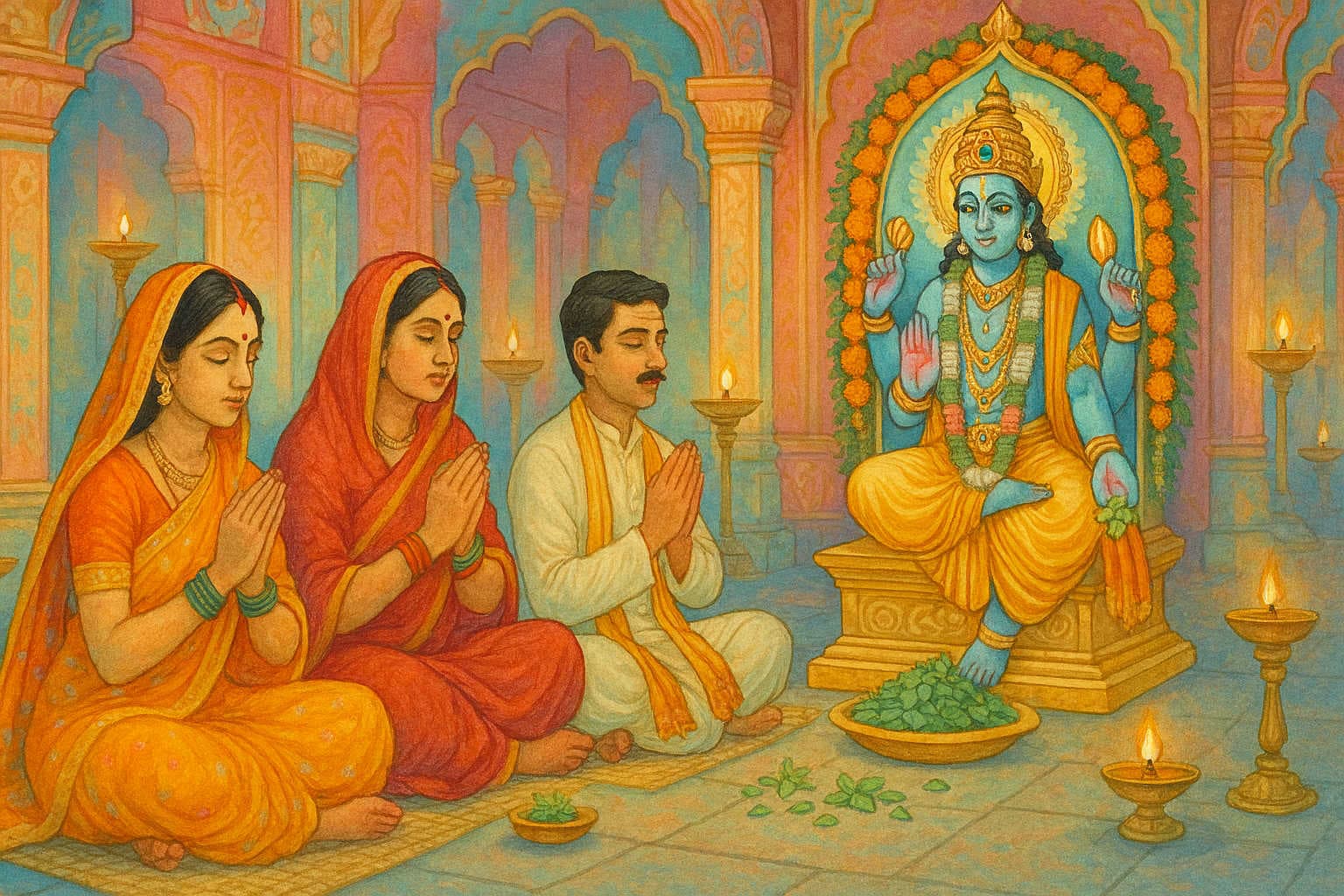
Set up an altar with Lord Vishnu’s idol or image.
-
Offer tulsi leaves, incense, flowers, and prasad.
-
Chant mantras like “Om Namo Bhagavate Vasudevaya” or recite the Vishnu Sahasranama.
-
Spend the day in prayer, reading scriptures like the Bhagavad Gita.
-
Avoid negative speech, gossip, or anger.
-
Break the fast (Parana) the next day after sunrise, following the specific time window given in the Panchang.
Foods to Eat and Avoid
Allowed: Fruits, milk, coconut water, nuts, jaggery, sago (sabudana), potatoes, and rock salt.
Avoided: Rice, wheat, pulses, onion, garlic, non-vegetarian food, and alcohol.
Ekadashi and Mental Discipline
Ekadashi is more than dietary discipline—it’s a mental fast. Avoiding distractions, controlling the senses, and keeping the mind focused on spiritual thoughts are central to the vrat’s true purpose. In a world filled with constant stimulation, Ekadashi offers a spiritual “reset” that refreshes the soul.
Common Misconceptions
-
It’s only about food – In reality, fasting without devotion is incomplete.
-
Anyone can skip it for convenience – While health conditions may allow modifications, regular observance is said to bring consistent spiritual merit.
-
It’s just tradition – Ancient practices like Ekadashi also align with cycles of nature and health benefits.
Conclusion
Ekadashi Vrat is a sacred opportunity to purify the body, mind, and soul while deepening one’s connection with Lord Vishnu. Whether followed strictly or with modifications, the focus should always be on sincerity, devotion, and self-discipline.
In the gentle glow of the diya, with the sound of Vishnu’s name on your lips and a calm heart, Ekadashi becomes more than a date on the calendar—it becomes a doorway to inner purity and divine grace.