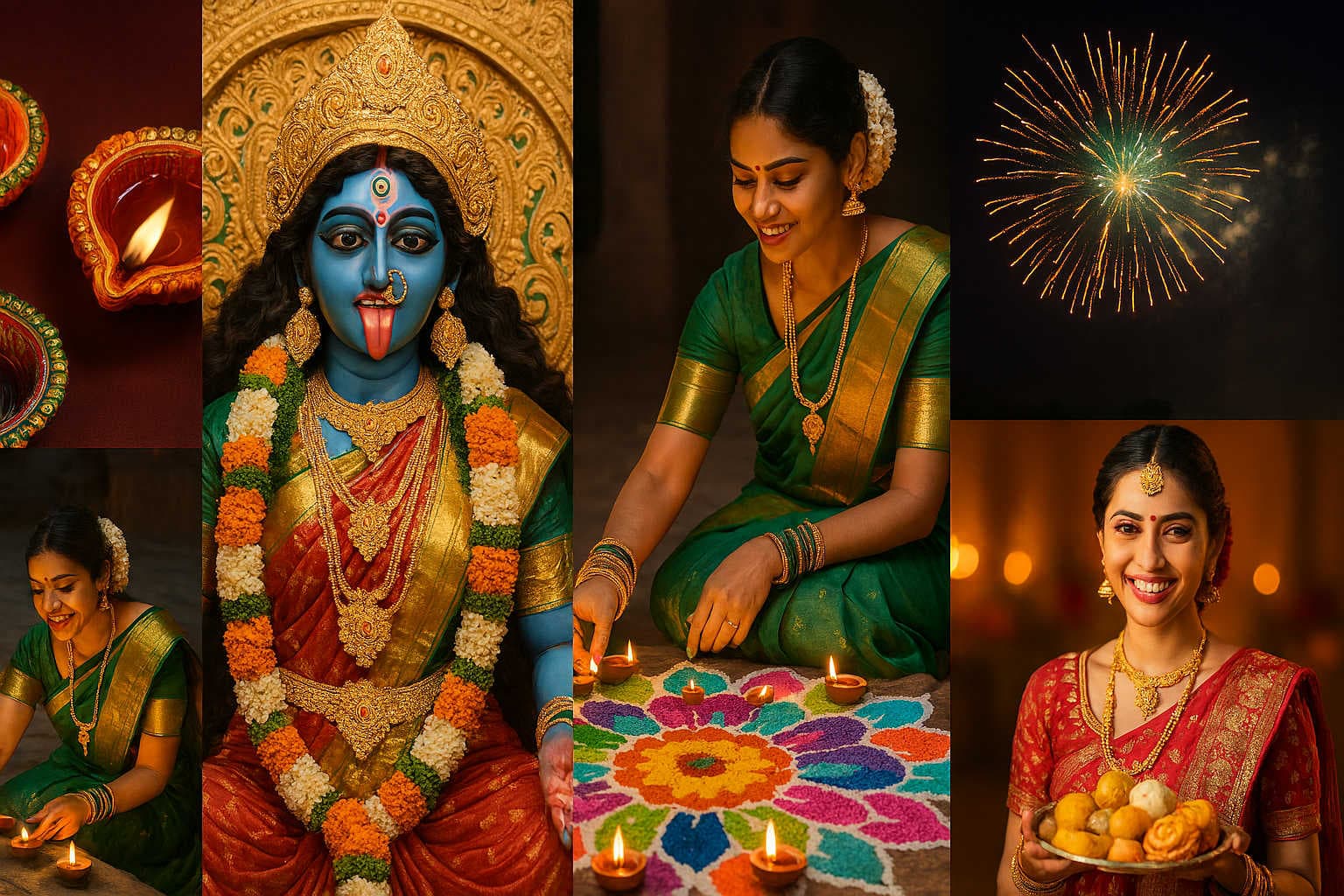
Diwali Across India – Regional Differences
Diwali, the Festival of Lights, is one of India’s most beloved celebrations, symbolizing the triumph of light over darkness, good over evil, and hope over despair. While its core message remains the same across the nation, the way it is celebrated varies greatly depending on the region. From the bustling streets of Delhi to the serene temples of Tamil Nadu, Diwali takes on unique flavors, customs, and rituals that reflect India’s rich cultural diversity.
The Essence of Diwali
At its heart, Diwali is a celebration of victory—victory of Lord Rama over Ravana, of Lord Krishna over Narakasura, and of Goddess Lakshmi’s blessings over poverty and misfortune. Homes are decorated with oil lamps (diyas), colorful rangolis, and flowers. Families exchange sweets, wear new clothes, and enjoy fireworks. But the exact customs and the stories behind them differ widely from one state to another.
North India – The Return of Lord Rama
In most of North India—Uttar Pradesh, Punjab, Haryana, Rajasthan, and Himachal Pradesh—Diwali commemorates the return of Lord Rama, Sita, and Lakshmana to Ayodhya after defeating Ravana. According to the Ramayana, the people lit rows of diyas to welcome them home, which is why lighting lamps is central to the celebration.
Key Customs in North India:
-
Lakshmi Puja – On the third day of Diwali, families worship Goddess Lakshmi for wealth and prosperity. Lord Ganesha, the remover of obstacles, is also worshipped alongside her.
-
Rangoli and Diyas – Houses are decorated with intricate rangolis and clay lamps to invite positive energy.
-
Fireworks – The night sky bursts into color with fireworks, symbolizing joy and the victory of light.
Western India – Prosperity and New Beginnings
In states like Gujarat and Maharashtra, Diwali also marks the New Year for traders and businessmen. The festival is deeply tied to commerce, with people closing their old account books and starting new ones in a ritual called Chopda Pujan.
Special Traditions:
-
Vagh Baras – Celebrated before Diwali in Gujarat, it honors cows and calves, symbolizing prosperity.
-
Padwa and Bhai Dooj – Post-Diwali days focus on honoring marital bonds and sibling relationships.
-
Sweets and Farsan – Special delicacies like ghughra, chakli, and shankarpali fill households.
Eastern India – Kali Puja
In West Bengal, Odisha, and parts of Assam, Diwali coincides with Kali Puja, dedicated to Goddess Kali, the fierce form of the Mother Goddess who destroys evil forces.
Unique Aspects:
-
Night-long Worship – Temples and homes host elaborate midnight rituals with chants, incense, and offerings.
-
Lighting and Decorations – Oil lamps are placed to ward off evil spirits, and fireworks are common.
-
Spiritual Emphasis – The worship of Kali focuses on liberation from ignorance and ego.
Southern India – Naraka Chaturdashi and Deepavali
In Tamil Nadu, Karnataka, Andhra Pradesh, and Telangana, the festival is known as Deepavali and is celebrated mainly on Naraka Chaturdashi, a day before the North Indian main Diwali night. It commemorates Lord Krishna’s victory over the demon Narakasura.
Distinctive Traditions:
-
Oil Bath at Dawn – Families wake up early and take a ceremonial oil bath, believed to cleanse the body and spirit.
-
Bursting Crackers in the Morning – Fireworks begin at sunrise, unlike in the North where they are mostly at night.
-
Special Foods – Festive dishes like murukku, laddu, and mysore pak are prepared.
Central India – Blend of Traditions
In Madhya Pradesh and Chhattisgarh, Diwali blends northern Lakshmi Puja traditions with tribal customs. Tribal communities celebrate harvest-related rituals during the festival, while urban areas follow the more familiar patterns of diyas, pujas, and sweets.
Five Days of Diwali Across India
While the names and significance may change from place to place, many parts of India observe a five-day celebration:
-
Dhanteras – Buying gold, silver, or utensils for good fortune.
-
Naraka Chaturdashi/Chhoti Diwali – Destroying negativity and evil.
-
Main Diwali Night – Lakshmi Puja or Kali Puja.
-
Govardhan Puja/Padwa – Honoring nature and relationships.
-
Bhai Dooj – Celebrating the sibling bond.
Regional Sweets and Delicacies
One of the joys of Diwali is the variety of festive foods. In the North, soan papdi, gulab jamun, and kaju katli dominate. The West offers basundi, ghughra, and savory farsan. The East delights in sandesh and rasgulla, while the South serves adhirasam, payasam, and laddu.
Why These Differences Matter
The diversity in Diwali celebrations across India is a testament to the country’s ability to embrace variety while cherishing unity. Every region weaves its local history, mythology, and seasonal rhythms into the festival, making Diwali a tapestry of countless traditions.
Conclusion
Diwali may be celebrated differently in Delhi, Kolkata, Chennai, and Ahmedabad, but its essence—the triumph of light, love, and goodness—remains universal. These regional differences not only add color to the festival but also show how India’s cultural mosaic thrives through shared joy.
Whether it’s lighting a diya in Ayodhya, worshiping Kali in Kolkata, or taking an oil bath in Chennai, Diwali binds hearts across the subcontinent in a single thread of light.