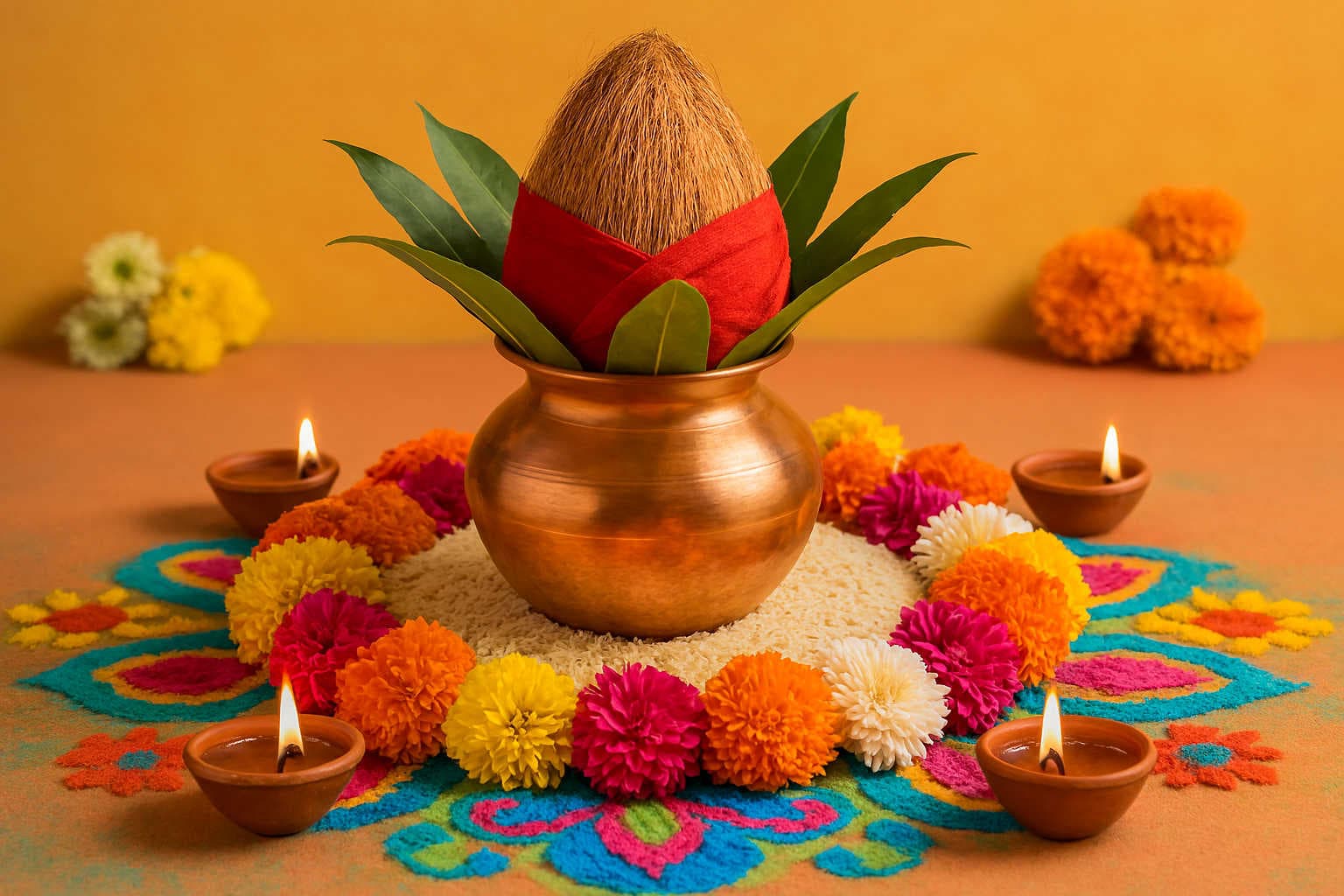
Kalash Sthapana – First Ritual of Navratri
Navratri, the nine-day festival dedicated to Goddess Durga, begins with Kalash Sthapana—also known as Ghatasthapana—a highly auspicious ritual that marks the official commencement of the celebrations. It is not just a ceremonial act; it symbolizes inviting the divine energy of Goddess Durga into the home and heart for the entire duration of Navratri.
This ritual holds deep spiritual meaning and must be performed at a specific time, following traditional guidelines, as mentioned in Hindu scriptures.
Significance of Kalash Sthapana
The Kalash (sacred pot) represents the universe and is considered an abode of the Goddess during the festival. In Hindu tradition:
-
The water inside symbolizes life and purity.
-
The mango leaves represent fertility, auspiciousness, and prosperity.
-
The coconut placed atop signifies selflessness and divine blessings.
-
The red cloth wrapped around the coconut denotes power and energy (Shakti).
By installing the Kalash, devotees symbolically welcome Devi Durga’s presence into their home, seeking her protection, prosperity, and blessings.
Auspicious Time (Muhurta) for Kalash Sthapana
The ritual is performed during the Pratipada tithi (first day of Navratri) in the morning, preferably during the Abhijit Muhurta or Pratahkal. Performing it at the correct time is believed to ensure the Goddess’s blessings throughout the festival.
Essential Items for Kalash Sthapana
To perform Kalash Sthapana, devotees prepare:
-
A Kalash (copper, brass, or earthen pot)
-
Sacred water (Gangajal)
-
Betel nut or coins
-
Mango leaves (5 or more)
-
Raw rice (to place under the Kalash)
-
A fresh coconut
-
Red cloth and sacred thread (kalawa)
-
Haldi (turmeric) and kumkum (vermillion)
-
Durva grass (optional)
-
Flowers and garlands
-
Sand or soil (for sowing barley seeds)
Step-by-Step Ritual of Kalash Sthapana
Step 1: Prepare the Puja Area
Choose a clean, sanctified place in the house, preferably in the northeast direction. Draw a swastika or rangoli as a base for the Kalash.
Step 2: Sowing Barley Seeds
Spread clean soil or sand in a pot or tray and sow barley seeds. Over the nine days, these seeds grow into green shoots, symbolizing growth, prosperity, and blessings.
Step 3: Filling the Kalash
Fill the Kalash with sacred water, adding a few coins or betel nut along with turmeric, akshat (rice grains), and flowers.
Step 4: Placing Mango Leaves
Arrange mango leaves around the opening of the Kalash in a circular manner, symbolizing divine protection.
Step 5: Wrapping and Placing the Coconut
Wrap a clean coconut with a red cloth and tie it with sacred thread. Place it atop the Kalash.
Step 6: Invoking the Goddess
Chant mantras such as:
"Om Aim Hreem Kleem Chamundaye Vichhe"
and offer flowers, kumkum, and incense to invoke Goddess Durga’s energy into the Kalash.
Spiritual Meaning Behind the Ritual
Kalash Sthapana is not just a physical act—it’s a symbolic invitation to the cosmic energy. The pot signifies creation, the water within symbolizes the life-giving element, and the coconut denotes the offering of one’s ego to the divine. The mango leaves act as channels through which divine blessings flow into the home.
Rules and Precautions
-
Once installed, the Kalash must be worshipped twice daily (morning and evening).
-
A diya (oil lamp) should be lit near the Kalash throughout Navratri.
-
The barley sprouts must be watered regularly and kept clean.
-
Breaking the Kalash ritual midway is considered inauspicious.
Concluding the Ritual
On the ninth day of Navratri, the Kalash is ceremonially removed during the Kanya Pujan or on Vijaya Dashami. The water from the Kalash is sprinkled in the house for purification, and the barley shoots are placed in the home temple or immersed in a river.
Benefits of Performing Kalash Sthapana
-
Invites positive energy and drives away negativity.
-
Brings prosperity, health, and harmony in the household.
-
Strengthens spiritual discipline during Navratri.
-
Connects devotees deeply with traditional and cultural roots.
Final Thoughts
Kalash Sthapana is more than a ritual—it is the opening gateway to nine days of devotion, self-purification, and divine connection with Goddess Durga. When performed with sincerity, it not only sanctifies the home but also awakens spiritual energy, ensuring that Navratri becomes a time of true inner transformation.
This year, when you perform Kalash Sthapana, remember that you are not just placing a pot of water—you are inviting the Goddess herself into your life, asking her to bless your home with light, power, and prosperity.