Shravana Somwar – Power of Mondays in Shiva’s Month
The month of Shravana (also called Sawan) holds a special place in the Hindu calendar. Falling during the monsoon season (July–August), this month is entirely dedicated to Lord Shiva, one of the principal deities in Hinduism. Among its most sacred observances are the Shravana Somwars—the Mondays of this month—when devotees undertake special fasts and rituals to seek the blessings of the destroyer and transformer, Mahadev.
🌙 The Significance of Mondays for Shiva
In Hindu tradition, Monday (Somwar) is considered auspicious for worshipping Lord Shiva. The connection between Shiva and Monday has roots in ancient scriptures. The moon (Soma) is said to have been saved by Shiva when it was cursed to wane away. By wearing the crescent moon on his matted hair, Shiva not only restored the moon’s glory but also made Mondays a day of his special grace.
When these Mondays fall in the month of Shravan—a month already sacred to Shiva—the spiritual potency of the day multiplies.
📜 Mythological Importance of Shravan Month
The Shravan month is linked to the story of Samudra Manthan (the churning of the cosmic ocean) from Hindu mythology. During the churning, a deadly poison called Halahala emerged, threatening to destroy all life. Lord Shiva, out of compassion, drank the poison and held it in his throat, which turned blue, earning him the name Neelkanth.
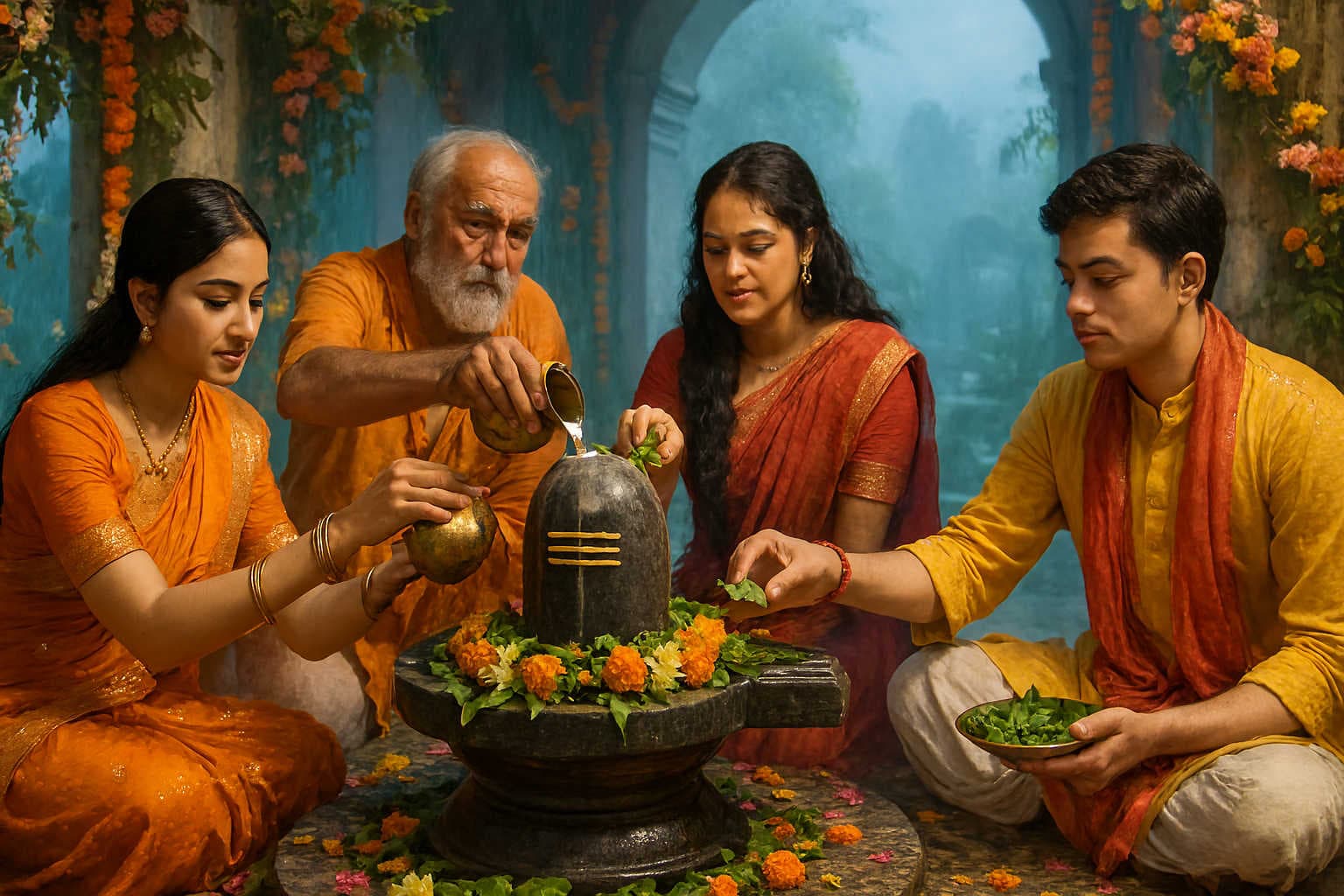
Devotees observe Shravan as a time to honor Shiva’s sacrifice and express gratitude by offering water, milk, and sacred leaves to the Shiva Lingam.
🕉️ Rituals of Shravana Somwar
1. Fasting (Vrat):
Many devotees observe a nirjala fast (without water) or a partial fast, consuming only fruits, milk, and light foods. The fast is broken after evening prayers.
2. Morning Bath and Purification:
Devotees rise early, bathe, and wear clean, preferably white or light-colored clothes. Women often choose green bangles and sarees as green symbolizes prosperity.
3. Shiva Lingam Abhishek:
The highlight of the day is the ritual bathing (abhishek) of the Shiva Lingam with:
-
Milk: Symbol of purity and devotion.
-
Water from the Ganga: For spiritual cleansing.
-
Honey and Yogurt: For sweetness and prosperity.
-
Bel Patra (Bilva Leaves): Believed to cool and please Lord Shiva.
4. Chanting Mantras:
Reciting “Om Namah Shivaya” or the Mahamrityunjaya Mantra is considered highly auspicious.
5. Offering Prasad:
After puja, offerings of fruits, sweets, and panchamrit (a mix of milk, curd, ghee, honey, and sugar) are distributed among family members and devotees.
🚶 Kanwar Yatra – Devotees on a Sacred Journey
In North India, Shravan Somwar is closely associated with the Kanwar Yatra, where devotees called Kanwariyas travel on foot to fetch holy Ganga water from places like Haridwar, Rishikesh, and Gangotri. They carry this water in decorated containers and offer it to Shiva temples in their hometowns.
The sight of saffron-clad Kanwariyas chanting “Bam Bam Bhole” is a vibrant part of Shravan festivities.
🌿 Spiritual Benefits of Shravana Somwar
-
Strengthening Devotion: Regular fasting and prayer deepen one’s connection with Shiva.
-
Cleansing the Mind: Observing rituals with sincerity helps remove negative thoughts and habits.
-
Blessings for Prosperity: Married women often fast for the well-being of their families, while unmarried women seek a righteous life partner.
-
Calming Energy: The meditative atmosphere of the puja brings peace of mind and emotional balance.
🌍 Regional Variations in Celebration
-
Ujjain, Madhya Pradesh: Home to the Mahakaleshwar Jyotirlinga, the city sees grand Rudrabhishek ceremonies during Shravan.
-
Varanasi, Uttar Pradesh: The Kashi Vishwanath temple is filled with pilgrims offering Ganga water daily.
-
South India: While Mondays remain important, the focus is on special pujas and recitation of Shiva Sahasranama.
-
Nepal: The Pashupatinath Temple becomes a major center for devotees in Shravan.
🪔 Shravan Somwar in Modern Times
In today’s fast-paced life, the observance of Shravan Somwar has adapted while retaining its spiritual essence. Many devotees balance work with evening pujas, while others join virtual prayer sessions. Social media has made it easier to share devotional songs, mantras, and stories, keeping the festival alive in the hearts of the younger generation.
📖 The Essence of Shravan Somwar
At its heart, Shravana Somwar is not just about ritual—it’s about discipline, devotion, and transformation. Just as Lord Shiva transforms poison into a symbol of strength, devotees seek to transform their weaknesses into virtues during this holy month.
Through fasting, prayer, and acts of service, believers align themselves with Shiva’s qualities—calmness, compassion, and unwavering focus. The Mondays of Shravan are a reminder that in the midst of life’s storms, there is always a space of peace within, waiting to be discovered.