Teej Festival – Monsoon Celebration of Love and Devotion
The arrival of the monsoon in India brings not only the sweet fragrance of wet earth but also the joy of festivals that celebrate love, devotion, and the beauty of nature. Among these, the Teej Festival holds a special place, especially in the hearts of married women across northern and western India.
Teej is dedicated to Goddess Parvati, symbolizing her union with Lord Shiva after years of penance. It is a celebration of marital bliss, devotion, and the rejuvenating season of rain.
🌸 The Many Forms of Teej
Teej is celebrated in three major forms, each with its own unique rituals and significance:
-
Hariyali Teej: Celebrated in the month of Shravan (July–August) when nature is lush and green, it focuses on the joy of the monsoon season and the worship of Goddess Parvati.
-
Hartalika Teej: Observed a day before Ganesh Chaturthi, this version commemorates the time when Parvati performed severe penance to win Lord Shiva as her husband.
-
Kajari Teej: Celebrated in the month of Bhadrapada, it includes singing folk songs, dancing, and swings, especially in rural areas.
📜 The Legend Behind Teej
The Teej Festival is deeply connected to the story of Parvati’s devotion to Shiva. According to Hindu mythology, Parvati was determined to marry Shiva and undertook intense penance, renouncing all comforts until he accepted her as his wife. After many lifetimes of devotion, Shiva finally agreed, and their union became a symbol of eternal love and marital harmony.
Women observe Teej as a way to seek blessings for a happy married life and to emulate Parvati’s dedication and faith.
🕉️ Rituals and Celebrations
The Teej Festival is not just about fasting—it is a vibrant celebration that combines spirituality with cultural traditions.
1. Fasting (Vrat):
Married women observe a strict fast, refraining from food and water, praying for the long life and prosperity of their husbands. Unmarried women fast to seek a suitable life partner.
2. Puja and Offerings:
An idol or image of Goddess Parvati is decorated with flowers and worshiped. Offerings of fruits, sweets (especially ghewar), and seasonal delicacies are made.
3. Dressing in Festive Attire:
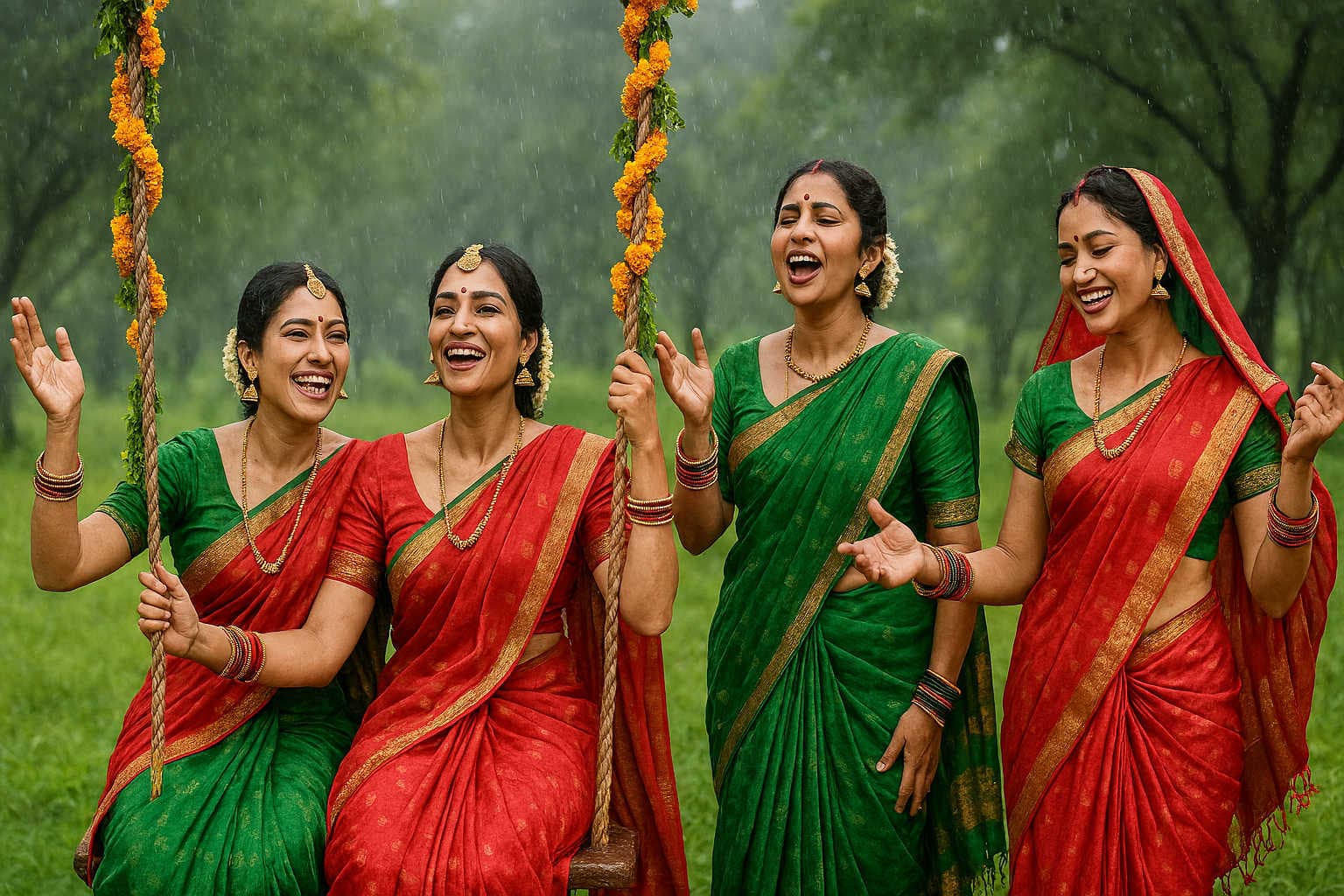
Women wear traditional red and green sarees or lehengas, symbolizing fertility, love, and prosperity. Mehendi (henna) is applied to the hands, often with intricate designs.
4. Swings and Folk Songs:
Decorated swings (jhoolas) are set up in courtyards and gardens. Women sing folk songs, dance, and enjoy the cool monsoon breeze, making the festival as joyous as it is devotional.
5. Community Gatherings:
Teej is often celebrated in groups, with women visiting their maternal homes and sharing sweets, gifts, and stories.
🍬 Teej Delicacies
Food plays an important role in the celebrations, though women on fast eat only after completing rituals. Popular dishes include:
-
Ghewar: A sweet disc-shaped dessert soaked in sugar syrup.
-
Kheer: Rice pudding made with milk, sugar, and dry fruits.
-
Puris and Sabzi: Traditional festive meals enjoyed after the fast.
🌍 Regional Celebrations
-
Rajasthan: Known for grand processions where an idol of Goddess Parvati is carried through the streets in a decorated palanquin, accompanied by music and dance.
-
Punjab and Haryana: Focus more on swings, singing, and group festivities.
-
Nepal: Hartalika Teej is a major festival here, with three days of celebrations, including ritual baths and lavish feasts.
🌿 Symbolism of Teej
Teej is more than a cultural event—it is a symbolic celebration of:
-
Marital Harmony: Following Parvati’s example of devotion and commitment.
-
Seasonal Joy: Welcoming the monsoon, which brings life and greenery.
-
Sisterhood and Community Bonding: Women come together to celebrate, share, and strengthen social ties.
📖 Lessons from Teej
The festival teaches timeless values:
-
Dedication and Faith: Parvati’s perseverance is a reminder that devotion yields results.
-
Celebration of Nature: By aligning with the monsoon, Teej reinforces the bond between humans and the natural world.
-
Joy in Togetherness: Beyond fasting, it is about sharing happiness with others.
✨ Teej in Modern Times
Today, Teej is celebrated both traditionally and in modern styles. In cities, cultural events, stage performances, and themed parties are common, while rural areas retain the more intimate, traditional rituals. Social media has also brought the festival global attention, with photos and videos capturing the color, joy, and devotion of the celebrations.
💖 The Heart of Teej
At its core, Teej is a blend of love, devotion, and joy. It honors the deep connection between husband and wife, celebrates nature’s beauty during the monsoon, and strengthens the bonds of community. Whether celebrated in a small village courtyard or a bustling city hall, the spirit of Teej remains timeless—a festival where faith meets festivity, and devotion blooms alongside the monsoon flowers.