Gudi Padwa – Maharashtrian New Year Celebration
In Maharashtra, the arrival of spring is welcomed with Gudi Padwa, a festival that marks the Hindu New Year for the Marathi community. Observed on the first day of the Chaitra month in the Hindu lunisolar calendar (usually March or April), Gudi Padwa is a joyful blend of religious rituals, cultural pride, and family gatherings.
🌸 The Meaning and Timing of Gudi Padwa
The term Padwa comes from the Sanskrit word Pratipada, meaning the first day of a lunar fortnight. The festival coincides with Chaitra Shukla Pratipada, which is also celebrated as Ugadi in Andhra Pradesh, Telangana, and Karnataka.
For Maharashtrians, it is not just a new year but a day to invite prosperity, victory, and good fortune into their lives. The highlight of the festival is the Gudi hoisting ceremony, which is believed to ward off evil and bring blessings.
📜 Historical and Mythological Significance
Several legends surround Gudi Padwa:
-
Victory of Lord Rama: It is believed that on this day, Lord Rama returned to Ayodhya after defeating Ravana, and people celebrated by hoisting a victory flag — symbolized today by the Gudi.
-
Creation of the Universe: According to Hindu mythology, Lord Brahma created the world on this day and set the concept of time in motion.
-
Shivaji Maharaj’s Victories: For many, the Gudi also represents the victories of Chhatrapati Shivaji Maharaj and the pride of the Maratha Empire.
🪔 Preparations for the Festival
Preparations for Gudi Padwa start a few days earlier:
-
Cleaning and Decorating the Home: Families thoroughly clean their houses, believing it invites positive energy.
-
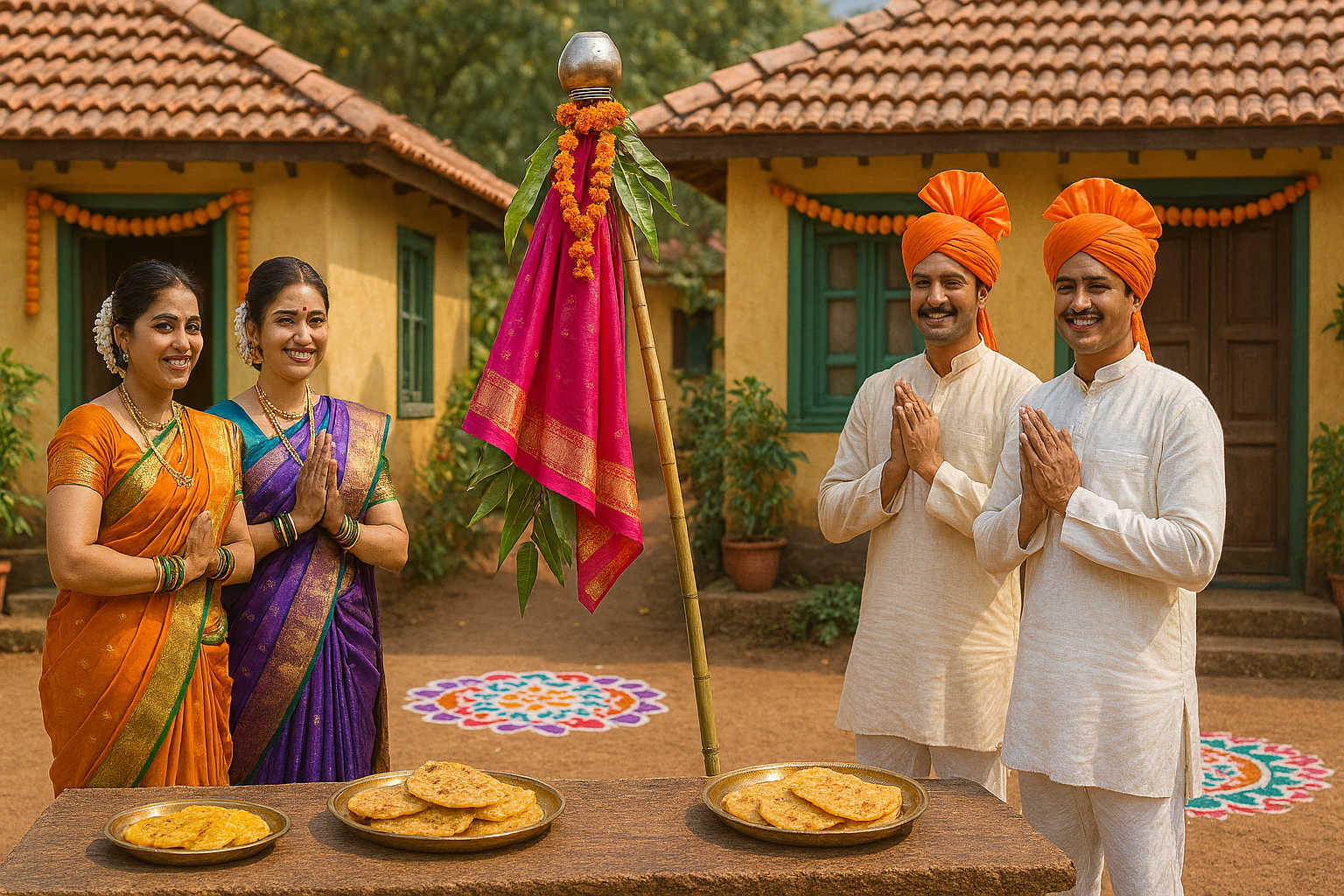
Rangoli Designs: Intricate and colorful rangoli patterns are drawn at the entrance, often with floral decorations.
-
New Clothes: Women often wear nauvari sarees (nine-yard sarees), and men wear kurta-pajamas with a pheta (traditional turban).
🏳️ The Gudi Hoisting Ritual
The centerpiece of Gudi Padwa celebrations is the Gudi — a bright silk saree or cloth (usually green, yellow, or saffron) tied to the top of a long bamboo stick. Atop it, a kalash (metal pot) is placed, decorated with mango leaves, neem leaves, and a garland of flowers.
The Gudi is usually positioned outside a window, balcony, or at the entrance, facing the street. It symbolizes victory, prosperity, and the driving away of negativity. People believe that seeing a Gudi first thing in the morning brings good luck for the entire year.
🌿 The Taste of Life – Neem and Jaggery
Like Ugadi Pachadi in the southern states, Maharashtrians consume a mixture of neem leaves and jaggery on Gudi Padwa morning.
-
Neem’s bitterness signifies life’s challenges.
-
Jaggery’s sweetness represents the joys and successes.
This ritual teaches acceptance of both sweet and bitter moments as part of the year ahead.
🙏 Prayers and Temple Visits
After the Gudi is hoisted, families perform puja to the Gudi and to deities such as Lord Vishnu or Lord Ganesha, seeking blessings for health, wealth, and peace. Many also visit local temples to offer prayers and receive the year’s Panchang (Hindu almanac), which predicts the fortunes of the year ahead.
🍛 The Festive Feast
No festival in Maharashtra is complete without its signature dishes, and Gudi Padwa is no exception. The day’s menu often includes:
-
Puran Poli – A sweet flatbread stuffed with jaggery and chana dal.
-
Shrikhand – Sweetened yogurt flavored with saffron and cardamom.
-
Batata Bhaji – A spiced potato preparation.
-
Aamras – Fresh mango pulp (especially when the season coincides).
The food is usually served on a banana leaf, emphasizing tradition and auspiciousness.
🎭 Cultural Celebrations
In villages and cities alike, Gudi Padwa is celebrated with processions, folk dances, and street performances. In some places, dhol-tasha pathaks (drum troupes) perform energetic beats, adding a festive atmosphere. Cultural programs include storytelling sessions, honoring farmers for their harvests, and showcasing local crafts.
🌍 Gudi Padwa Across the World
For the Maharashtrian diaspora in the United States, UK, Australia, and the Middle East, Gudi Padwa becomes a nostalgic and unifying celebration. Marathi associations organize Gudi hoisting, cultural performances, and traditional meals, keeping the essence of the festival alive across continents.
🌱 The Message of Gudi Padwa
Gudi Padwa teaches renewal, gratitude, and resilience. The Gudi itself is a reminder to raise one’s spirit high, regardless of past struggles. Just as neem and jaggery blend in harmony, life’s bittersweet experiences shape a stronger, more grateful soul.
As Maharashtra steps into the new year, the fluttering Gudi in every home becomes a shared symbol of hope, prosperity, and joy.