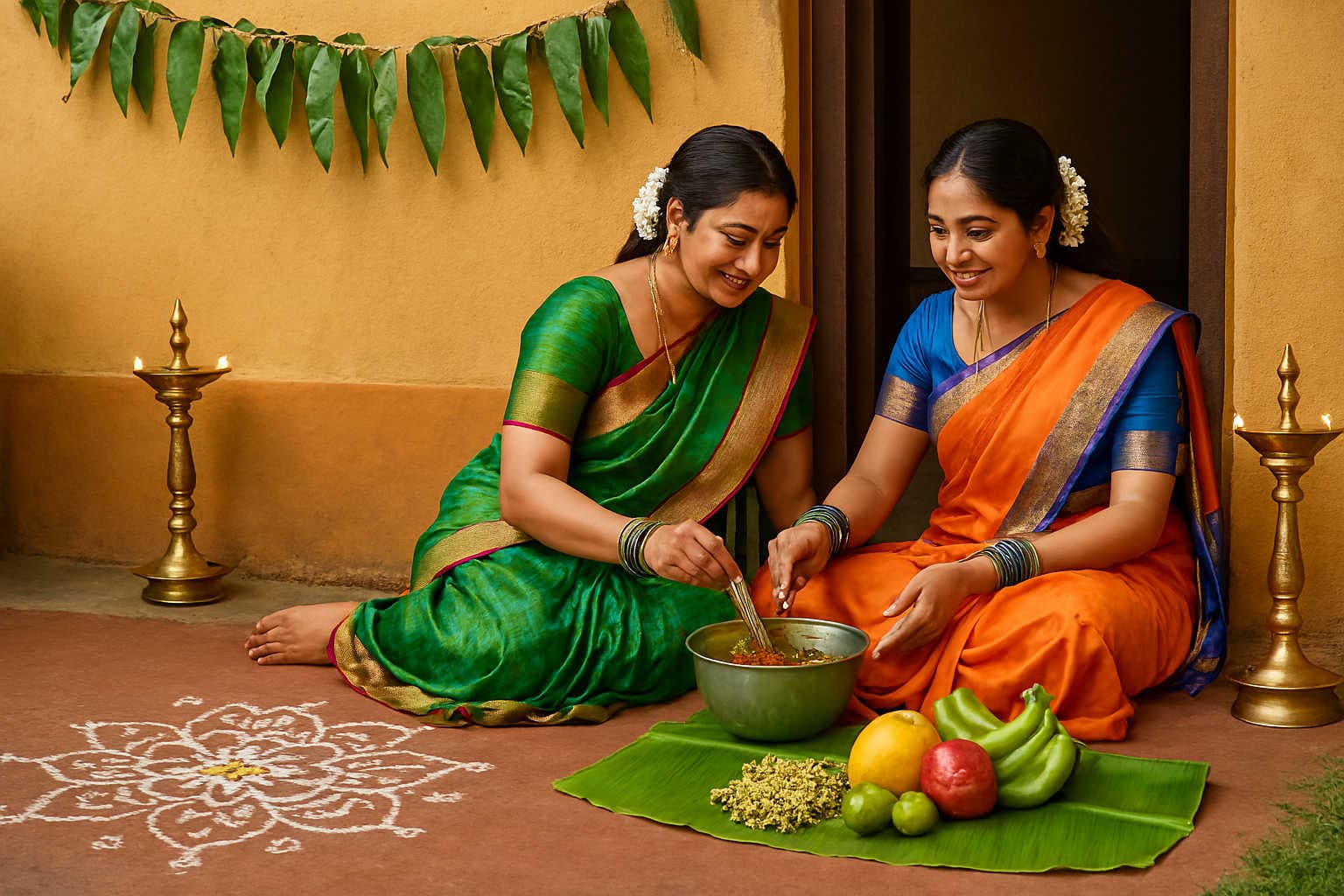
Ugadi – The Telugu and Kannada New Year
In the states of Andhra Pradesh, Telangana, and Karnataka, the arrival of spring is more than a seasonal shift — it is the beginning of a brand-new year according to the Hindu lunar calendar. This occasion, called Ugadi in Telugu and Yugadi in Kannada, is a festival that blends spirituality, tradition, and community celebration.
🌸 The Meaning and Timing of Ugadi
The word Ugadi comes from the Sanskrit terms Yuga (age or epoch) and Adi (beginning), literally meaning “the start of a new age.” It is celebrated on the first day of the Chaitra month in the Hindu lunisolar calendar, usually falling in March or April.
For Telugu and Kannada communities, Ugadi marks the start of Chaitra Shukla Pratipada, the bright half of the month, symbolizing new beginnings, prosperity, and growth.
📜 Historical and Mythological Significance
Ugadi’s origins are steeped in myth. One legend says that Lord Brahma began the creation of the universe on this day. Another connects Ugadi to the beginning of Kali Yuga, as mentioned in the Puranas.
It is also considered an auspicious day for starting new ventures, moving into a new home, or making important decisions, as it is believed that cosmic energies are highly favorable.
🪔 Preparations for the Festival
The joy of Ugadi begins days before the actual celebration. Homes are cleaned thoroughly, symbolizing the removal of past negativity and making space for fresh blessings.
-
Mango Leaf Toran (Thoranam): Strings of fresh mango leaves are hung above doorways, signifying fertility, prosperity, and auspiciousness.
-
Rangoli (Muggulu or Rangavalli): Colorful patterns made from rice flour and natural pigments welcome guests and divine energy.
-
New Clothes: Families buy and wear traditional attire — men often wear dhotis or kurtas, and women wear silk sarees in bright colors.
🌿 The Six Tastes of Ugadi Pachadi
One of Ugadi’s most unique traditions is the preparation of Ugadi Pachadi, a special dish combining six distinct flavors:
-
Neem flowers – Bitterness (representing sorrow)
-
Jaggery – Sweetness (representing happiness)
-
Raw mango – Tanginess (representing surprise or new challenges)
-
Tamarind juice – Sourness (representing hardship)
-
Green chili or pepper – Spiciness (representing anger or energy)
-
Salt – Saltiness (representing life’s essential balance)
This symbolic dish reminds everyone that life is a mixture of different experiences — joy, sorrow, surprise, fear, and excitement — and that all must be embraced with equal acceptance.
🙏 Rituals and Prayers
On the morning of Ugadi, devotees take an oil bath, which is considered purifying. They then wear fresh clothes and perform puja to deities, often including Lord Vishnu, Lord Shiva, and Goddess Lakshmi, seeking blessings for the year ahead.
Special panchanga shravanam (reading of the Hindu almanac) is done in temples and homes, predicting the coming year’s fortunes in agriculture, business, and family matters.
🍛 The Ugadi Feast
Apart from Ugadi Pachadi, the festival is incomplete without a lavish South Indian meal served on banana leaves. Common dishes include:
-
Pulihora (tamarind rice)
-
Bobbatlu / Obbattu (sweet flatbreads stuffed with jaggery and dal)
-
Payasam (sweet pudding)
-
Various vegetable curries and chutneys
Families come together for this feast, reinforcing bonds and expressing gratitude for abundance.
🎭 Cultural Programs
Ugadi is also a time for literary and cultural expression. Poets, writers, and artists mark the day with Kavi Sammelanam (poetry gatherings) and Panchanga Pathanam (astrological forecasts). Folk dances, music performances, and traditional games are enjoyed, especially in rural areas.
In Karnataka, Bevu-Bella (similar to Ugadi Pachadi) is distributed, carrying the same message of life’s mixed emotions.
🌍 Ugadi Beyond India
For the Telugu and Kannada diaspora in the United States, Australia, Singapore, and the Middle East, Ugadi is an important cultural anchor. Community associations organize grand gatherings, temple rituals, and traditional dinners to help younger generations stay connected to their roots.
🌱 The Message of Ugadi
Ugadi is more than just a New Year’s Day — it is a celebration of life’s cyclical nature, an acceptance of both joy and challenge, and a reminder to start anew with hope and gratitude.
As neem flowers mix with jaggery in the Ugadi Pachadi, they remind us that the coming year will be a tapestry of sweet and bitter moments, all essential to the richness of human experience.