Pongal – South India’s Harvest Festival
In the southern state of Tamil Nadu, January arrives with more than just the turning of the calendar — it brings Pongal, a four-day celebration of harvest, gratitude, and abundance. It is a festival where the rhythm of rural life meets the joy of family gatherings, and the air fills with the aroma of sweet, boiling rice.
Pongal, named after the Tamil word meaning “to overflow”, signifies prosperity spilling over into the lives of farmers and communities. This harvest festival aligns with Makar Sankranti, marking the Sun’s northward journey (Uttarayanam) and symbolizing longer days and agricultural abundance.
🌞 Origins and Significance
Pongal is deeply rooted in Tamil culture, with origins dating back over 1,000 years, mentioned in Sangam literature. It honors Surya Dev (the Sun God), whose energy makes crops grow, as well as nature, cattle, and the hardworking farmers.
The overflowing of milk and rice during the cooking of Pongal represents prosperity, fertility, and the hope for a plentiful harvest in the year ahead.
🪔 The Four Days of Pongal
While Pongal is often referred to as a single festival, it actually spans four distinct days, each with its own rituals and cultural significance.
1. Bhogi Pongal – The Cleansing Day
The festival begins with Bhogi Pongal, dedicated to Lord Indra, the God of Rain. Families clean their homes, discarding old belongings and burning them in a symbolic bonfire, known as Bhogi Mantalu, to drive away negativity. Colorful kolam (rangoli) patterns decorate entrances, made with rice flour to feed small creatures like ants and birds.
2. Thai Pongal – The Main Harvest Celebration
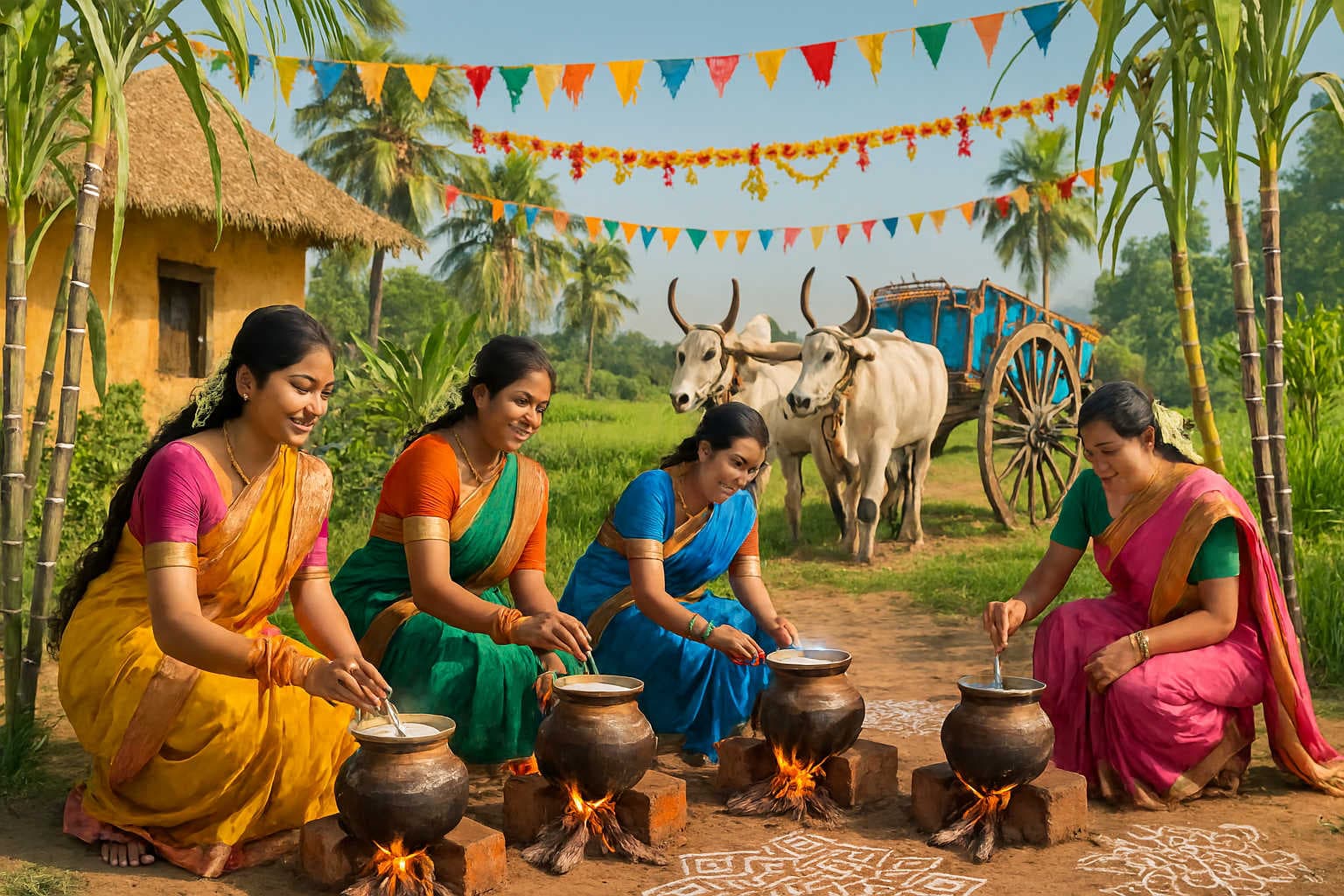
This is the centerpiece of the festival, dedicated to Surya Dev. Families gather to cook the special dish “Pongal” in clay pots, outdoors under the Sun. Freshly harvested rice, jaggery, and milk are boiled until they overflow — a moment greeted with shouts of “Pongalo Pongal!”
The offering is then placed before the Sun God, along with sugarcane, turmeric plants, and betel leaves. The act symbolizes gratitude for the year’s harvest and prayers for abundance in the future.
3. Mattu Pongal – Honoring the Cattle
Cattle are central to farming life, and Mattu Pongal is a day of honoring them. Farmers wash and decorate their cows and bulls with colorful beads, bells, and painted horns. They are fed special treats, including bananas and jaggery. In some regions, the day features the traditional sport of Jallikattu, a centuries-old bull-taming event that is both thrilling and controversial.
4. Kaanum Pongal – A Day of Socializing
The final day, Kaanum Pongal, is about community and togetherness. Families visit relatives, enjoy picnics, and relax after the harvest season’s hard work. Traditional dances, folk songs, and cultural performances take place in villages and towns.
🍚 The Dish That Defines the Festival
The sweet dish Pongal is both the centerpiece and the namesake of the festival. Made of freshly harvested rice, jaggery, milk, ghee, and cardamom, it is cooked in new earthen pots and stirred with a turmeric stick. The overflowing moment is considered highly auspicious.
Apart from sweet Pongal, a savory version called Ven Pongal is also popular, made with rice, moong dal, black pepper, and ghee.
🌿 Connection to Nature
Pongal is not just a celebration of human effort but also of the Earth, Sun, rain, and animals that make farming possible. It is a reminder of the cyclical relationship between humans and nature. Every element of the rituals — from turmeric plants tied to the pot to sugarcane offerings — reinforces this deep ecological respect.
🎭 Cultural Celebrations
During Pongal, Tamil Nadu bursts with cultural vibrancy. Streets are decorated, traditional music fills the air, and people wear new clothes. Folk dances like Kummi and Kolattam are performed, and marketplaces overflow with fresh produce, flowers, and festive items.
In urban areas, cultural associations organize Pongal-themed competitions — kolam drawing, traditional cooking, and bullock cart races — to keep traditions alive among younger generations.
📜 Legends Associated with Pongal
One legend tells of Lord Krishna lifting the Govardhan Hill to protect villagers from torrential rains sent by Indra, after which people began offering thanks to nature and the Sun. Another connects Pongal to the myth of Lord Shiva sending his bull, Nandi, to earth with instructions for humans to have an oil bath daily and eat once a month. Nandi got the message wrong, telling people to eat daily and bathe once a month — resulting in the need for more grain and cattle labor, hence the gratitude rituals for cattle.
🌍 Pongal Beyond Tamil Nadu
While Pongal is most closely associated with Tamil Nadu, similar harvest festivals are celebrated across India — Makar Sankranti in the north, Lohri in Punjab, Bihu in Assam, and Chhath Puja in Bihar. For the Tamil diaspora in Sri Lanka, Malaysia, Singapore, and beyond, Pongal is an important way to stay connected to cultural roots.
✨ The Message of Pongal
At its core, Pongal is a festival of gratitude — to nature, to the Sun, to the cattle, and to the farmers. It teaches contentment, the importance of community, and respect for the environment.
As the boiling milk in the clay pot spills over, it is more than just a cooking moment — it’s a promise that abundance will continue to flow, as long as humans live in harmony with the forces that sustain them.