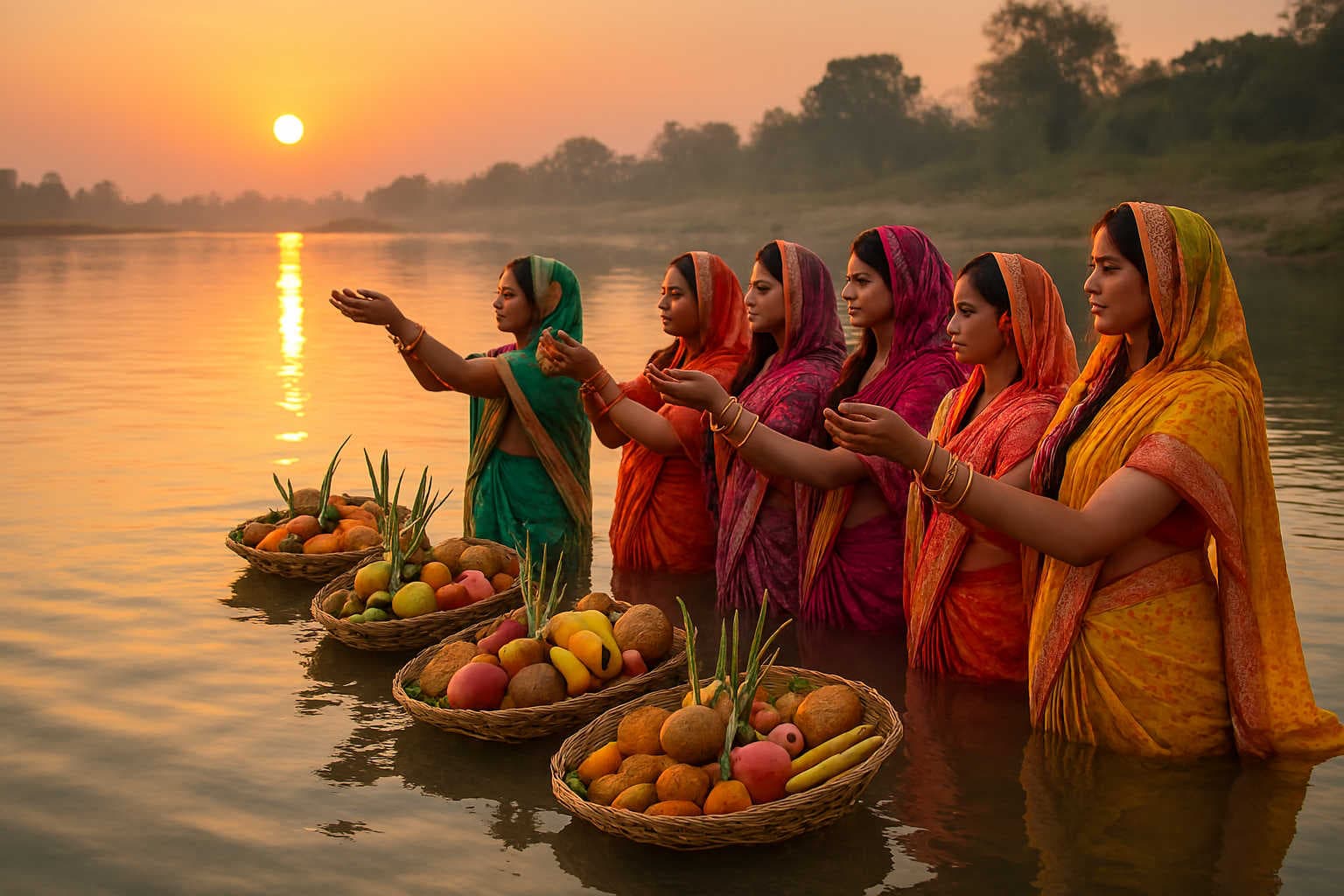
Chhath Puja – Devotion to Surya Dev and Nature
In the heartlands of India, particularly in Bihar, Jharkhand, Uttar Pradesh, and parts of Nepal, there is a festival that radiates both simplicity and deep spirituality — Chhath Puja. This ancient Hindu festival is dedicated to Surya Dev (the Sun God) and Chhathi Maiya (the Goddess who represents Usha, the first light of dawn). Celebrated over four days, it is a time of purity, discipline, and gratitude towards the life-sustaining forces of nature.
🌞 Origins and Spiritual Significance
The worship of the Sun God predates many other rituals in Indian tradition. The Vedas describe Surya as the source of life and energy, the dispeller of darkness, and the one who grants health and prosperity. Chhath Puja’s origins are deeply rooted in these ancient practices.
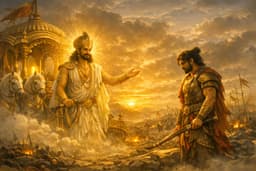
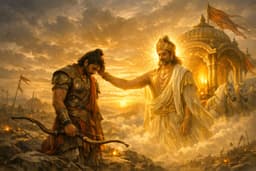
According to legend, Draupadi and the Pandavas performed Chhath rituals during their exile to seek blessings for their lost kingdom. Another popular belief associates the festival with Karna, the son of Surya Dev, who was a devout sun worshiper.
Chhathi Maiya, believed to be the sister of Surya Dev, is worshiped for the wellbeing of children and the prosperity of the family. The festival is seen as a way of thanking the Sun for sustaining life and ensuring balance in nature.
🪔 The Four Days of Chhath Puja
Chhath is not a festival of indulgence but of austerity, marked by strict rituals, fasting, and purity. The four days unfold as follows:
-
Nahay Khay (Day 1) – Devotees take a sacred bath in a river or pond, often the Ganga, and clean their homes. They prepare a satvik meal, usually rice, pumpkin curry, and gram dal, eaten only once in the day.
-
Lohanda and Kharna (Day 2) – This is a day of fasting without water from sunrise to sunset. In the evening, devotees break their fast with a special offering of kheer (made of jaggery or sugar), bananas, and chapati. After this, the 36-hour nirjala vrat (fast without water) begins.
-
Sandhya Arghya (Day 3) – Devotees stand in waist-deep water at sunset to offer arghya (water, milk, and flowers) to the setting sun, accompanied by folk songs and prayers. The riverbanks come alive with colorful sarees, bamboo baskets, sugarcane stalks, and thekua (a traditional sweet).
-
Usha Arghya (Day 4) – The final day begins before dawn. Devotees return to the riverbank to offer prayers to the rising sun. This symbolizes the cycle of life, honoring both sunset and sunrise. The fast is then broken with prasad distributed among family and community.
🌿 A Festival of Nature Worship
At its core, Chhath Puja is about harmonious coexistence with nature. The rituals are performed in natural settings — rivers, lakes, ponds — reinforcing the bond between humans and the environment. Every offering used is eco-friendly: bamboo baskets, seasonal fruits, sugarcane, coconuts, and earthen lamps.
The timing of the festival, just after the harvest season, reflects gratitude for agricultural abundance and the natural forces that make it possible.
🎶 Cultural Expressions
Chhath Puja is as much a cultural celebration as it is a spiritual one. Traditional folk songs fill the air, often narrating tales of devotion, sacrifice, and gratitude. Women, dressed in vibrant sarees, sing as they prepare offerings, and families gather in large numbers along the riverbanks.
Thekua, the signature sweet of Chhath, is prepared in every household — made of wheat flour, jaggery, and ghee, deep-fried until crisp. This prasad holds a special place in the hearts of devotees.
🧘 Discipline and Devotion
One of the most remarkable aspects of Chhath Puja is the physical and mental discipline it demands. The 36-hour waterless fast requires immense willpower and faith. Devotees observe cleanliness, wear unstitched or freshly washed clothes, and refrain from negative thoughts.
It is believed that performing Chhath with complete devotion brings blessings for health, prosperity, and the fulfillment of wishes.
🌍 Chhath Beyond Bihar
While Chhath is traditionally associated with Bihar and Uttar Pradesh, migration has carried the festival to different parts of India and the world. Today, you can find Chhath celebrations in Delhi, Mumbai, Kolkata, Mauritius, Fiji, and the United States, wherever the Bhojpuri-speaking community has settled.
✨ Symbolism of the Rituals
Every part of Chhath Puja is symbolic:
-
Standing in water represents humility and surrender to the cosmic forces.
-
Offering arghya to both sunrise and sunset reflects the acceptance of life’s dualities — joy and sorrow, beginnings and endings.
-
Eco-friendly offerings are a reminder to live in balance with the environment.
🕊️ The Spirit of Gratitude
In a modern world driven by speed and consumption, Chhath Puja offers a pause — a moment to reconnect with the natural world, to express gratitude, and to practice self-discipline. It is not a festival of excess but of restraint, humility, and reverence for life’s simple yet profound gifts.
As the first rays of the sun touch the water and the faces of the devotees, there is a shared sense of hope — that just as the sun rises unfailingly every day, so too will faith and gratitude continue to illuminate human hearts.