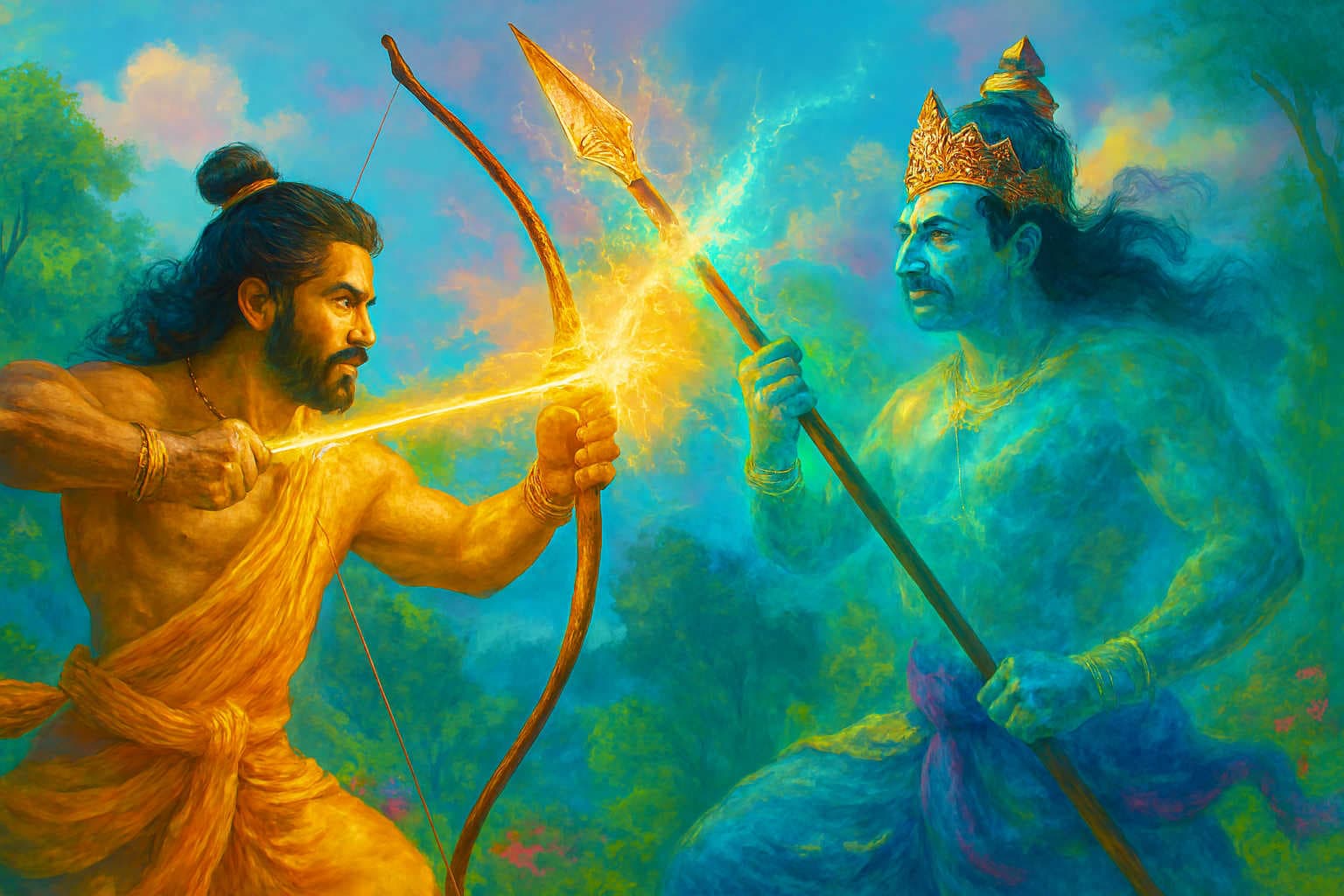
Indrajit and Lakshman’s Battle
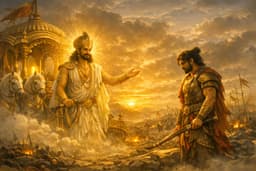
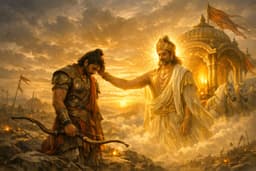
The battle between Indrajit (also known as Meghnad) and Lakshman, Lord Rama’s devoted younger brother, is one of the most intense and symbolic duels in the epic Ramayana. It wasn’t merely a confrontation of warriors—it was a clash between ego and humility, black magic and divine virtue, and ultimately, between adharma and dharma.
This battle had far-reaching consequences. Indrajit was Ravana’s most powerful son, a warrior trained in mystic warfare, while Lakshman was the embodiment of duty, sacrifice, and righteous strength. Their confrontation decided the momentum of the War of Lanka and symbolized the inner war between light and shadow.
⚔️ Who Was Indrajit?
Indrajit, originally named Meghnad, earned his title after defeating Indra, the king of the gods. He was a master of illusion, astras (divine weapons), and black magic. His powers included becoming invisible during battle, flying through the sky, and invoking dark celestial forces. Trained by the demon guru Shukracharya and favored by the gods after severe penance, he was Ravana’s greatest hope.
Indrajit was not only powerful, but also clever and cunning, capable of manipulating the battlefield through fear and surprise.
🧭 Lakshman – Rama’s Pillar of Strength
Lakshman was the devoted brother who followed Rama into exile without hesitation. He was fiery, disciplined, and intensely loyal. In war, he was a fearless archer and an embodiment of righteous duty. But what set him apart was his moral clarity—he fought not for vengeance or glory, but for the protection of dharma and his brother’s cause.
His calmness in front of chaos, and his resolve to confront Indrajit—the most formidable warrior in Ravana’s army—marked him as one of the true heroes of the Ramayana.
🌩️ The First Encounter – Defeat Without Death
When Indrajit first entered the battlefield, his power stunned the Vanar Sena. Using the Nagapasha, a weapon of serpents, he bound Rama and Lakshman. It was only through the intervention of Garuda, the mount of Vishnu, that the brothers were freed.
This encounter proved Indrajit’s ability to challenge even divine incarnations. But it also signaled that he would not be easily defeated—he had to be outwitted, not just overpowered.
🔥 The Decisive Battle Begins
Knowing that Indrajit could not be defeated in open combat unless he was first stripped of his magical powers, Vibhishan (Ravana’s righteous brother who had joined Rama) revealed Indrajit’s secret ritual. Indrajit was performing a yagna (fire ritual) in a secluded cave to gain invincibility.
Lakshman, guided by Vibhishan, interrupted the ritual at the final moment—striking when Indrajit was most vulnerable, before he could complete his mantras.
This bold move enraged Indrajit. The duel that followed would become one of the greatest and most brutal one-on-one battles in all of Hindu literature.
🗡️ The Epic Duel – Weapons, Courage, and Willpower
The fight between Lakshman and Indrajit was long and intense. They used celestial weapons granted by sages and gods. The sky turned dark, the earth trembled, and the air shimmered with divine energy. Indrajit tried to vanish, but Lakshman countered with weapons that revealed hidden foes. Indrajit summoned illusion after illusion, but Lakshman stayed focused, his arrows guided by truth and purpose.
The war of words was as sharp as the clash of weapons. Indrajit taunted Lakshman, calling him weak. Lakshman replied not with pride, but with righteous anger, showing the strength of humility and truth.
🏹 The Final Blow
After hours of fierce fighting, both warriors were injured, fatigued, and pushed to their limits. But while Indrajit relied on mystic power, Lakshman’s source of strength was his faith in Rama and the dharma he upheld.
Finally, Lakshman invoked the Indrastra, a powerful divine weapon, and released it with intense focus. It struck Indrajit fatally, piercing through the illusions and armor of pride. The prince of Lanka fell.
🕊️ The Fall of Hope for Ravana
Indrajit’s death was not just a personal loss for Ravana—it marked the collapse of his confidence. Ravana had hoped that his son’s strength and dark knowledge would save Lanka. But dharma had prevailed.
Vibhishan mourned the death of his nephew, acknowledging his valor, but reaffirmed the justice of the act. Even Indrajit, in his final moments, recognized Lakshman’s honor and righteousness.
🌱 Symbolism of the Battle
-
Indrajit symbolizes illusion, ego, and power misused.
-
Lakshman represents duty, discipline, and clarity.
-
The battle teaches that illusion and pride cannot stand against truth and service.
-
Even the most powerful enemy falls before the righteous mind guided by purpose.
✨ Lessons from the Duel
-
True strength comes from humility, not pride.
-
Even powerful magic cannot withstand unwavering dharma.
-
Clarity of purpose defeats confusion and illusion.
-
Victory requires both courage and strategy.
-
The mightiest fall when their cause is unjust.
🪔 Conclusion
The battle between Lakshman and Indrajit remains one of the most heroic and moral turning points in the Ramayana. It’s not only a tale of martial prowess but a profound reflection on what makes a warrior truly great—not just power, but purpose.
In Lakshman, we see the ideal of quiet strength, the courage to fight darkness without hatred, and the resilience to stand for the good—no matter the cost.
And in Indrajit’s fall, we are reminded that might divorced from virtue is ultimately hollow.
Let their battle continue to inspire us: to seek light, to stand for what is right, and to fight our own inner battles with courage and clarity.