The Bridge to Lanka – Ram Setu
One of the most iconic and awe-inspiring episodes in the Ramayana is the construction of Ram Setu, also known as the Bridge to Lanka. This massive stone bridge, built across the ocean by Lord Rama’s army of vanaras (monkey warriors), is more than just an incredible feat of ancient engineering—it is a symbol of faith, determination, and divine grace.
Ram Setu connects the land of Bharat (India) to the island of Lanka (modern-day Sri Lanka), and stands as a testament to the power of unity, devotion, and righteousness. The story of its creation continues to inspire millions, evoking deep cultural and spiritual emotions.
🌊 The Challenge Before Rama
After Ravana, the demon king of Lanka, abducted Sita, Rama vowed to rescue her. He was accompanied by his brother Lakshman, the mighty Hanuman, and a massive army of vanaras led by Sugriva and Nala.
When the search for Sita led them to the southern tip of Bharat, Rama faced a formidable obstacle—the vast ocean that separated them from Lanka. With no ships or natural paths, the only way to reach the island was to cross the water.
Here, the epic takes a divine turn.
🙏 Rama’s Appeal to the Ocean
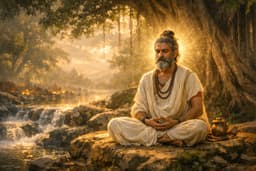
True to his dharmic nature, Lord Rama did not resort to violence or ego. Instead, he sat in meditation on the seashore, praying to the Samudra Dev (God of the Ocean) to give them passage.
He fasted and waited patiently, showing respect and humility toward nature. But when the ocean did not respond, Rama finally lifted his bow, preparing to dry the ocean with a fiery arrow.
Terrified, Samudra Dev appeared and begged forgiveness. He advised Rama to build a bridge and told him that Nala, a vanara with divine architectural knowledge, could lead the project.
🐒 The Construction of Ram Setu
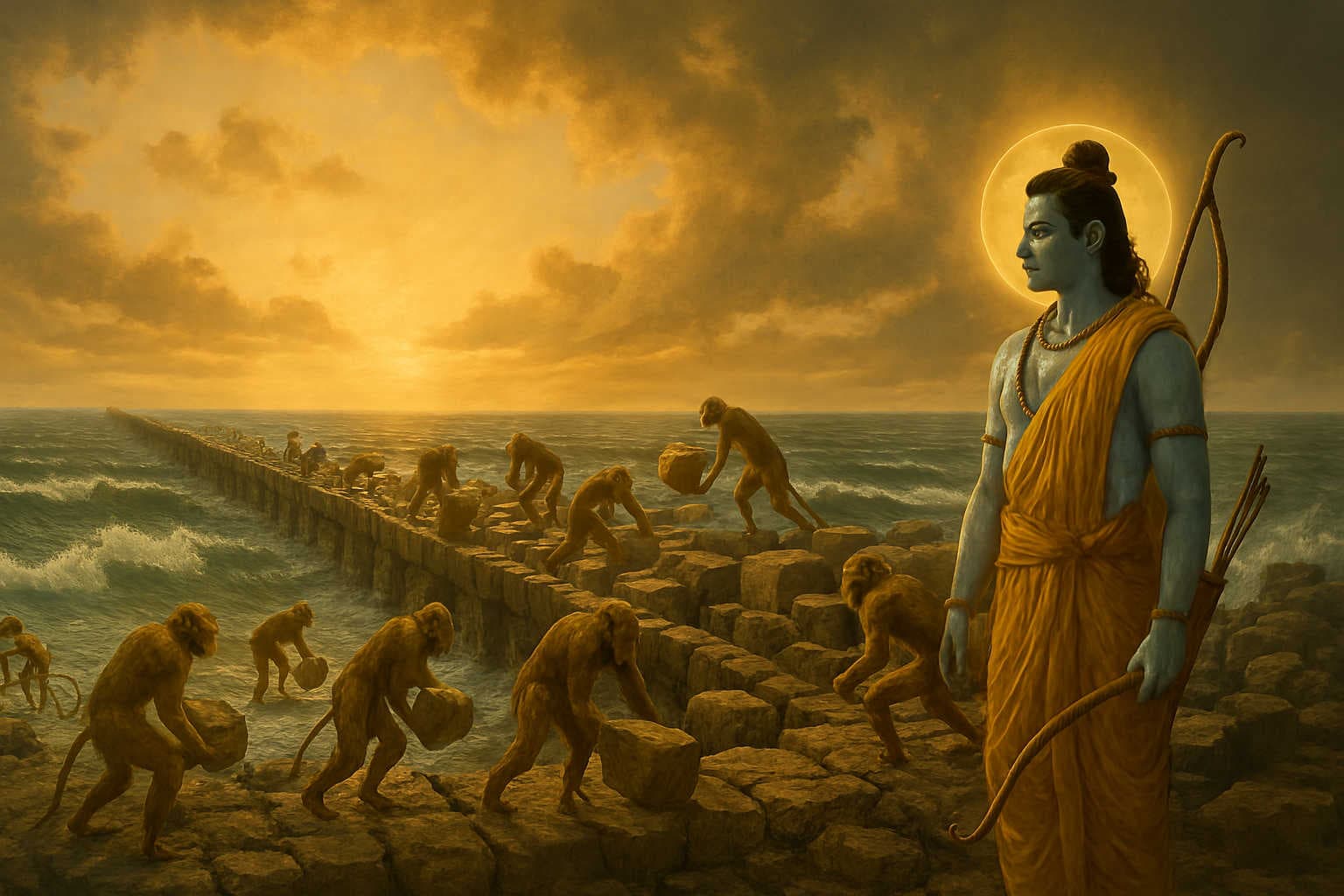
With Samudra Dev’s blessing and Nala’s guidance, the vanaras began the monumental task. Huge stones and boulders were brought from forests and hills, engraved with the name “Rama”, and thrown into the sea.
Miraculously, these stones floated on water—a divine phenomenon fueled by devotion and the sacred name of Rama.
Day and night, thousands of vanaras worked tirelessly. Hanuman, with his immense strength, carried mountains and rocks, placing them where needed. The entire army joined hands in unity, driven by their love for Rama and the mission to rescue Sita.
In just five days, the incredible bridge spanned the ocean—stretching nearly 30 kilometers, connecting Rameswaram to Lanka.
✨ Symbolism of Ram Setu
Ram Setu is not merely a physical bridge; it is a metaphor for the spiritual path, built over the turbulent ocean of life:
-
Faith overcomes the impossible: Stones floating on water may defy physics, but they represent how unwavering belief can carry us across any obstacle.
-
Unity in devotion: The bridge was not built by divine power alone—it was the collective effort of an entire army working with purpose.
-
Name of Rama as power: The sacred name “Rama” written on the stones made them float, signifying the power of devotion and chanting.
-
Nature and divinity in harmony: Rama's respectful negotiation with the ocean teaches that balance with nature precedes conquest over it.
📜 Historical and Scientific Debates
Interestingly, NASA satellite images have shown a chain of limestone shoals between India and Sri Lanka, resembling a submerged bridge. While science calls it Adam’s Bridge, believers identify it as Ram Setu.
This intersection of myth, history, and geology continues to fascinate scholars, spiritual seekers, and explorers. Whether seen as symbolic truth or sacred history, Ram Setu remains a powerful reminder of the depth of Indian heritage.
🛕 Ram Setu Today
The site near Rameswaram in Tamil Nadu is considered sacred. Devotees visit to pay homage to the place where Rama prayed and built the bridge. The nearby Ramanathaswamy Temple is one of the holiest shrines dedicated to Lord Shiva, established by Rama himself as an act of gratitude.
The Setu Karai (bridge shore) is also a place of deep pilgrimage, where one can reflect on Rama’s humility and vision, Hanuman’s strength, and the devotion of countless vanaras.
🪔 Lessons from the Ram Setu Episode
The story of Ram Setu offers several timeless insights:
-
Leadership through dharma: Rama didn’t act impulsively. He respected natural laws and led with patience.
-
Collective effort is divine: From mighty Hanuman to humble vanaras, every being played a role. No act was too small.
-
Faith can move oceans: Even in the most difficult situations, trust in the divine path can create miracles.
🌺 Conclusion
Ram Setu, the bridge to Lanka, is not just an architectural marvel from myth—it is a bridge of belief, sacrifice, and courage. It connects devotion with duty, determination with divinity.
In our lives, too, we face oceans—of fear, doubt, or hardship. But like Rama and his army, with faith, unity, and purpose, we can build our own path to victory.
Let Ram Setu be a reminder that no distance is too great when walked with dharma and devotion.