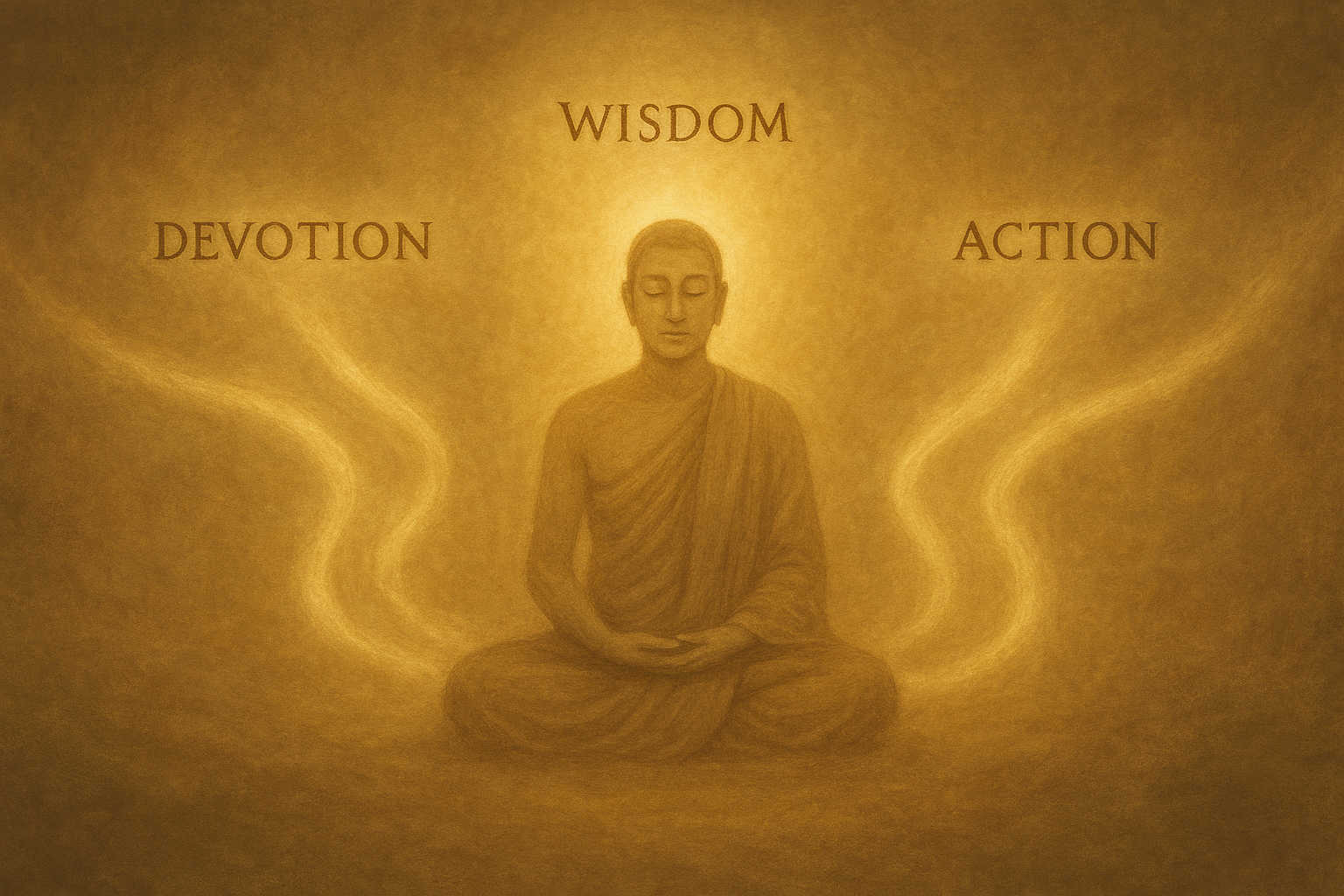
Mind Control Through Bhakti, Jnana & Karma
In Sanatan Dharma, the three major paths—Bhakti Yoga, Jnana Yoga, and Karma Yoga—offer complete and complementary approaches to purify, stabilize, and transform the mind. These are not mere philosophies, but powerful disciplines that refine emotions, intellect, and actions, guiding the seeker toward inner freedom.
The Need for Mind Control
The mind is the instrument through which we experience life. When uncontrolled, it becomes the source of anxiety, anger, confusion, and suffering. A wandering mind prevents concentration, productivity, and spiritual growth.
But when the mind is harnessed, it becomes a gateway to peace, clarity, and Self-realization.
Sanatan Dharma teaches that the root cause of mental turbulence is identification—believing the thoughts, emotions, and desires to be “me.”
Bhakti, Jnana, and Karma Yoga offer three unique ways to loosen this identification.
1. Bhakti Yoga – Controlling the Mind Through Devotion
Bhakti is the path of love, surrender, and emotional purification. It works through the heart rather than the intellect. For many, it is the gentlest and easiest way to tame the mind.
How Bhakti Controls the Mind
Bhakti transforms the mind by redirecting emotions toward the divine. Every human emotion—love, longing, fear, trust, joy—when offered to God, becomes purifying instead of binding.
a) Love Replaces Restlessness
The mind naturally runs toward what it loves. When one cultivates love for the Divine, the mind automatically turns inward and becomes steady.
b) Surrender Removes Burden
Worry and anxiety arise from trying to control outcomes. Bhakti teaches surrender:
“Let Thy will be done.”
This relieves the mind of pressure, bringing deep inner peace.
c) Devotional Practices Structure the Mind
Chanting, bhajans, mantra japa, and temple rituals anchor the mind, giving it rhythm and stability. These practices dissolve negative emotions and cultivate humility, gratitude, and compassion.
The Highest Bhakti
In its peak stage, the devotee experiences:
-
loss of ego
-
constant remembrance of God
-
spontaneous love for all beings
-
a mind filled with bliss rather than agitation
Bhakti melts the heart and, in melting, dissolves the ego—the root of mind’s chaos.
2. Jnana Yoga – Controlling the Mind Through Knowledge
Jnana Yoga is the path of inquiry, discrimination, and wisdom. It uses the power of the intellect to understand reality and break the illusions that bind the mind.
How Jnana Controls the Mind
Jnana Yoga trains the seeker to observe the mind rather than identify with it.
a) Viveka (Discernment)
Jnana teaches the constant practice of distinguishing:
“What is real and eternal vs. what is temporary and changing?”
When the seeker sees that thoughts and emotions are impermanent, they lose their grip.
b) Neti-Neti (Not This, Not That)
This Upanishadic method cuts away attachment by recognizing:
“I am not the body, not the mind, not the senses.”
By dis-identifying from the mind, the seeker becomes free from its turbulence.
c) Atma Vichara (Self-Enquiry)
The mind is traced back to its source by asking:
“Who am I?”
In this inquiry, thoughts fall silent. The ego dissolves like mist in sunlight, and the natural state of pure awareness shines forth.
d) Understanding the Nature of the Mind
Jnana Yogis analyze the mind: how it rises, how it creates suffering, and how it can be transcended.
Knowledge becomes the sword that cuts through ignorance.
The Mind of a Jnani
A person established in Jnana experiences:
-
detachment from emotions
-
clarity of thought
-
freedom from fear
-
a deep stillness that no external event can shake
Jnana Yoga turns the mind into a clear mirror that reflects truth instead of distortions.
3. Karma Yoga – Controlling the Mind Through Action
Karma Yoga is the art of performing action without attachment. It purifies the mind through selfless service and disciplined work.
How Karma Yoga Controls the Mind
Karma Yoga removes the mental agitation caused by desire, expectation, and ego-driven action.
a) Freedom From Expectation
The Bhagavad Gita teaches:
“You have the right to action, but not to its fruits.”
When action is done for its own sake—not for reward or recognition—the mind becomes light and peaceful.
b) Ego Dissolution Through Service
Selfless service reduces the sense of “I” and “mine,” the primary causes of mental disturbance.
Acts of kindness expand the heart and calm the mind.
c) Rhythm and Discipline
Daily duties done with mindfulness create stability.
When action becomes a meditation, the mind gains focus and purpose.
d) Work Without Stress
Most stress comes from results-oriented thinking.
When one learns to act without attachment, work becomes effortless and enjoyable.
The Mind of a Karma Yogi
Such a person displays:
-
emotional resilience
-
mental steadiness
-
freedom from anxiety
-
inner joy even in busy life
Karma Yoga transforms ordinary life into spiritual practice.
Harmony of the Three Paths
Bhakti, Jnana, and Karma are not contradictory; they complement and strengthen each other.
-
Bhakti softens the heart so Jnana can enter.
-
Jnana clarifies the mind so Bhakti becomes pure and selfless.
-
Karma purifies the ego so both love and wisdom flourish.
A balanced approach integrates emotion, intellect, and action—leading to holistic mind control.
The Final Goal – A Still, Pure Mind
Mind control is not suppression; it is transformation.
The Gita teaches that a purified mind becomes the friend of the seeker.
Such a mind:
-
stays focused
-
remains peaceful
-
reflects inner divinity
-
becomes a channel for compassion
-
leads effortlessly to meditation and Self-realization
Through Bhakti, Jnana, and Karma, the mind becomes steady like a lamp in a windless place—shining with the light of the Self.