%20in%20Spiritual%20Life.png&w=3840&q=75)
The Role of Viveka (Discernment) in Spiritual Life
What Is Viveka?
In Vedanta, Viveka means the discriminative intelligence that can separate truth from illusion, the eternal from the temporary, the Self from the not-Self. It is the intellectual and intuitive capacity to see things as they truly are, not as they appear to be.
Adi Shankaracharya emphasized that the first qualification of an aspirant is Nitya-Anitya Viveka—the discernment between the permanent and the impermanent.
Viveka helps the seeker understand:
-
What is lasting vs. what is momentary
-
What is essential vs. what is superficial
-
What belongs to the Self vs. what belongs to the ego
-
What elevates vs. what entangles
This inner discrimination becomes the compass of spiritual life.
Why Viveka Is Important in Spirituality
Without discernment, the mind gets deceived by desires, fears, and illusions (Maya). One may pursue temporary satisfactions, mistaking them for permanent fulfillment. Viveka prevents this confusion.
Some key roles it plays:
1. Helps Recognize the Self
Only through discrimination can one understand that the body, mind, and intellect are ever-changing, but the Atman is eternal.
2. Protects From Wrong Paths
Viveka prevents seekers from falling into superstition, blind belief, or practices that distract them from the real purpose of spiritual growth.
3. Leads to Emotional Balance
When one discerns that emotions are temporary waves of the mind, they stop being overwhelmed by them.
4. Gives Clarity in Decisions
Clarity arises when the mind is no longer clouded by cravings or fears. Viveka helps choose actions aligned with Dharma.
5. Weakens Ego
Discernment reveals the ego’s tricks—its need for control, identity, and superiority—allowing the seeker to rise above it.
Viveka in the Upanishads
The Upanishads repeatedly declare that true knowledge arises through discrimination.
-
The Katha Upanishad speaks of Shreyas (the good) vs. Preyas (the pleasant). The wise choose the good; the ignorant choose the pleasant. Viveka makes this choice clear.
-
The Mundaka Upanishad distinguishes higher knowledge (Para Vidya)—knowledge of the Self—from lower knowledge—rituals and worldly learning.
-
The Brihadaranyaka Upanishad says the Self cannot be known through intellect alone, but through a purified mind guided by discrimination.
Thus, viveka is not merely logical thinking; it is deep inner insight.
Viveka in the Bhagavad Gita
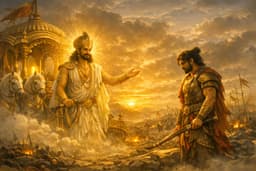
The Gita emphasizes the importance of discriminative intelligence (Buddhi) at every step.
-
Krishna says that a person with steady intellect can distinguish between what binds and what liberates.
-
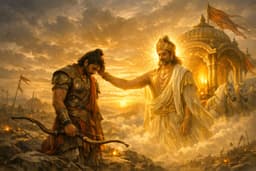
Arjuna is taught to use Buddhi Yoga—the yoga of intelligence—to make dharmic decisions during confusion.
-
The qualities of a Sthita Prajna (stable-wise person) arise only when viveka is strong.
-
Krishna warns that desires cloud wisdom, leading to loss of discrimination and ultimately to spiritual downfall.
Thus, viveka is essential for right action and inner clarity.
How Viveka Helps Face Challenges
In everyday life, discernment protects us from:
-
Emotional reactions
-
Impulsive decisions
-
Attachment-driven suffering
-
Negative influences
-
Overthinking and confusion
With viveka, the seeker remains centered, even in difficulties. One learns to pause, reflect, and respond consciously rather than reacting blindly.
Types of Viveka
1. Nitya–Anitya Viveka
Discernment between the eternal (Atman) and transient (body, mind, world).
2. Dharma–Adharma Viveka
Ability to distinguish right from wrong, aligned with higher values.
3. Shreya–Preya Viveka
Choosing long-term good over short-term pleasure.
4. Sat–Asat Viveka
Distinguishing truth from falsehood, reality from illusion.
A seeker who nurtures all four becomes a master of inner clarity.
How to Cultivate Viveka
1. Study of Scriptures (Svadhyaya)
Regular study of the Gita, Upanishads, Vivekachudamani, and yogic texts sharpens intellect and gives true perspective.
2. Satsang (Company of the Wise)
Being around spiritually mature people naturally strengthens discrimination.
3. Meditation
Meditation clears mental fog and sharpens awareness, allowing one to see things as they are.
4. Self-Inquiry (Atma Vichara)
Ask questions like:
“Who am I?”
“What is temporary?”
“What is truly fulfilling?”
“What leads to freedom?”
This inquiry strengthens inner intelligence.
5. Observe the Results of Actions
Actions driven by ego bring agitation.
Actions rooted in clarity bring peace.
Seeing this difference is itself viveka.
6. Mindfulness in Daily Life
Awareness of thoughts, emotions, and impulses reveals what is true and what is illusion.
Obstacles to Viveka
Several forces weaken discernment:
-
Desires – cloud judgment
-
Fear – distorts clarity
-
Ego – resists truth
-
Attachment – blinds insight
-
Anger – destroys inner balance
-
Delusion (Moha) – creates false identities
Overcoming these gradually strengthens viveka.
Viveka and Self-Realization
Ultimately, discernment leads the seeker to one profound realization:
Only the Self is real; everything else is temporary appearance.
When this knowledge becomes steady:
-
Fear ends
-
Ego dissolves
-
Suffering reduces
-
Wisdom becomes natural
-
Liberation (Moksha) becomes attainable
Viveka is the first step on the path—and the final clarity achieved at its end.
Conclusion
Viveka is not just a philosophical concept; it is a daily practice. It is the quiet voice of wisdom guiding the seeker toward truth, peace, and liberation. When cultivated, it becomes the light that reveals the Self amidst the darkness of ignorance.
A life guided by discernment is a life aligned with Dharma, clarity, and spiritual awakening.