Taming the Ego – Teachings from Gita and Upanishads
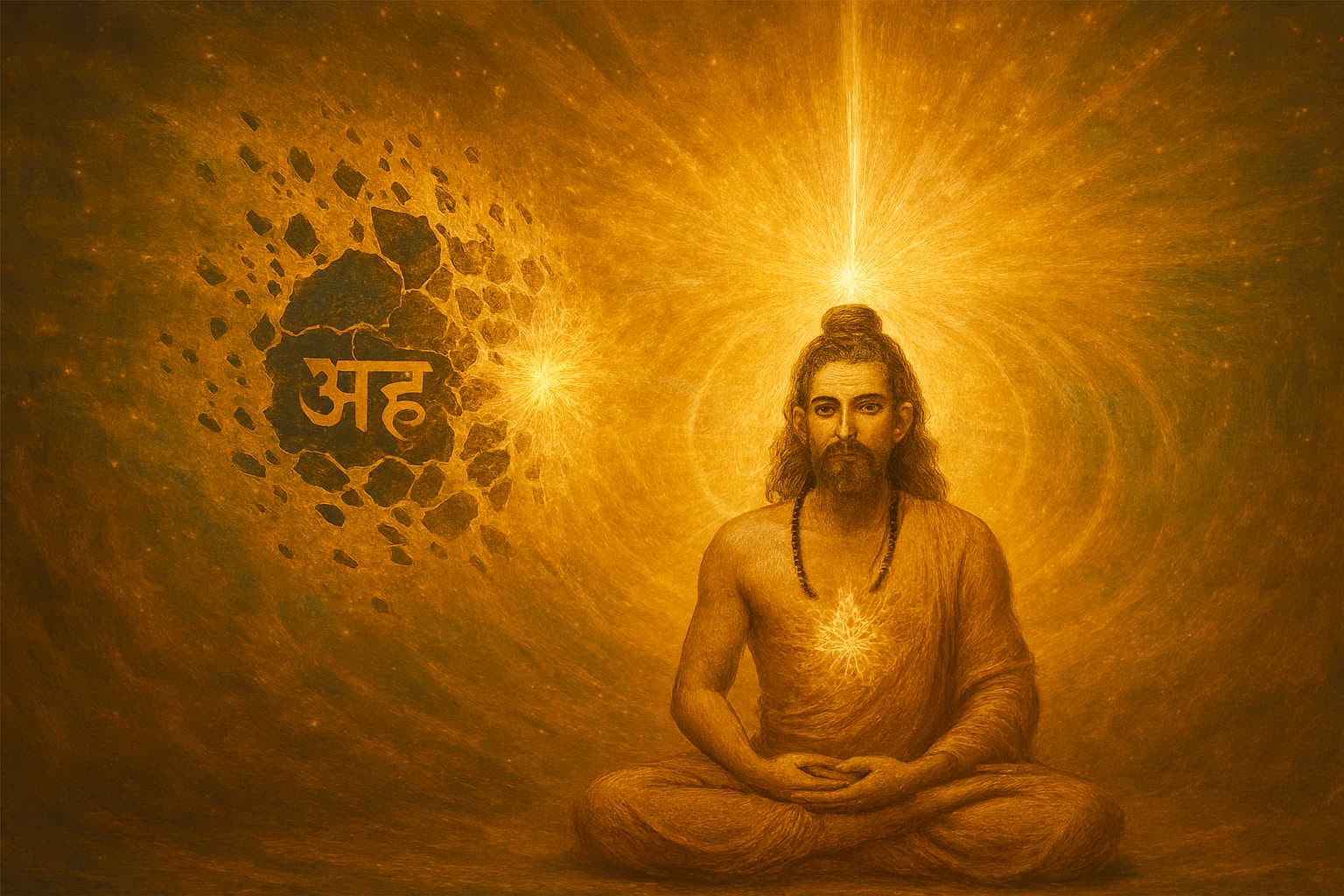
The ego, or Ahamkara, is one of the greatest obstacles on the spiritual path according to Sanatan Dharma. It is the false identity we construct from our body, possessions, achievements, and beliefs. While the ego serves a functional purpose—allowing us to navigate the world—it becomes a barrier when it dominates our thoughts and actions. The Bhagavad Gita and the Upanishads offer deep insights into how to understand, transcend, and ultimately tame the ego so that one may live in harmony with the Self (Atman).
The ego is not evil; it is simply misinformed. Its fundamental flaw is misunderstanding the temporary as permanent and the limited as infinite. Taming the ego therefore means correcting perception, not destroying oneself.
Ego in the Bhagavad Gita
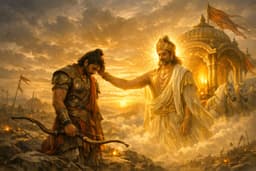
The Gita repeatedly addresses the struggle between the ego-self (lower self) and the higher Self. Krishna teaches Arjuna that ego distorts judgment, fuels attachment, and clouds dharma. Key teachings include:
1. Perform actions without ego-doership (Karma Yoga).
Krishna says that the wise act without attachment, offering all their actions to the Divine. Ego makes us believe “I am the doer,” while the Gita emphasizes that nature (Prakriti) performs all actions through the gunas. Freedom comes from relinquishing this false ownership.
2. Ego is tied to desire and anger.
In Chapter 3, Krishna explains the cycle: desire → anger → confusion → fall of wisdom. The ego creates desires that, when obstructed, turn into anger. By regulating the ego’s impulses, one maintains inner clarity.
3. Self-knowledge dissolves ego.
The Gita teaches that the true Self is eternal, untouched, and beyond the body. When one realizes the Atman, the ego naturally loses its dominance. Krishna asserts that the wise person sees the same Self in all beings—this vision destroys all ego-based superiority or judgment.
4. Surrender to the Divine (Ishvara Pranidhana).
Krishna’s final teaching is that surrendering the ego to the Supreme leads to liberation. Surrender is not weakness but freedom from the burden of constant self-centeredness.
Ego in the Upanishads
The Upanishads focus on the inner journey toward realizing the Self, and ego is identified as the primary obstacle.
1. The ego is a sheath, not the Self.
According to the Taittiriya Upanishad, the ego resides within the Manomaya and Vijnanamaya Kosha—layers that are not the ultimate reality. Recognizing that “I am not the body, not the mind, not the ego” is the first step toward transcendence.
2. “Neti Neti” – Not this, not that.
This mahavakya helps the seeker peel away all false identities. When one says Neti Neti, they reject all ego-based definitions of the Self. What remains is pure consciousness.
3. The Self is one; ego creates duality.
The Upanishads declare that Atman and Brahman are one. Ego creates the illusion of separateness. When this veil lifts, one perceives unity, compassion, and interconnectedness.
4. Witness consciousness (Sakshi Bhava).
Upanishadic teachings advise observing thoughts and emotions as a witness. The ego dissolves when one stops identifying with mental fluctuations.
Why Is Ego Difficult to Tame?
The ego gains strength from comparison, praise, possessions, and social identity. In modern life—driven by achievement and recognition—it becomes deeply entrenched. It convinces us that letting go means losing individuality or success. But spirituality teaches the opposite: taming the ego leads to clarity, peace, and authentic strength.
12 Practical Ways to Tame the Ego (Based on Gita & Upanishads)
1. Practice Karma Yoga (Selfless Action).
Offer your work to a higher purpose. Reduce “What do I gain?” and increase “How can I serve?”
2. Cultivate humility (Amanitvam).
Krishna lists humility as the first quality of true knowledge in the Gita.
3. Adopt witness consciousness.
Observe the mind without reacting. This breaks identification.
4. Let go of the need to be right.
The ego thrives on superiority and validation.
5. Embrace gratitude.
Gratitude shifts attention from what “I” deserve to what is received through grace.
6. Accept criticism gracefully.
The ego is wounded easily; a strong mind learns from feedback.
7. Meditate regularly.
Meditation weakens ego-driven thought streams and strengthens awareness.
8. Practice “Neti Neti.”
Detach from labels and titles: I am not this role; I am consciousness.
9. Reduce attachment to outcomes.
Focus on effort, not results—core Gita teaching.
10. See the Divine in all beings.
Unity dissolves ego-based separation.
11. Engage in self-inquiry (Atma Vichara).
Ask, “Who am I?” The ego cannot survive deep questioning.
12. Surrender to the Divine.
Letting go into a higher will dissolves ego’s constant anxiety.
The Freedom Beyond Ego
Taming the ego does not mean losing individuality but discovering true identity. When the ego softens, life becomes lighter. One acts with clarity, loves without fear, and lives with equanimity. The Gita and Upanishads remind us that ego is only a temporary mask. Beneath it shines the Atman—pure, infinite, blissful.
To tame the ego is to uncover our natural state. It is a journey of returning home to ourselves.