Manas, Buddhi, Chitta, Ahamkara – Functions of the Mind
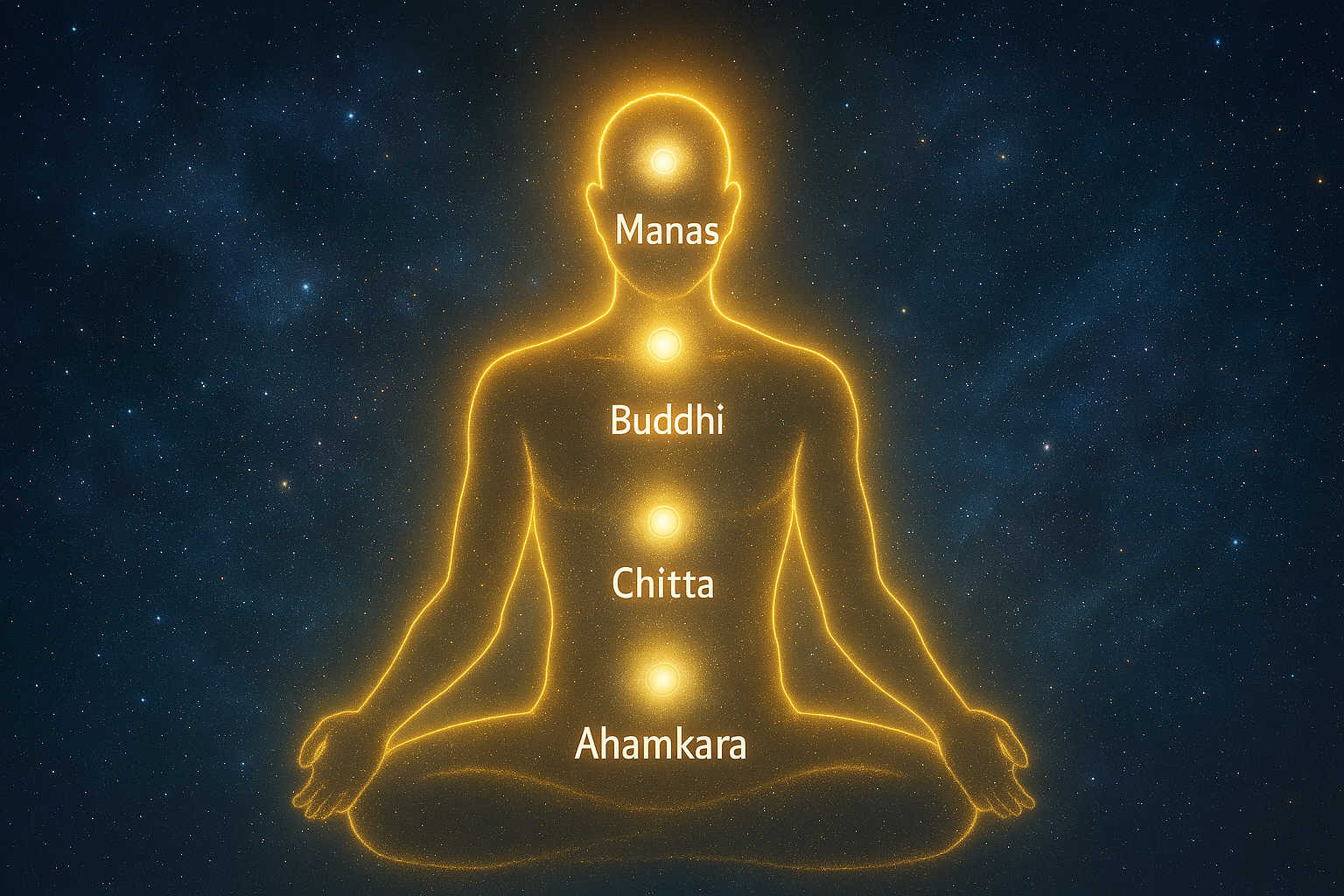
In Sanatan Dharma, the mind is not viewed as a single unit but as a complex inner mechanism known as the Antahkarana—the subtle internal instrument that shapes perception, thought, emotion, memory, intuition, and identity. This Antahkarana is made of four interconnected components: Manas (mind), Buddhi (intellect), Chitta (memory), and Ahamkara (ego).
Together, they determine how we think, act, respond, and evolve spiritually. Understanding these four functions is essential for mastering the mind and walking the path of liberation.
This model appears across the Upanishads, Bhagavad Gita, Sankhya philosophy, Yoga Sutras, and Vedanta, making it one of the most complete psychological frameworks in world philosophy.
1. Manas – The Thinking, Wandering, Emotional Mind
Manas is the lower mind—the part that receives sensory input and generates thoughts, emotions, imaginations, doubts, and questions.
Functions of Manas
-
Receives impressions from the five senses
-
Generates feelings and reactions
-
Imagines, fantasizes, and visualizes
-
Doubts and hesitates
-
Operates through habits and emotional responses
Manas is restless by nature. The Bhagavad Gita calls it “chanchalam hi manah”—constantly moving, like the wind. This is why meditation begins by calming Manas through breath control and focus.
When Manas Is Unbalanced
-
Excessive thinking
-
Emotional turmoil
-
Mood swings
-
Overreacting to situations
-
Impulsive decisions
A controlled Manas becomes a supportive tool for clarity and creativity, while an uncontrolled Manas becomes the root of suffering.
2. Buddhi – The Intellect, Discernment & Higher Reasoning
Buddhi is the higher mind—the seat of discrimination (viveka), decision-making, logic, and wisdom. It is Buddhi that says:
-
“This is right, this is wrong.”
-
“This is beneficial, this is harmful.”
-
“This is real, this is illusion.”
Functions of Buddhi
-
Makes decisions
-
Judges and evaluates
-
Discerns truth from error
-
Plans and analyzes
-
Gives direction and restraint
-
Provides intuition and insight
When Buddhi is strong, a person acts wisely and with purpose. When Buddhi is weak, one becomes slave to emotions and desires produced by Manas.
Signs of a Strong Buddhi
-
Clarity
-
Self-control
-
Inner stability
-
Moral strength
-
Ability to choose the right path
The Gita emphasizes strengthening Buddhi through self-inquiry, knowledge, meditation, and righteous living.
3. Chitta – The Storehouse of Memories & Samskaras
Chitta is the memory aspect of the mind—the vast internal storage that holds impressions, experiences, habits, trauma, talents, and tendencies from both this life and previous lives.
Functions of Chitta
-
Stores memories and knowledge
-
Holds subconscious patterns
-
Preserves samskaras (deep impressions)
-
Creates tendencies and instincts
-
Influences personality and preferences
Because Chitta is like a field of seeds, whatever impressions are stored here eventually sprout as thoughts, emotions, desires, and behaviors.
Positive and Negative Samskaras
-
Good samskaras → compassion, discipline, clarity, devotion
-
Negative samskaras → anger, fear, addiction, jealousy
Many spiritual practices—japa, meditation, karma yoga—aim to purify Chitta and dissolve negative impressions.
Chitta and the Vrittis
Patanjali in the Yoga Sutras says the mind’s suffering comes from vrittis, the waves or fluctuations that arise from Chitta.
Yoga is defined as:
“Chitta vritti nirodhah” – quieting the modifications of the mind.
When Chitta becomes clear, the Self shines unobstructed.
4. Ahamkara – The Ego-Sense, “I-ness”
Ahamkara literally means “I-maker”. It creates the sense of individual identity:
-
“I am this body.”
-
“I am this profession.”
-
“I am this personality.”
Though ego sounds negative, in Vedanta Ahamkara is not a villain—it is a necessary instrument for functioning in the world.
Functions of Ahamkara
-
Creates individuality
-
Gives ownership (“my life, my thoughts”)
-
Separates the self from the environment
-
Sets personal boundaries
-
Helps navigate society
Without ego, one cannot operate in the material world. But when it becomes overgrown, it becomes the cause of suffering.
When Ahamkara Is Dominant
-
Pride
-
Possessiveness
-
Anger
-
Desire
-
Attachment
-
Competition
-
Fear of losing identity
The ego’s illusion is that it disconnects us from the universal Self (Atman). Spiritual practices do not destroy the ego but purify it so that it becomes humble, loving, and transparent.
How the Four Parts Work Together
These four aspects are not separate entities—they work in coordination every moment:
-
Manas receives a sensory input
-
Chitta recalls past memories and patterns
-
Ahamkara interprets it as “my experience”
-
Buddhi decides how to respond
Example
You see a dog (Manas).
You remember being bitten before (Chitta).
You feel fear because ego sees threat to itself (Ahamkara).
You choose whether to stay calm or run (Buddhi).
This is how every mental experience unfolds.
Antahkarana – The Inner Instrument as a Whole
Together, Manas, Buddhi, Chitta, and Ahamkara form the Antahkarana, the inner subtle system that operates the human personality.
Manas → Thinks
Buddhi → Decides
Chitta → Remembers
Ahamkara → Identifies
The true Self (Atman) is the witness of all these processes. Once the seeker learns to observe the mind rather than be controlled by it, spiritual freedom begins.
Mind as the Cause of Bondage and Liberation
Upanishads teach:
“Manayeva manushyanam karanam bandha mokshayoh”
“The mind alone is responsible for bondage and liberation.”
-
When mind is dominated by ego and impulses → bondage
-
When mind is purified, disciplined, and inward-turned → liberation
Thus, controlling these four aspects is the essence of yoga, meditation, and spiritual life.
Conclusion
Manas, Buddhi, Chitta, and Ahamkara together form the intricate system we call “mind.” Understanding their roles helps one navigate emotions, thoughts, memories, and identity with greater clarity and strength. When these four become balanced and purified, the mind becomes a transparent instrument through which the light of the Atman shines effortlessly. This mastery leads to inner peace, wisdom, and ultimately, spiritual liberation.