What Is the Mind According to Sanatan Dharma?
In Sanatan Dharma, the mind (Manas) is not a single entity but a complex, multi-layered instrument that shapes perception, emotions, thoughts, and actions. Unlike modern psychology, which treats the mind as a product of the brain, Vedic philosophy considers the mind a subtle, non-physical organ that connects the physical body and the immortal soul (Atman). It acts as the bridge through which the soul experiences the world and expresses itself.
Sanatan Dharma explains the mind through various scriptures—Upanishads, Bhagavad Gita, Yoga Sutras of Patanjali, Sankhya philosophy, and Ayurveda. Together, they provide one of the most comprehensive understandings of human consciousness ever developed.
1. The Mind Is Part of the Antahkarana (Inner Instrument)
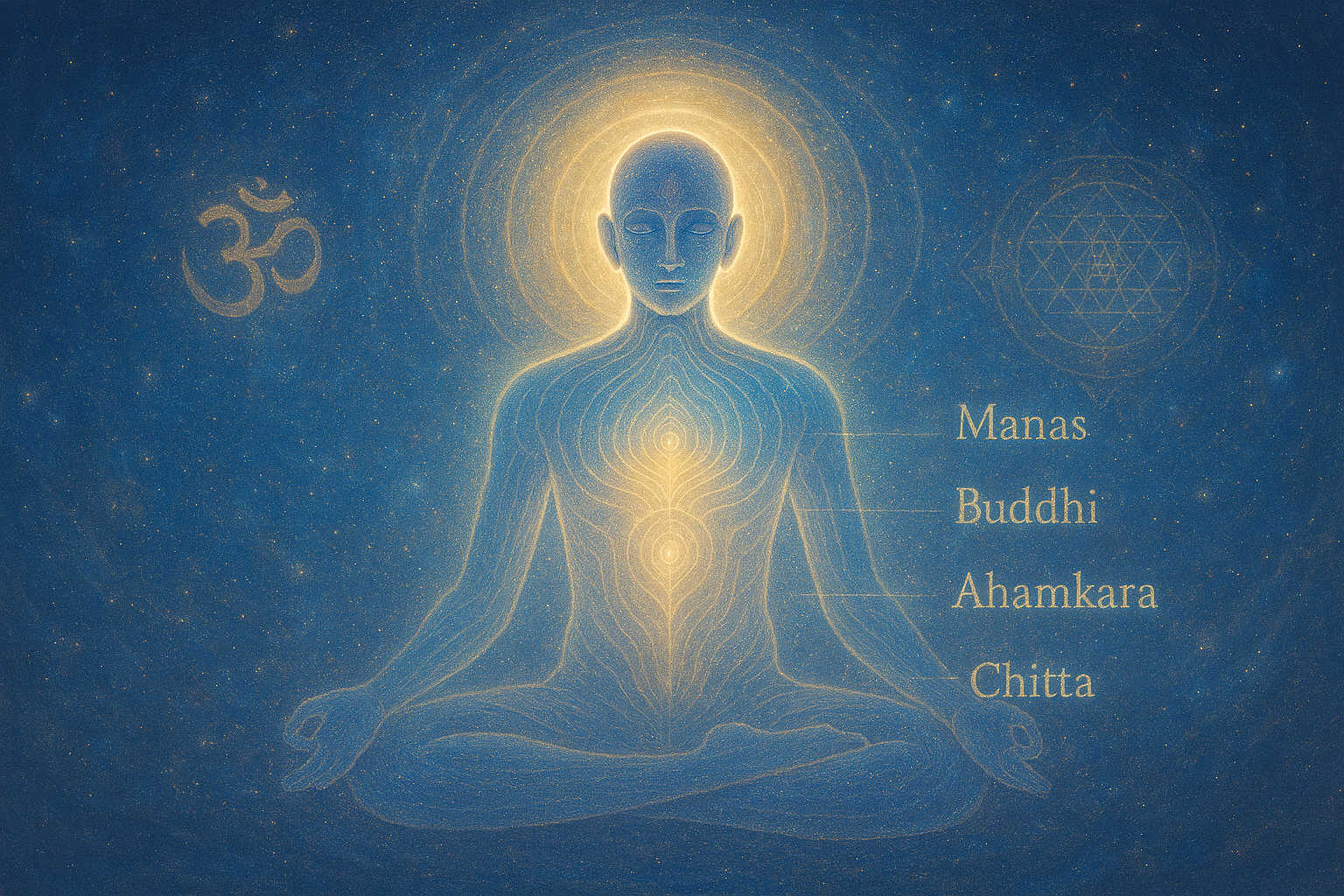
The mind is one of four components of the Antahkarana, the inner subtle system that governs thought and awareness:
-
Manas – the thinking, doubting, feeling mind
-
Buddhi – the intellect or discriminating faculty
-
Ahamkara – the ego-sense or “I-maker”
-
Chitta – the storehouse of memories and impressions
These four aspects work together and form what we typically call “mind.” However, Sanatan Dharma emphasizes that you are not the mind—you are the Atman, the witness behind all mental activity.
2. Manas – The Mind That Thinks and Wanders
The Manas is responsible for:
-
Receiving sensory inputs
-
Generating thoughts
-
Doubting, comparing, and imagining
-
Producing desires and emotions
The mind is naturally restless. The Bhagavad Gita describes it as “chanchalam hi manah”—constantly wandering. This restlessness is why spiritual disciplines focus on stabilizing and purifying the mind.
3. Buddhi – The Higher Mind
Beyond Manas is Buddhi, the seat of intelligence, clarity, and discrimination. Buddhi decides, judges, and understands.
-
When Buddhi is strong → life becomes balanced and peaceful.
-
When Buddhi is weak → the emotional mind dominates, leading to confusion and suffering.
The Gita teaches that spiritual growth comes from strengthening Buddhi through knowledge, meditation, and righteous action.
4. Ahamkara – The Ego That Creates Identity
Ahamkara is the principle that produces the sense of “I,” “me,” and “mine.” While ego is necessary for functioning in the world, an unbalanced ego leads to:
-
Attachment
-
Pride
-
Anger
-
Desire
-
The illusion of separateness
Sanatan Dharma teaches not to destroy the ego but to purify it so that it becomes an instrument of the Divine rather than a source of suffering.
5. Chitta – The Memory Bank of Impressions
Chitta holds all stored experiences, memories, and samskaras (deep impressions). Samskaras influence:
-
Personality
-
Habits
-
Likes and dislikes
-
Emotional triggers
-
Tendencies from past lives
Chitta explains why individuals behave differently even when raised in similar environments. Purifying the Chitta is essential for liberation (moksha).
6. Mind as the Cause of Bondage and Liberation
According to the Amritabindu Upanishad:
“Mind alone is the cause of bondage and mind alone is the cause of liberation.”
-
When the mind is attached to desires → it binds the soul.
-
When it is calm, pure, and inward-turned → it becomes the path to freedom.
Thus, liberation is not found outside but achieved by transforming the mind.
7. The Three Gunas of the Mind
The mind operates under the influence of the three gunas:
-
Sattva (purity, clarity) – brings peace, wisdom, balance
-
Rajas (activity, passion) – causes restlessness, ambition, desire
-
Tamas (darkness, inertia) – creates ignorance, laziness, confusion
Your mental state in any moment depends on which guna is dominant. Spiritual practices aim to increase sattva, reduce rajas, and eliminate tamas.
8. Mind According to Patanjali’s Yoga Sutras
Patanjali defines the mind as “vrittis”—waves or fluctuations of thought.
Yoga is described as:
“Yoga chitta vritti nirodhah” – The stopping of the fluctuations of the mind.
When the mind is still, the Self shines clearly. Meditation, breath control, concentration, and ethics are prescribed to calm the mind.
9. The Mind Is Subtle Matter
Sankhya philosophy explains that the mind arises from Prakriti (Nature) and is made of subtle matter (tanmatras).
This is why:
-
The mind can change
-
The mind can be purified
-
The mind can be trained just like the body
Even emotions, thoughts, and desires are considered subtle forms of matter.
10. Ayurveda’s Perspective on the Mind
Ayurveda teaches that mental health depends on three mental energies:
-
Sattva – balance and intelligence
-
Rajas – movement and stimulation
-
Tamas – stability but also stagnation
Disturbance in these energies leads to psychological imbalance. Proper diet, routine, breathing practices, and lifestyle help maintain a healthy mind.
11. The Mind Is Different from the Self
All scriptures repeatedly emphasize:
You are not the mind. You are the witness of the mind.
The Atman watches:
-
Thoughts
-
Emotions
-
Dreams
-
Desires
-
Memories
This witnessing awareness is unchanging, while the mind constantly changes. Realizing this distinction is a major step on the spiritual path.
Conclusion
According to Sanatan Dharma, the mind is a powerful, multifaceted tool that determines the quality of one’s life. It can be a source of suffering when uncontrolled, but the key to liberation when purified and disciplined. Understanding the layers of the mind—Manas, Buddhi, Ahamkara, and Chitta—helps individuals gain mastery over their inner world. By cultivating sattva, practicing yoga, and strengthening the intellect, one learns to calm the mind and experience the true Self, the eternal Atman that lies beyond all mental fluctuations.