Purusha Suktam – The Cosmic Being
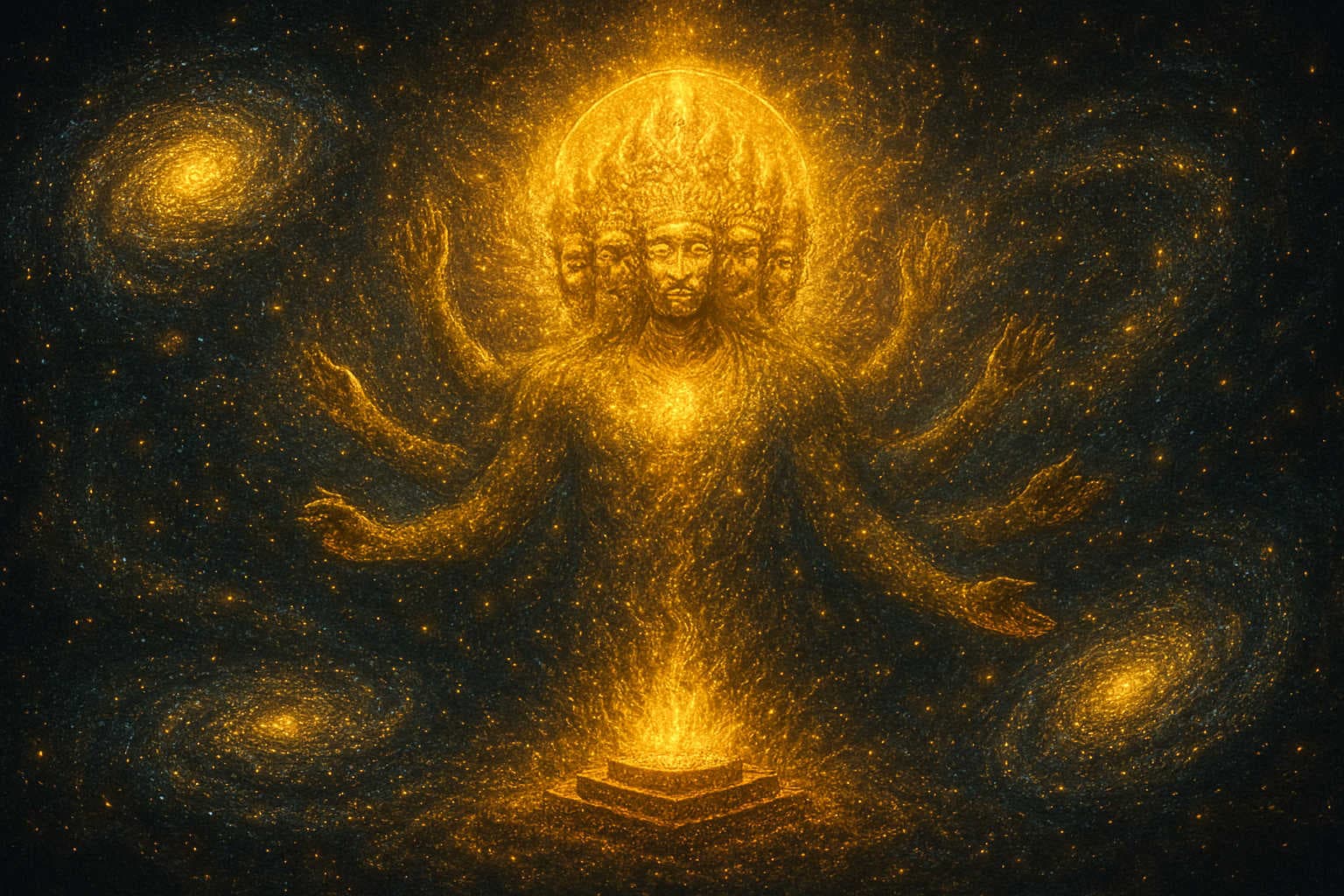
The Purusha Suktam, found in the Rig Veda (10.90), is one of the most mystical and profound hymns in all of Vedic literature. It presents a grand, cosmic vision of creation by describing the universe as emerging from the Purusha, the Cosmic Being whose essence permeates everything. This hymn does not speak in ordinary philosophical language—it reveals creation as a divine sacrifice, a spiritual unfolding where the entire cosmos manifests through the divine presence of Purusha.
In Vedic tradition, Purusha represents the eternal, infinite consciousness that exists before creation, within creation, and beyond creation. He is described as having “a thousand heads, a thousand eyes, and a thousand feet,” symbolizing omnipresence rather than a literal form. The hymn uses poetic imagery to show that the entire universe—past, present, and future—is only a small fraction of this boundless Being. The cosmos is not separate from Purusha but rather an expression of His infinite presence.
One of the central ideas in the Purusha Suktam is the concept of cosmic sacrifice or yajna. According to the hymn, the gods performed a sacred yajna using Purusha as the offering. From this yajna arose the various elements of the universe: the moon from His mind, the sun from His eyes, Indra and Agni from His mouth, and the wind from His breath. The entire natural world—sky, earth, rivers, mountains—emerged through this divine unfolding. This imagery conveys a profound truth: creation is not an accident but an intentional, sacred manifestation. It is a reminder that the universe is imbued with divine order, harmony, and purpose.
The Purusha Suktam also describes the emergence of society from this cosmic sacrifice. The four varnas are said to arise from different parts of the Purusha: Brahmins from His mouth, Kshatriyas from His arms, Vaishyas from His thighs, and Shudras from His feet. Importantly, this symbolizes interdependence, not hierarchy. Just as every part of the body is essential to its functioning, every role in society is born from the same divine source. The hymn teaches unity, not division, emphasizing that all humans are expressions of the same cosmic consciousness.
Another powerful verse explains that only a quarter of the Purusha became the manifest universe, while three-quarters remained in the transcendental realm. This distinction forms the foundation of later Vedantic thought: the world we perceive is only a fraction of reality. Beneath names, forms, and changing phenomena lies an infinite, unchanging consciousness. Purusha is both immanent—present in every atom of creation—and transcendent—beyond the limitations of space and time.
The Purusha Suktam also highlights the idea that creation is cyclic. The hymn does not describe a one-time event but an eternal process of manifestation and dissolution. Purusha is the source from which the universe arises and into which it eventually returns. This rhythmic cycle echoes throughout the Upanishads and forms the basis for the concept of cosmic time, where universes are born, sustained, and dissolved across vast ages.
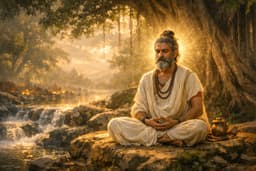
On a spiritual level, the hymn becomes a guide for the seeker. Purusha is not just the cosmic being outside; He is the consciousness within. The infinite that manifests the universe is the same infinite presence that shines in the heart. This realization is the essence of Vedanta—that the individual self (Atman) and the cosmic Self (Brahman) are one. Meditating on Purusha helps dissolve the boundaries of ego and expand one’s awareness to embrace the unity of all existence.
The Purusha Suktam is also deeply connected with rituals. It is traditionally chanted during yajnas, temple ceremonies, and auspicious occasions. Its vibrations are believed to purify the environment, invoke divine blessings, and harmonize cosmic energies. The cadence and meter of the hymn create a meditative rhythm that elevates the mind and awakens spiritual insight. For centuries, householders and priests have used this mantra to align themselves with dharma and cosmic order.
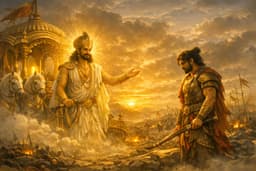
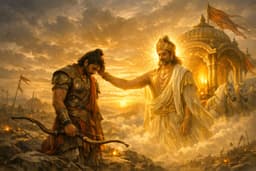
Its influence extends beyond the Vedic period into later Hindu scriptures, philosophies, and rituals. The idea of the universe as the body of the Divine appears in the Bhagavad Gita, where Krishna reveals His cosmic form to Arjuna. The Upanishads expand on the concept of Purusha as pure consciousness, while the Puranas incorporate the idea into their cosmological narratives. Thus, the Purusha Suktam becomes the foundation for understanding Hindu cosmology, metaphysics, and spirituality.
In a modern context, the hymn offers a profound reminder of unity and interconnectedness. It teaches that life is sacred because it is part of a divine whole. Nature is not external to us but an expression of the same consciousness that animates our being. When one recognizes this unity, compassion, ecological awareness, and respect for all life naturally arise.
Ultimately, the Purusha Suktam is not just a creation story—it is a vision of oneness, portraying the universe as a manifestation of the Divine. It invites us to see beyond the surface and recognize the sacred presence in all things. By meditating on the Cosmic Being, the seeker experiences a deep sense of belonging and realizes the eternal truth proclaimed by the Vedas: that the entire universe is woven into the fabric of the Divine, and the Divine lives within every heart.