“Neti Neti” – Not This, Not That
“Neti Neti,” a profound teaching from the Upanishads, is one of the most powerful methods used by ancient sages to guide seekers toward the realization of the true Self. The phrase means “Not this, not that”, and it serves as a systematic process of negating everything that is not the Atman—the eternal, unchanging consciousness. Rather than defining the Self directly, “Neti Neti” removes all illusions and false identities, allowing the seeker to discover what remains when all that is non-essential is stripped away.
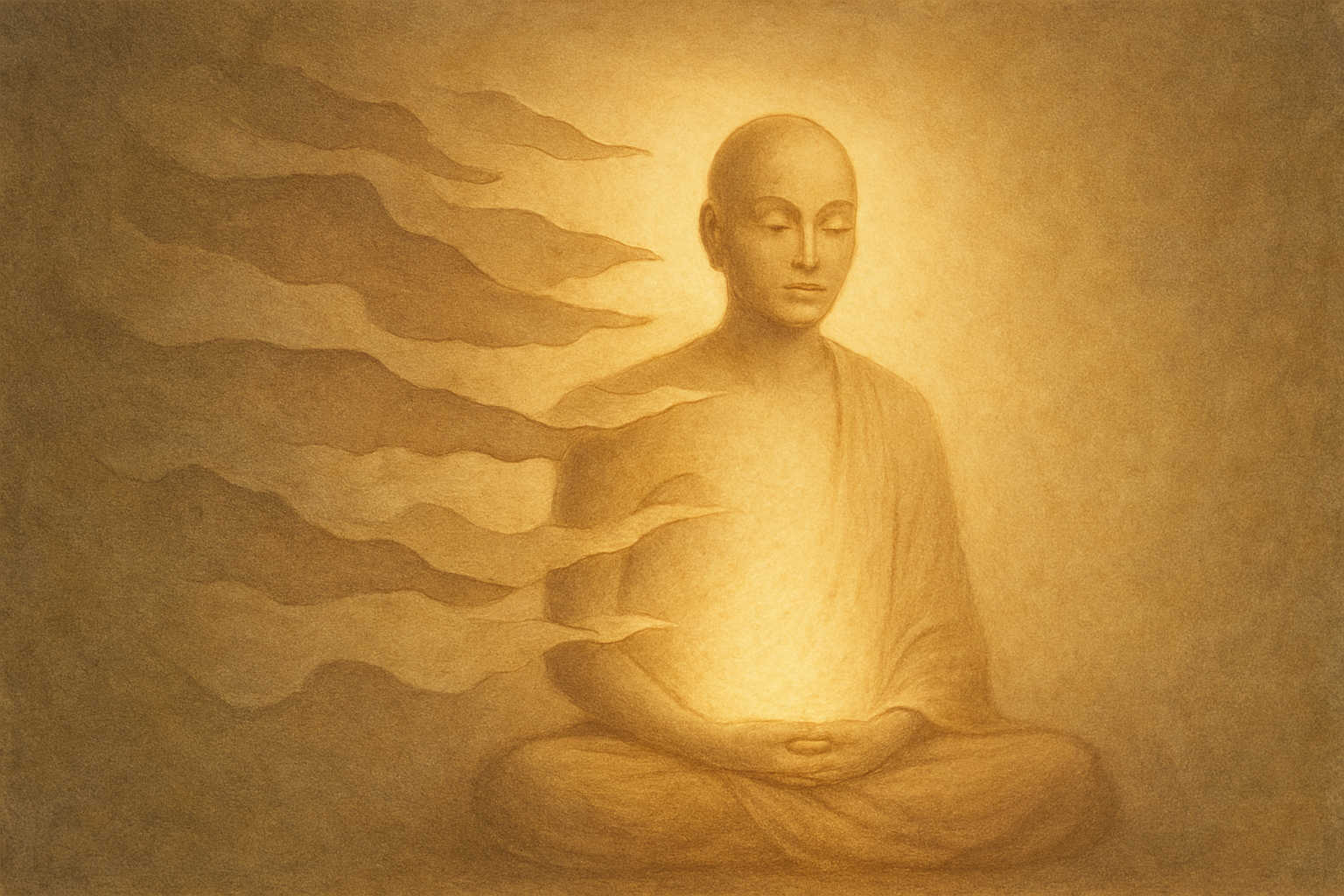
In daily life, people identify themselves through layers: the body, emotions, thoughts, memories, achievements, relationships, and personal roles. But each of these is constantly changing. The body ages, emotions fluctuate, and thoughts come and go like passing clouds. The sages asked: If all these things change, how can they be the real “I”? The true Self must be something permanent—something that exists before all experiences and continues after them.
“Neti Neti” begins with this inquiry. When the seeker sits in contemplation and observes an emotion—say anger—the practice instructs: This anger is not me. Neti Neti. When the mind is full of thoughts: These thoughts are not me. Neti Neti. When one feels physical discomfort: This body is not the eternal Self. Neti Neti. By rejecting everything that is limited, transient, or influenced by time, one gradually reaches the recognition of the infinite, formless Self.
This process is not about denying the world but about clarifying what we truly are. The Upanishadic sages emphasized that the Self cannot be grasped through the senses or understood through intellectual concepts. The Self is not an object that can be seen, heard, or described. It is the pure subject—the silent witness behind all experiences. “Neti Neti” helps reveal this witness by peeling away the layers of false identity.
As one progresses on this path, deeper layers of identification are challenged. The seeker realizes: I am not the mind because the mind changes. I am not the personality because my traits evolve. I am not my memories because they fade with time. Even subtle spiritual experiences—visions, bliss states, intuitions—must be dismissed as Neti Neti, for they too are temporary. The teachings warn that clinging to any experience, however pleasant, can prevent one from discovering the truth that lies beyond all experiences.
The essence of “Neti Neti” is freedom. It frees the seeker from the bondage of ego, conditioning, and attachments. When all superficial identities fall away, what remains is a profound stillness—a presence untouched by joy or sorrow, gain or loss. This is the Atman, the eternal Brahman within. It cannot be defined, but it can be experienced as the unchanging awareness in which all phenomena arise and dissolve.
The beauty of “Neti Neti” lies in its simplicity. It requires no special rituals, no elaborate philosophy, and no external tools. It only requires introspection, sincerity, and patience. Even in the midst of daily life, one can silently practice it. When overwhelmed by stress, remind yourself: This stress is not my true Self. When caught in conflict: This reaction is not me. Gradually, the mind begins to let go of its rigid patterns, bringing peace and clarity.
The Upanishads teach that once the false is removed, the truth shines by itself. Just as cleaning a dirty mirror reveals the reflection clearly, clearing false identifications reveals the Self effortlessly. This realization brings immense liberation—freedom from fear, sorrow, and the cycle of birth and death. One understands that the true Self was never harmed, never incomplete, and never bound. It was only mistaken identity that created the illusion of suffering.
“Neti Neti” is also deeply practical. By reminding oneself that the body and mind are instruments—not the Self—one becomes less reactive, more compassionate, and more stable. The ego softens, relationships improve, and inner resilience grows. Spiritual maturity develops because one stops taking external situations personally. The world is seen as a play of ever-changing forms, while the Self remains the unchanging foundation beneath it.
In essence, “Neti Neti” is not a philosophy but an inner journey. It guides the seeker inward, layer by layer, until the deepest truth is revealed: the Self is infinite, pure awareness—beyond form, beyond description, and beyond all limitations. When “Not this, not that” has removed everything, the seeker stands face to face with the ultimate reality—the silent, radiant consciousness that is the essence of existence.
Thus, “Neti Neti” becomes the gateway to freedom, wisdom, and oneness with the Divine. It is a timeless reminder that the truth of who we are cannot be found in the world outside, but only in the stillness within.