“Tat Tvam Asi” – You Are That Supreme
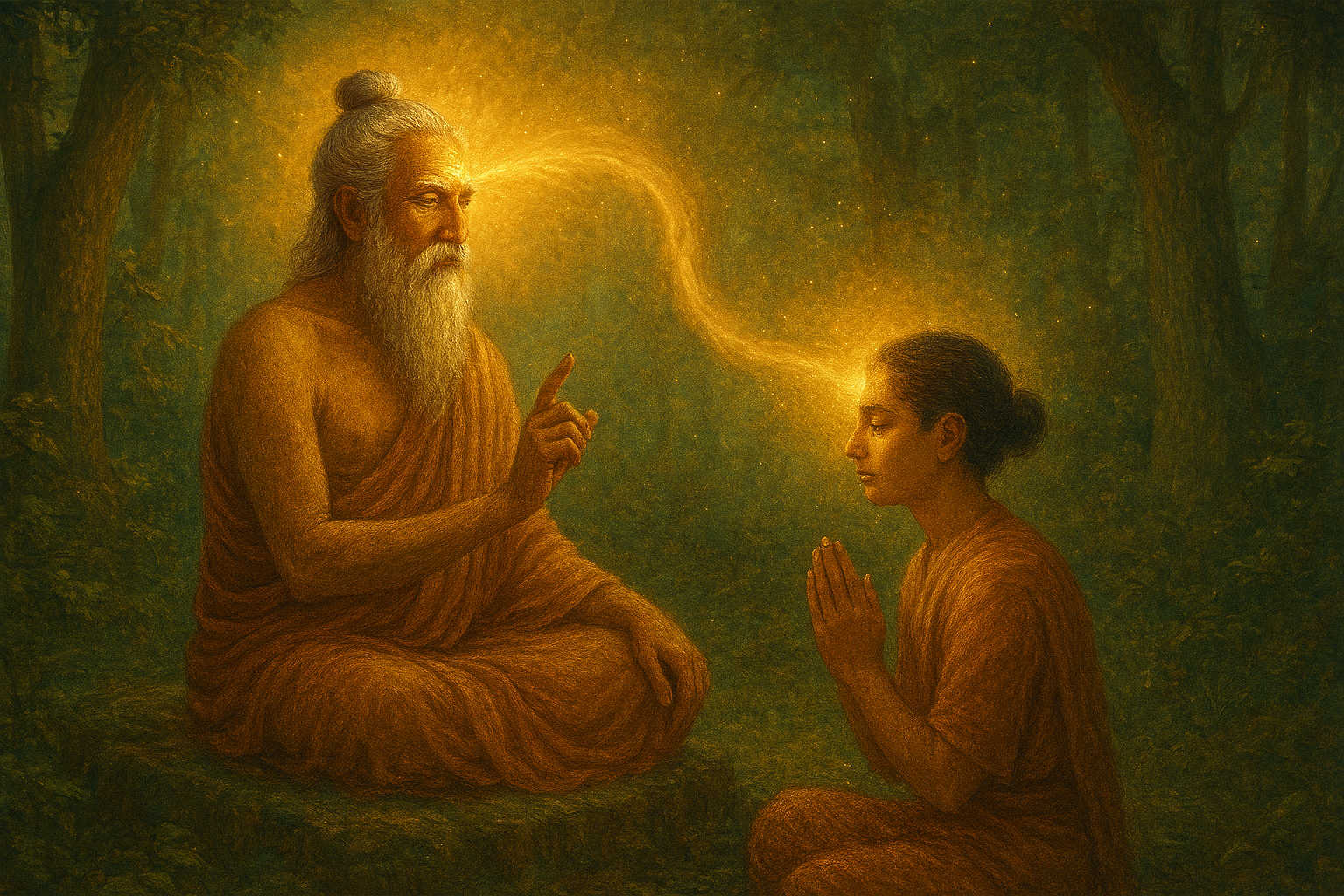
“Tat Tvam Asi,” one of the most profound Mahavakyas from the Chandogya Upanishad, translates to “You are That” or “You are the Supreme Reality.” It is a powerful declaration by the ancient rishis that the essence of the individual soul is identical to the infinite, all-pervading Brahman. This statement, made by the sage Uddalaka to his son Shvetaketu, encapsulates the heart of Advaita Vedanta—the realization that the true Self (Atman) is not limited, small, or separate, but is in fact the same as the universal consciousness that sustains everything.
To understand “Tat Tvam Asi,” we must first explore the meaning of the two components: Tat and Tvam. “Tat” refers to Brahman—the absolute, infinite, unchanging reality that exists beyond all forms, names, and attributes. It is the cosmic intelligence, the source of all creation, and the consciousness that pervades the universe. “Tvam” refers to the inner Self, the pure consciousness that observes thoughts, emotions, and experiences. This Self is not the body, mind, or ego, but the silent witness within. The mahavakya bridges these two concepts by revealing that the individual consciousness and the cosmic consciousness are ultimately the same.
This teaching challenges the ordinary perception of life. Most people see themselves as limited beings defined by their physical form, personal history, and social identity. This narrow view creates fear, insecurity, and a sense of incompleteness. “Tat Tvam Asi” calls upon the seeker to break free from these limitations and discover the divine essence within. It teaches that beneath the surface differences—gender, nationality, status, or personality—there is one universal spirit present in all beings.
The beauty of this Mahavakya lies in its simplicity. Sage Uddalaka uses everyday examples to explain this truth to his son. He speaks of a seed that appears tiny, yet contains within it the potential to grow into a vast tree. He instructs Shvetaketu to dissolve salt in water and observe how the salt, though invisible, permeates the entire solution. In the same way, Brahman permeates all creation, and the Self within every living being is a spark of that infinite presence. These stories convey that the divine cannot always be seen, but it can be experienced through direct insight.
Realizing “Tat Tvam Asi” is not an intellectual exercise—it is a transformation of consciousness. When one contemplates this Mahavakya deeply, the layers of ego begin to dissolve. The seeker gradually shifts from identifying with the body and mind to recognizing the timeless witness within. In meditation, one experiences glimpses of inner silence where duality fades and a sense of unity arises. This moment of realization brings immense peace, joy, and clarity—because one understands that there is nothing to fear, nothing to lose, and nothing to become. One already is that supreme reality.
Importantly, “Tat Tvam Asi” is not a statement of personal superiority. It does not suggest that one’s ego is the ultimate truth. Instead, it reveals that the divine light shining in every heart is the same. When understood correctly, it becomes a source of compassion and humility. It teaches that harming another is like harming oneself because all beings are connected through the same essence. This wisdom dissolves barriers and fosters love, harmony, and respect.
In practical life, this teaching helps one navigate challenges with greater wisdom. When faced with jealousy, anger, or insecurity, remembering “You are That” brings an inner shift. Problems appear smaller, the mind becomes grounded, and actions become more aligned with truth. It encourages seekers to live with awareness, detachment, and gratitude. Tough situations become opportunities for spiritual growth, as one learns to see the same divine presence in every person and circumstance.
Ultimately, the realization of “Tat Tvam Asi” leads to Moksha, the liberation from the cycle of birth and death. It frees one from ignorance (Avidya) and the illusion of separateness. The seeker recognizes that the Self was never bound, never imperfect, and never incomplete—only unaware of its true nature. The journey of life then becomes an exploration of this inner divinity, expressed through compassion, service, and wisdom.
In summary, “Tat Tvam Asi” is an invitation to awaken. It encourages each person to look beyond external differences and discover the eternal truth within. It reveals that the same consciousness flows through all existence, making life sacred and interconnected. By contemplating this Mahavakya and integrating its wisdom into daily life, one gradually realizes the profound truth: the divinity you seek outside has always been within you