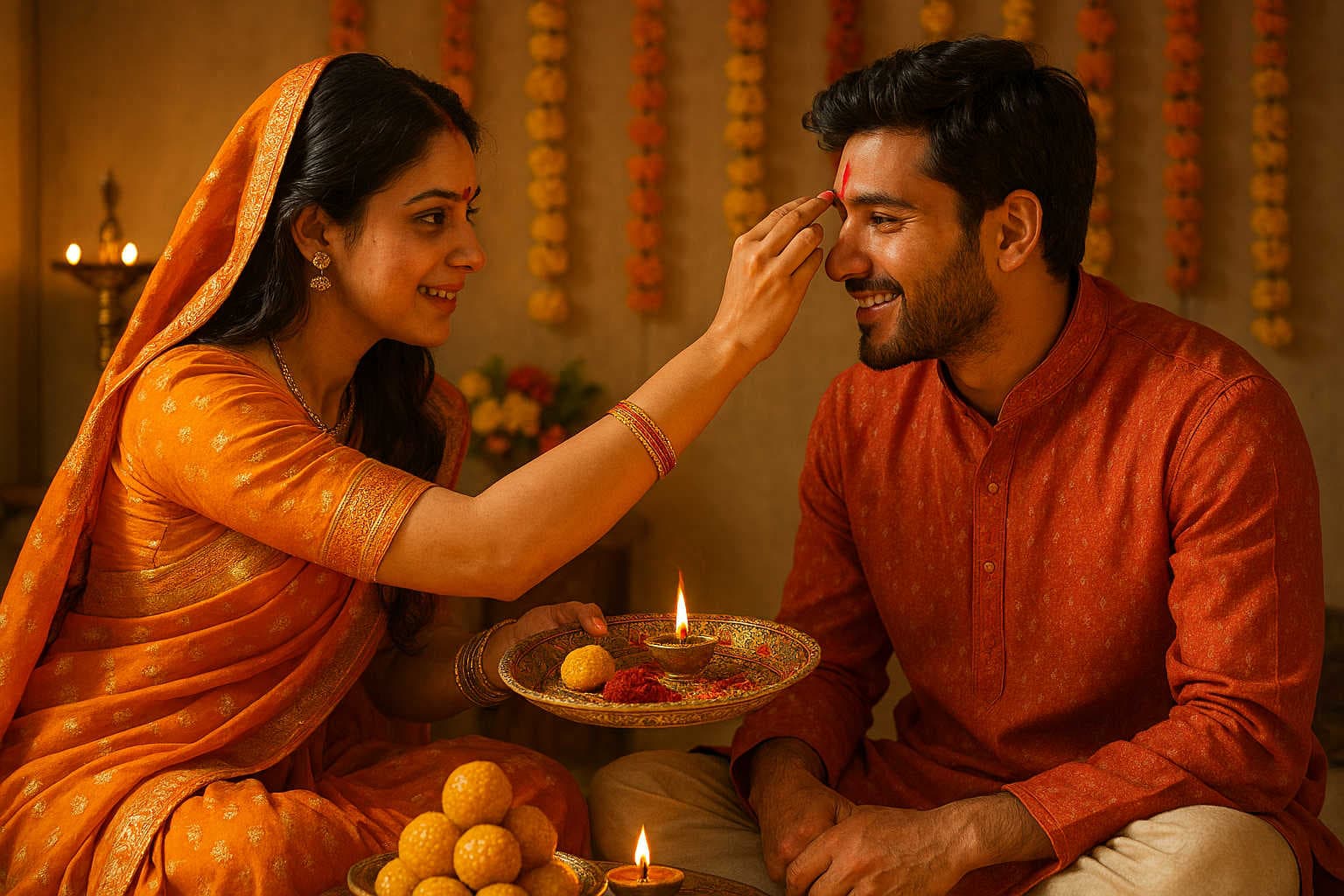
Bhai Dooj – Celebrating the Sibling Bond After Diwali
As the glowing lamps of Diwali begin to fade and the festivities start to wind down, another beautiful celebration brings families back together—Bhai Dooj. Also known as Bhaiya Dooj, Bhau Beej (in Maharashtra), or Bhai Tika (in Nepal), this festival honors the sacred bond between brothers and sisters, much like Raksha Bandhan, but with its own unique traditions and emotional depth.
Bhai Dooj is celebrated on the second day (Dwitiya) of the Shukla Paksha in the Hindu lunar month of Kartik, just two days after Diwali. It is a festival of love, prayer, blessings, and family, centered around a touching ceremony where sisters pray for their brothers' well-being, and brothers vow to protect and cherish their sisters.
📜 Mythological Origins of Bhai Dooj
The roots of Bhai Dooj can be traced to various legends in Hindu mythology. One of the most popular stories involves Yamraj, the god of death, and his sister Yamuna.
According to legend, Yamraj visited Yamuna after a long time. Overjoyed by his arrival, she prepared a special meal, welcomed him with tilak (sacred mark) and performed aarti, praying for his safety and long life. Touched by her love and devotion, Yamraj declared that any sister who performs this ritual for her brother on this day will bless him with a long and prosperous life.
Another version connects Bhai Dooj to Lord Krishna returning to his sister Subhadra after slaying the demon Narakasura. She greeted him with sweets and tilak, marking the beginning of this tradition.
In all versions, the essence remains the same—celebrating the love and protection between siblings.
🪔 Rituals and Traditions
The Bhai Dooj ceremony is simple yet profound. Unlike Raksha Bandhan, where the sister ties a rakhi on her brother’s wrist, Bhai Dooj is marked by a tilak ceremony and blessings.
Key Rituals:
-
Tilak Application: The sister applies a tilak of sandalwood, roli (vermilion), and rice on her brother’s forehead. It symbolizes her prayer for his protection from all evil and misfortune.
-
Aarti and Prayer: She performs aarti with a diya (lamp), circling it around him while chanting or silently praying for his success and longevity.
-
Sweet Sharing: Delicious homemade sweets and festive dishes are served, and the siblings often feed each other as a gesture of affection.
-
Gift Exchange: The brother gives his sister a gift of appreciation—often clothing, jewelry, or money—as a symbol of his gratitude and love.
In some regions, if a brother cannot be present physically, sisters pray to the moon, symbolically connecting with their brother from afar.
🧡 Bhai Dooj vs. Raksha Bandhan – What’s the Difference?
While both festivals honor sibling relationships, their timing and rituals differ:
-
Raksha Bandhan is observed in Shravan (August) and centers on the rakhi (thread) symbolizing protection.
-
Bhai Dooj comes at the end of Diwali, and focuses on prayer and tilak.
In both cases, the bond of love and responsibility is celebrated, but Bhai Dooj highlights the sister’s role in praying for her brother’s health and long life.
🎉 Regional Names and Celebrations
-
Bhai Tika (Nepal): The festival is celebrated with grandeur in Nepal, where sisters perform an elaborate five-colored tika and prepare a lavish feast for their brothers.
-
Bhau Beej (Maharashtra): Sisters invite their brothers for a meal, and a special coconut or kalash may be worshipped.
-
Yama Dwitiya (South India): Celebrated with reverence to Yamraj and Yamuna, emphasizing the mythology behind the festival.
Despite the regional variations, the emotional essence of Bhai Dooj remains universally loving, heartfelt, and family-oriented.
🍛 Festive Foods and Togetherness
No Indian festival is complete without delicious food, and Bhai Dooj is no exception. Sisters often prepare their brothers’ favorite dishes and festive sweets like gulab jamun, barfi, kheer, or laddoos. The act of cooking and sharing a meal enhances the emotional warmth of the day.
More than the food, it’s the time spent together, reliving childhood memories, laughing over shared jokes, and expressing love through rituals, that makes the festival special.
💬 Bhai Dooj in the Modern World
As families become more global and distances widen, the essence of Bhai Dooj remains strong. Video calls, couriered tilaks, virtual aartis, and digital gifts have become part of the modern celebration. Technology now bridges the physical gaps, but the emotional connection remains timeless.
Even today, Bhai Dooj teaches the importance of:
- Gratitude and love among siblings
- Spiritual bonding through prayer
- Honoring family traditions and rituals
- Creating space for appreciation and reconnection
🌟 Conclusion: A Festival of Sibling Grace
Bhai Dooj is more than a ritual—it is a reminder of how sacred the sibling relationship is. It celebrates the moments we often take for granted—the shared laughter, silent support, old memories, and the lifelong promise to be there for each other.
In a world that moves fast, Bhai Dooj invites us to pause and say: “I’m grateful for you.”
Whether celebrated in person or across oceans, this festival is a heartfelt tribute to the bond that begins in childhood and strengthens with time.
Wishing you a joyful and love-filled Bhai Dooj!