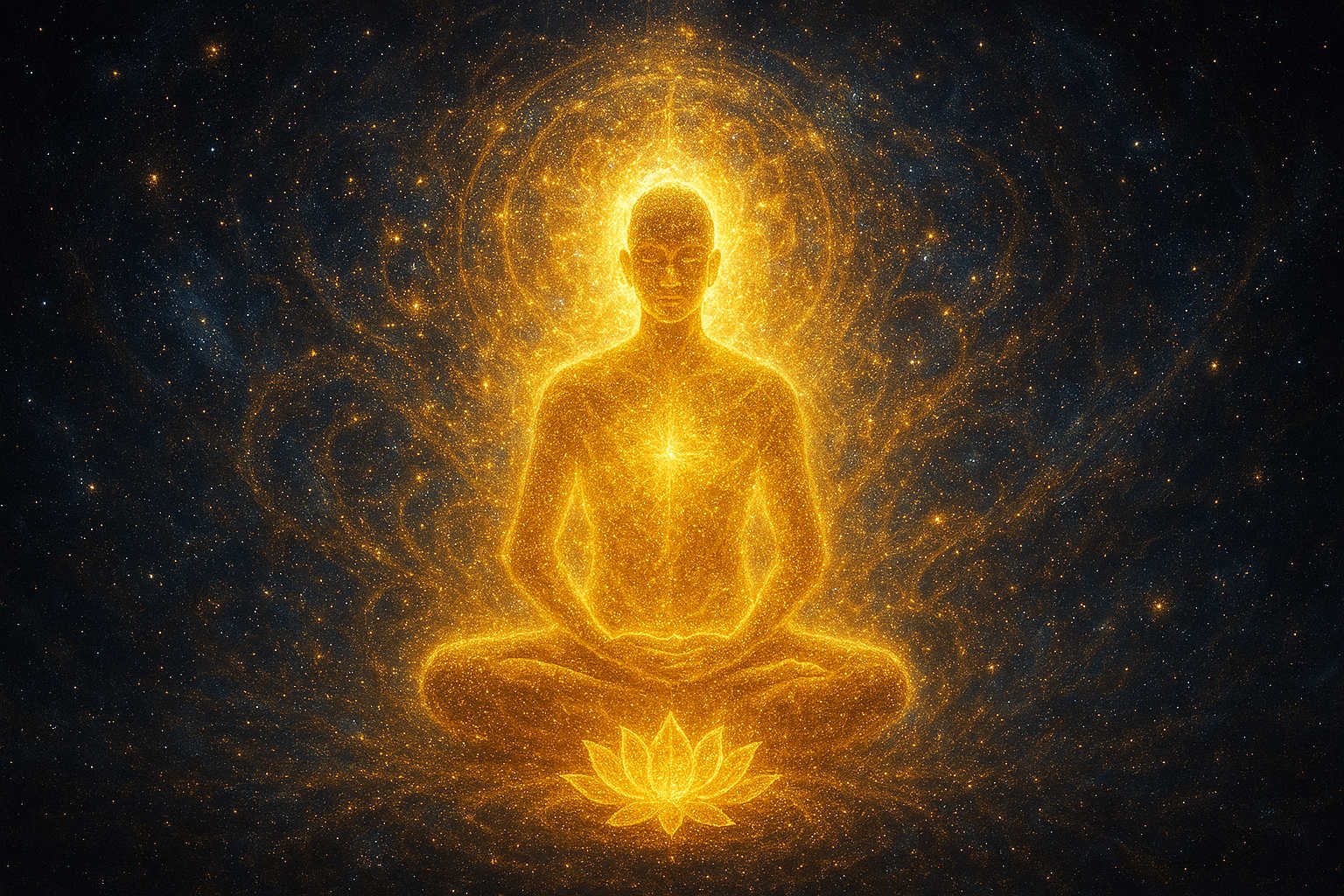
Aham Brahmasmi – I Am Divine Consciousness
“Aham Brahmasmi” is one of the most celebrated Mahavakyas (great sayings) from the Brihadaranyaka Upanishad. Translated as “I am Brahman” or “I am Divine Consciousness,” it expresses the highest truth of Advaita Vedanta—that our innermost Self (Atman) is not separate from the ultimate, infinite reality (Brahman). This profound declaration is not merely a philosophical idea; it is a transformative realization that has the power to liberate the seeker from ignorance, suffering, and the illusion of separateness.
To understand this Mahavakya, one must first reflect on the nature of Brahman, described as infinite consciousness, the eternal ground of existence, and the source from which all creation arises. Brahman is not a deity or a form but the formless, limitless essence that pervades everything. It is pure awareness, untouched by time, space, or change. Similarly, the Atman, the inner Self, is not the body, mind, or ego—it is the witnessing consciousness that remains constant through all experiences. The Mahavakya bridges these two concepts by asserting that the individual Self and the cosmic Self are fundamentally one.
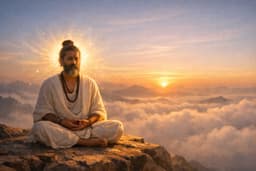
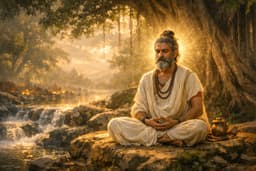
This realization, however, does not arise instantly. It is the fruit of deep inquiry, meditation, and purification. The Upanishads teach that we mistakenly identify ourselves with temporary things—our roles, emotions, thoughts, and physical form. This identification creates a sense of separation, which is the root of fear, anxiety, desire, and suffering. When one meditates on “Aham Brahmasmi,” these layers of identity begin to dissolve. The seeker experiences glimpses of inner stillness, where the boundaries between “I” and the universe begin to fade.
The statement does not promote egoistic thinking. It does not mean “I as a person am God.” Rather, it points to the truth that the essence within every being is divine. It is a recognition of the universal consciousness that shines equally in all. When understood correctly, “Aham Brahmasmi” nurtures humility, compassion, and a deeper sense of unity. The ego becomes a tool rather than the master, and one begins to see all living beings as expressions of the same sacred reality.
This Mahavakya also holds immense spiritual power. Repeating it as a mantra helps calm the mind and turn awareness inward. It encourages seekers to shift their focus from external achievements to inner awakening. The fear of loss, death, and uncertainty weakens, as the meditator realizes their true nature is eternal and unchanging. In this state, one experiences a profound sense of peace—the peace that comes from knowing that nothing can truly diminish the light within.
In daily life, the wisdom of “Aham Brahmasmi” can be applied through mindfulness and self-observation. When faced with stress or conflict, pausing to remember this truth brings clarity and balance. It reminds us to act from awareness rather than reaction. It dissolves hatred and strengthens empathy because seeing oneself in others becomes more natural and effortless.
Spiritual masters explain that understanding this Mahavakya intellectually is only the first step. True realization dawns when the seeker experiences it directly, often during deep meditation or moments of inner silence. In that moment, the heart expands, the mind becomes still, and one feels united with all existence. This state is what the scriptures describe as Moksha—liberation from the cycle of birth and death, freedom from limitations, and the experience of pure bliss (Ananda).
Ultimately, “Aham Brahmasmi” is an invitation—a call to turn inward and discover the boundless consciousness that lies at the core of our being. It dissolves narrow identities and reveals the divine spark in every heart. By contemplating this Mahavakya, one gradually awakens to the truth that the universe is not something outside us; it is something we are intrinsically a part of. And in realizing this unity, life becomes a journey of peace, purpose, and spiritual fulfillment