Mahavakyas of the Upanishads – Great Sayings Explained
The Upanishads, the crown jewels of Vedic wisdom, contain some of the most profound philosophical statements known to humanity. Among these are the Mahavakyas—the “Great Sayings.” These short yet powerful declarations reveal the ultimate truth about the Self (Atman) and the Supreme Reality (Brahman).
Each Mahavakya acts like a spiritual lightning bolt—cutting through illusion, awakening knowledge, and guiding the seeker toward liberation. They are not meant for intellectual debate but for contemplation, meditation, and realization.
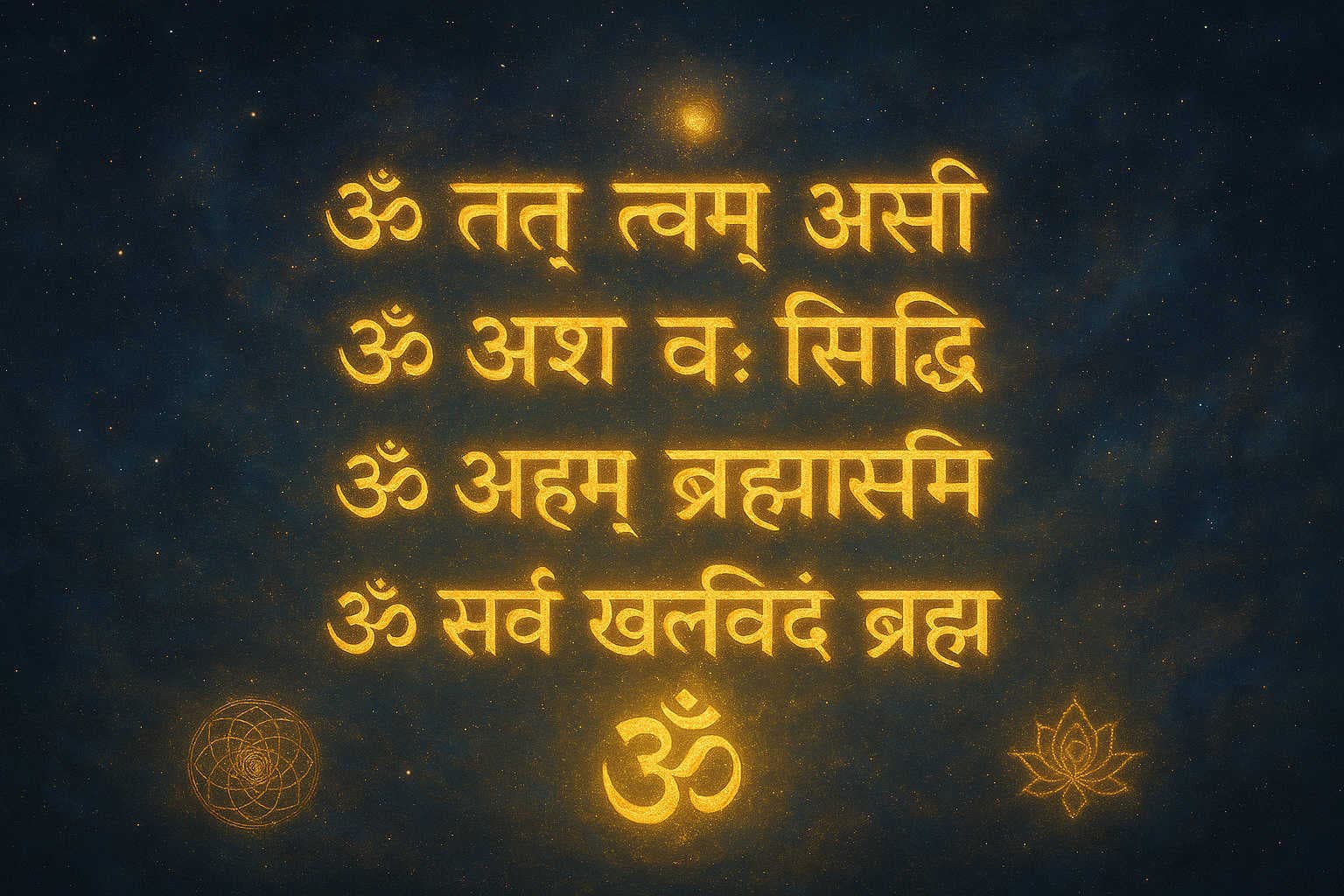
Traditionally, there are four principal Mahavakyas, each coming from one of the four Vedas through their corresponding Upanishads. Together, they express the essence of Advaita Vedanta—the non-dual truth that the individual soul and the Supreme are one.
1. Prajnanam Brahma – “Consciousness is Brahman”
(Aitareya Upanishad – Rigveda)
This Mahavakya teaches that pure consciousness is the ultimate reality. Everything we experience—world, thoughts, emotions, body—appears within consciousness. Consciousness is not a product of the brain; rather, the brain functions within consciousness.
According to this teaching:
-
Brahman is not an external creator
-
Brahman is the formless, infinite awareness
-
This awareness is the foundation of all existence
When a seeker meditates on this Mahavakya, they begin to see that the essence of everything is one luminous consciousness, unchanging and eternal.
2. Aham Brahmasmi – “I Am Brahman”
(Brihadaranyaka Upanishad – Yajurveda)
This is one of the most famous Mahavakyas. Here, the Upanishads declare that the true Self is not limited by the body or mind; it is the same infinite consciousness called Brahman.
This statement does not refer to the ego (“I”) but to the pure Self that lies beyond all personal identity.
Its implications are profound:
-
The Self is infinite, not small
-
The Self is birthless and deathless
-
The Self is the witness of all experiences
By contemplating this truth, the seeker dissolves identification with the body-mind and realizes their oneness with the Supreme.
3. Tat Tvam Asi – “Thou Art That”
(Chandogya Upanishad – Samaveda)
This Mahavakya is presented by the sage Uddalaka Aruni to his son Shvetaketu. Through a series of subtle teachings, he explains that the essence of the individual and the essence of the universe are the same.
“Tat” refers to the Supreme Reality.
“Tvam” refers to the inner Self.
“Asi” means “are.”
Thus, the statement reveals:
-
The individual soul (jiva) is not truly separate
-
All beings arise from one Reality
-
Divine essence permeates everything
Tat Tvam Asi is considered one of the most direct pointers to non-duality and is often meditated upon to transcend the illusion of separation.
4. Ayam Atma Brahma – “This Self Is Brahman”
(Mandukya Upanishad – Atharvaveda)
The Mandukya Upanishad is the shortest yet most powerful of all Upanishads. It explains that the Self exists in four states:
-
Waking
-
Dreaming
-
Deep sleep
-
Turiya – the transcendental state
The Mahavakya "Ayam Atma Brahma" declares that the Turiya state—the pure, silent awareness behind all experiences—is none other than Brahman. This reinforces that the divine is within, not outside.
The Unity of the Four Mahavakyas
Although each statement appears different, they express the same essential truth from different angles:
-
Prajnanam Brahma – Brahman is pure consciousness
-
Aham Brahmasmi – My true Self is Brahman
-
Tat Tvam Asi – You are that Supreme Reality
-
Ayam Atma Brahma – This Self is Brahman
Together, they establish the core of Advaita Vedanta:
There is only One Reality, and we are not separate from it.
How the Mahavakyas Transform the Seeker
1. Dissolving the Ego
The Mahavakyas point directly beyond the limited identity. When deeply contemplated, they weaken the ego’s grip and reveal the vast, limitless nature of the Self.
2. Ending the Sense of Separation
They teach that the Divine is not “somewhere else.” The same consciousness that pervades the cosmos shines in every heart.
3. Promoting Universal Compassion
When one realizes that all beings are expressions of the same Brahman, compassion arises naturally. Hatred and division dissolve.
4. Awakening Higher Knowledge
Mahavakya contemplation (Mahavakya Vichara) leads to direct insight. This is not bookish learning but inner revelation.
5. Pathway to Moksha
The ultimate aim is liberation from ignorance (avidya). The Mahavakyas are tools that lead the seeker from ignorance to enlightenment.
How to Practice Mahavakya Contemplation
-
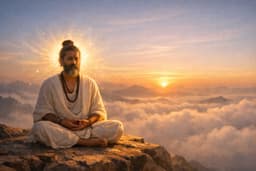
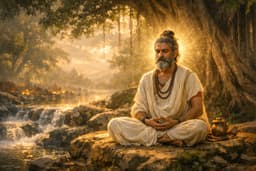
Sit in silence in a peaceful place
-
Choose one Mahavakya and repeat it mentally
-
Allow its meaning to sink deeper with each repetition
-
Do not analyze intellectually—experience the truth within
-
Let the mantra dissolve your identity with the body and mind
-
Gradually, a sense of boundless awareness arises
This contemplation, practiced consistently, is said to lead to Self-realization.
Mahavakyas in Daily Life
These teachings are not meant for monks alone. They can transform everyday life:
-
In stress: remember Prajnanam Brahma—all experiences arise in consciousness
-
In anger: recall Tat Tvam Asi—the same Self exists in the other
-
In fear: meditate on Aham Brahmasmi—your true nature is infinite
-
In confusion: reflect on Ayam Atma Brahma—the Self is the ultimate truth
The Mahavakyas bring clarity, peace, and a deep sense of purpose to modern life.
Conclusion
The Mahavakyas of the Upanishads are not simply ancient sayings—they are spiritual gateways. They reveal the highest truths about existence, consciousness, and divinity. By understanding and meditating upon them, one can transcend ignorance, discover inner freedom, and realize the ultimate unity of the Self and Brahman.
These great sayings remain timeless reminders that beneath all diversity, division, and change lies one eternal reality—the same divine essence shining in all beings.