Four Vedas – Rig, Yajur, Sama & Atharva
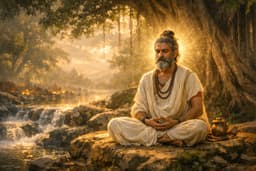
The Vedas are the most ancient and revered scriptures of Hinduism, forming the foundational knowledge of Sanatana Dharma. They are considered apauruṣeya—not created by any human—but revealed to great sages (rishis) in deep meditation. The term “Veda” itself means knowledge, and this knowledge covers everything from spiritual wisdom to rituals, ethics, music, philosophy, cosmology, and daily conduct.
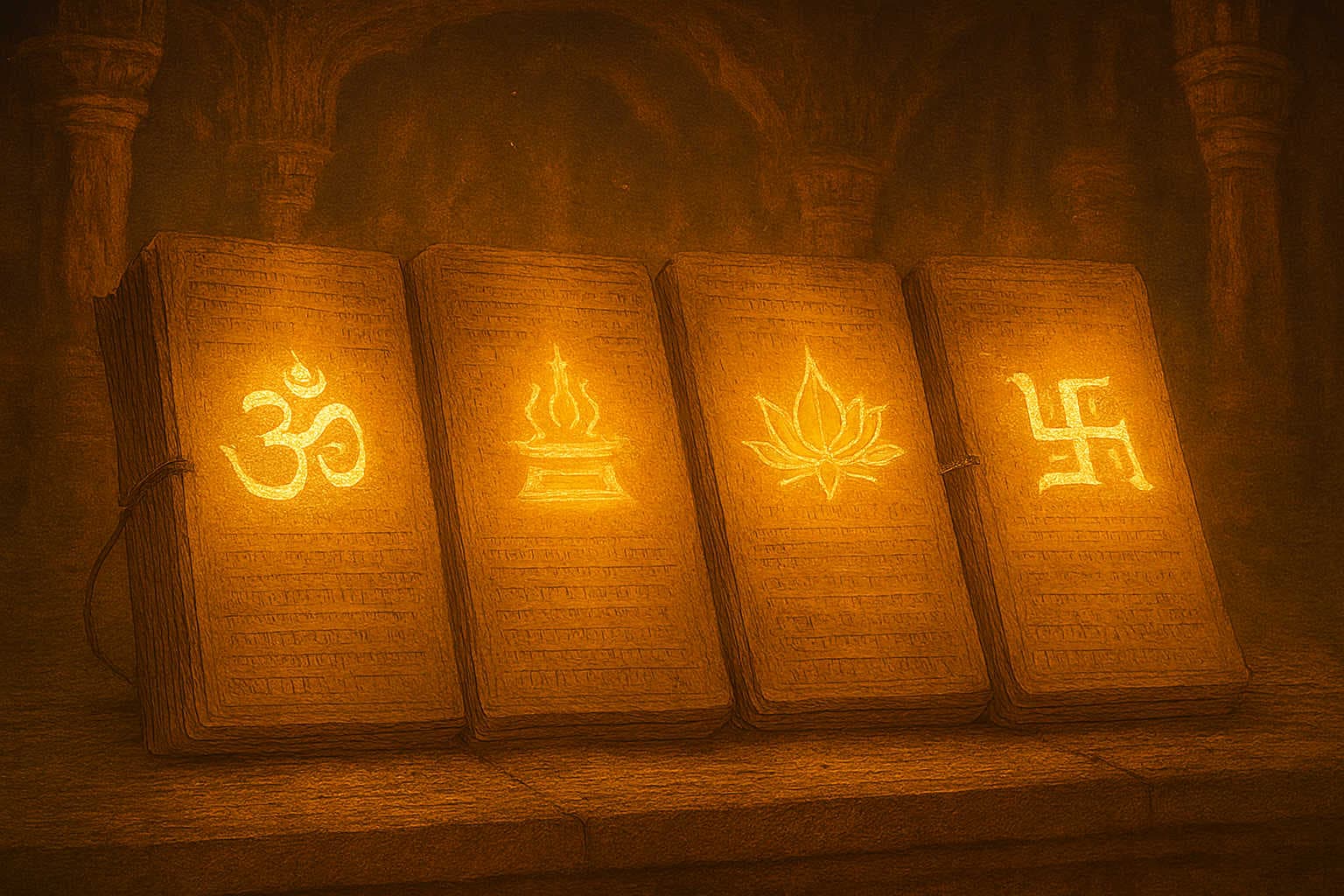
The Vedas are divided into four major collections: Rigveda, Yajurveda, Samaveda and Atharvaveda. Each carries a unique purpose, style, and domain of knowledge. Together, they form a complete spiritual system guiding humanity toward dharma, harmony, and truth.
1. Rigveda – The Oldest and Most Philosophical Veda
The Rigveda is the earliest of the four Vedas, composed around 1500–1200 BCE, making it one of the oldest known texts of humanity. It contains 1,028 hymns (suktas) arranged into 10 mandalas.
These hymns are dedicated to various deities representing divine forces of nature—Agni (fire), Indra (power), Varuna (cosmic order), Soma (divine elixir), Usha (dawn), and many others.
Rigveda is deeply poetic and symbolic. Its verses move between the physical world and higher spiritual truths. The famous Nasadiya Sukta, for instance, explores cosmic creation with remarkable philosophical depth, asking profound questions about existence and the origins of the universe.
In essence, Rigveda represents jnana—knowledge and spiritual inquiry.
2. Yajurveda – The Veda of Rituals and Sacrifice
While Rigveda contains hymns, Yajurveda focuses on the procedure for performing rituals (yajnas). Its verses guide priests on how to conduct sacred ceremonies, offering mantras, instructions, and formulas needed during sacrifices and worship.
There are two major branches of the Yajurveda:
-
Shukla (White) Yajurveda – contains clear verses arranged separately from explanatory prose.
-
Krishna (Black) Yajurveda – mixes mantras with explanations.
The main purpose of Yajurveda is to harmonize human life with cosmic forces through precise actions. It emphasizes discipline, order, and the correct performance of ritual duties. It represents the aspect of karma—action and responsibility.
Even today, many traditional Hindu ceremonies derive their procedures from Yajurvedic texts.
3. Samaveda – The Veda of Music, Melody, and Chanting
Samaveda is the musical core of the Vedic tradition. Its verses are primarily taken from the Rigveda but transformed into musical notes and melodic patterns.
It contains about 1,875 verses, most of which are sung rather than recited. Samaveda laid the foundation for Indian classical music, with its structured melodies and rhythmic patterns influencing ragas and devotional singing.
The purpose of Samaveda was to uplift consciousness through sound vibrations. Chanting these hymns during sacrifices helped create harmony, devotion, and a heightened spiritual atmosphere.
Samaveda represents bhakti—devotion expressed through sacred sound.
4. Atharvaveda – The Veda of Everyday Life and Practical Wisdom
Atharvaveda stands apart because it deals with daily life, health, healing, protection, relationships, prosperity, and social harmony. It includes hymns for peace, cure, success, and well-being.
It is sometimes called the Veda of knowledge for householders since it includes practical guidance for family life, community welfare, agriculture, and medicine.
Atharvaveda is also the source of many early ideas in Ayurveda, psychology, and metaphysics. Unlike the more ritualistic Vedas, it focuses on human needs such as happiness, harmony, and protection against suffering.
This Veda represents shanti—peace, healing, and well-being for all.
Structure of Each Veda
Every Veda contains four parts:
-
Samhitas – collection of hymns and mantras
-
Brahmanas – instructions for rituals
-
Aranyakas – forest texts for meditation
-
Upanishads – philosophical teachings
This structure reflects a journey from outer ritual to inner realization—from action to contemplation to spiritual truth.
Why the Four Vedas Are Still Relevant Today
The Vedas remain timeless because they offer:
-
Universal spiritual wisdom
-
Ethical values for harmonious living
-
Scientific insights into nature, astronomy, and consciousness
-
Guidance for family, society, and personal growth
-
Pathways to inner peace and liberation
Even thousands of years later, the Vedas continue to inspire seekers, scholars, musicians, yogis, and spiritual practitioners worldwide.
The Vedas as a Complete Path
Together, the four Vedas represent a holistic structure:
-
Rigveda → Knowledge (Jnana)
-
Yajurveda → Action (Karma)
-
Samaveda → Devotion (Bhakti)
-
Atharvaveda → Harmony (Shanti)
They mirror the four aspects needed for a balanced and meaningful life.
In summary, the Vedas are not just ancient scriptures—they are living wisdom. They invite humanity to explore truth, live with integrity, act with purpose, express devotion, and seek harmony in both the world and the inner self. Their teachings continue to illuminate the spiritual path, just as they have for countless generations.