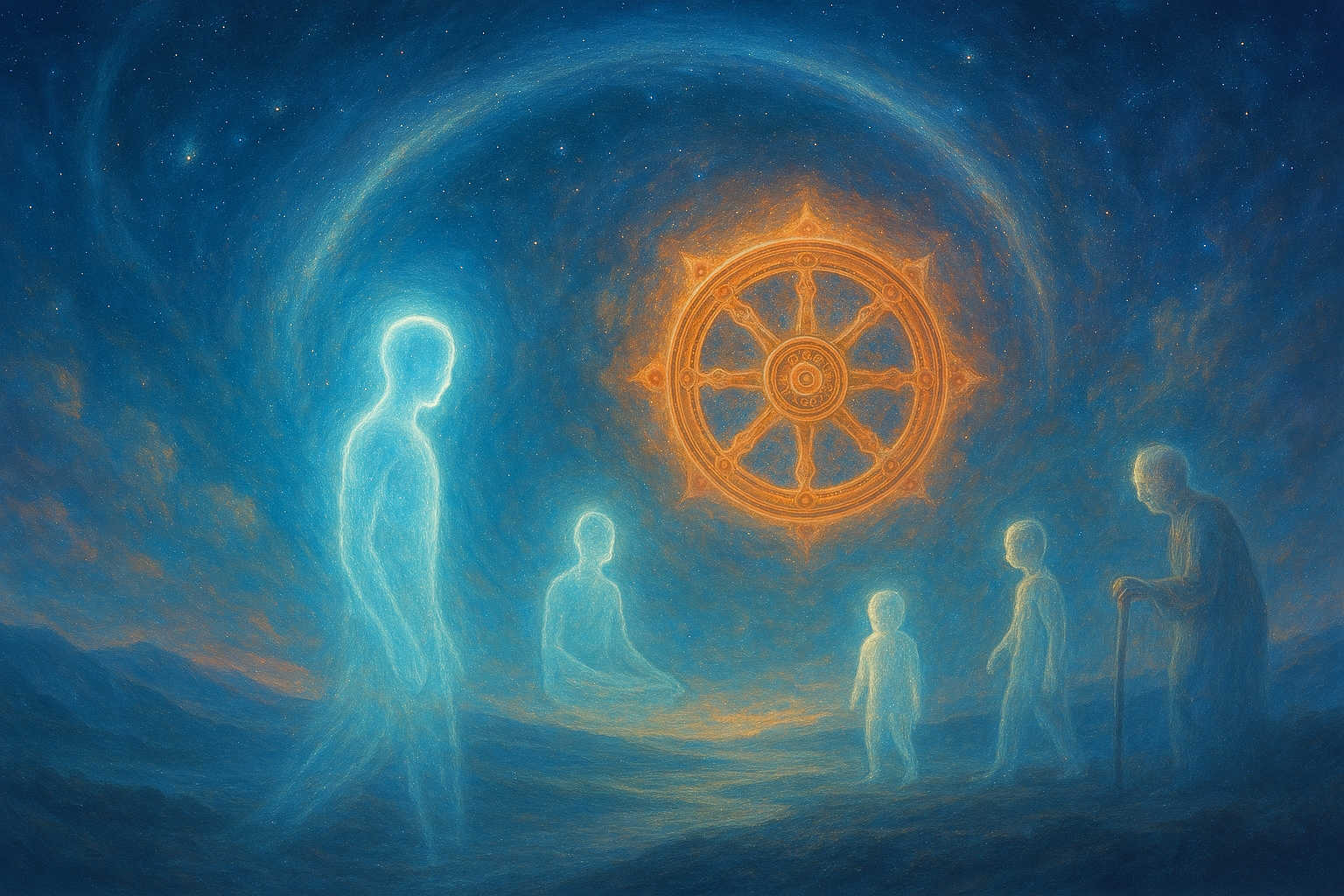
Rebirth & Reincarnation – Journey of the Soul
From ancient times, the idea that life is not limited to a single birth has been a central belief in Hindu philosophy. Known as punarjanma (rebirth) and punaravritti (reincarnation), this concept teaches that the soul does not die with the body but continues its journey across multiple lifetimes. This timeless understanding forms the backbone of Hindu spirituality, offering answers to life’s biggest questions—Who are we? Why are we here? Why do we suffer? What happens when we die?
The journey of the soul is a long and transformative path shaped by karma, desires, and spiritual evolution. Through countless births and experiences, the soul gradually moves toward the ultimate goal—moksha, freedom from the cycle of birth and death.
The Eternal Nature of the Soul
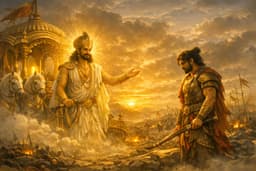
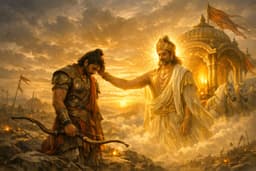
Hindu scriptures describe the soul, or Atman, as eternal, pure, and indestructible. The body may perish, but the soul simply sheds one form and takes another. In the Bhagavad Gita, Krishna explains this beautifully: “Just as a person gives up old clothes and puts on new ones, so the soul discards an old body and enters a new one.”
This understanding gives life a deeper meaning. Instead of seeing existence as a short journey between birth and death, Hindu philosophy teaches that life is part of a vast continuum, stretching beyond imagination.
Why Does Reincarnation Happen?
According to Hindu thought, reincarnation is neither random nor accidental. It is driven by:
1. Karma – The Law of Cause and Effect
Every action—good or bad—creates an imprint on the soul. These karmic impressions accumulate over many lifetimes, determining the circumstances of future births. Karma ensures that no action is without consequence and no lesson remains unlearned.
2. Vasanas – Deep-Seated Desires
Desires act as fuel for rebirth. As long as we crave experiences—pleasure, recognition, wealth, adventure, relationships—the soul must return to the physical world to fulfill them.
3. Dharma – The Soul’s Evolutionary Purpose
Each birth presents unique lessons. Some lives may be peaceful, others challenging, but each one is tailored to the soul’s growth. A soul may reincarnate to repay a debt, complete unfinished duties, or develop virtues such as compassion, patience, or courage.
The Cycle of Samsara
Reincarnation occurs within Samsara, the wheel of life, death, and rebirth. It is depicted in scriptures as a vast ocean where each soul is adrift, moving from one shore to another through countless lifetimes. Samsara continues until the soul rises above desire and karma.
This cycle explains the diversity of human experiences—why some are born into wealth, others into struggle; why some possess natural talents while others learn slowly. Each birth is a chapter in the soul’s long story.
Different Forms of Rebirth
Hindu texts mention that the soul can take birth as:
-
Humans – the only form capable of attaining moksha
-
Animals – driven by instinct and past-life tendencies
-
Heavenly or subtle beings – due to accumulated good karma
-
Lower beings – due to harmful deeds or ignorance
These births reflect the soul’s karmic record and spiritual maturity. Human birth is considered the most precious because it offers free will, self-awareness, and access to spiritual knowledge.
What Happens at the Time of Death?
Death is seen as a transition, not an end. When the body becomes unfit for the soul’s journey, it is left behind like a broken vessel. The subtle body—containing the mind, intellect, impressions, and karma—travels to its next destination.
Depending on karmic balance, the soul may:
-
immediately take a new birth
-
enter a temporary subtle realm
-
experience pleasure or suffering as a result of its deeds
The next birth is determined by the dominant karma at the moment of death and the deepest desires carried forward.
Reincarnation and Spiritual Growth
Each lifetime brings opportunities for growth:
-
A difficult life may teach resilience.
-
A peaceful life may cultivate gratitude.
-
A humble birth may foster humility.
-
A privileged life may encourage responsibility.
Over time, the soul evolves, refining its character and understanding. The more a person lives in alignment with dharma—truth, compassion, self-control, and devotion—the faster the soul progresses.
The Role of Karma Yoga, Bhakti, and Knowledge
Hindu tradition offers three primary paths to purify karma and move toward liberation:
1. Karma Yoga – Selfless Action
Acting without attachment reduces karmic burden.
2. Bhakti Yoga – Devotion
Surrender and love for the Divine burn away lifetimes of impurities.
3. Jnana Yoga – Knowledge of the Self
Understanding the soul’s true nature dissolves ignorance, the root of rebirth.
Through these paths, one gradually moves closer to inner freedom.
Moksha – The End of Rebirth
The ultimate aim of human life is moksha, the liberation from the endless cycle of births. Moksha is achieved when:
-
karma is exhausted
-
desires are dissolved
-
the soul realizes its unity with Brahman
In this state, the soul no longer seeks anything from the physical world. It rests in eternal bliss, free from all limitations.
Why Belief in Rebirth Matters Today
Reincarnation offers powerful perspectives for modern life:
-
It encourages responsibility for our actions.
-
It prevents despair by giving meaning to suffering.
-
It eliminates fear of death.
-
It inspires compassion, knowing every soul is on its own journey.
This worldview turns life into a classroom for the soul’s growth rather than a race for temporary achievements.
Conclusion
The belief in rebirth and reincarnation provides one of the most profound understandings of human existence. By seeing life as a series of journeys, shaped by karma and guided by divine intelligence, we can approach our experiences with clarity, patience, and purpose. The soul’s journey is vast and beautiful—each lifetime a step toward the ultimate realization of our eternal, divine nature.