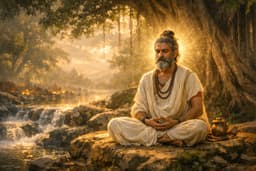
Daya – Developing Compassion for All Beings
In the spiritual traditions of India, Daya (compassion) is considered one of the highest virtues. The word Daya in Sanskrit means sympathy, empathy, or kindness—an ability to feel the suffering of others and respond with love. It is not just an emotional reaction but a conscious choice to extend care, protection, and goodwill to all beings, whether human, animal, or even the smallest creatures.
Daya is often described as the very essence of dharma (righteousness). A person may be learned, powerful, or wealthy, but without compassion, all virtues lose their true value. Compassion is what transforms knowledge into wisdom and worship into true devotion.
Daya in the Scriptures
Hindu scriptures repeatedly emphasize compassion as a divine quality:
-
The Bhagavad Gita (12.13) describes the true devotee as “friendly, compassionate, free from envy, and humble.”
-
The Mahabharata declares: “Compassion is the root of dharma. One who has no compassion has no dharma.”
-
The Tirukkural, a Tamil classic, praises compassion as the greatest of virtues, saying: “Compassion to all living beings is the true sign of righteousness.”
From the Vedas to the Bhakti poets, Daya is celebrated as a path to God, for compassion brings us closer to the universal spirit that resides in all beings.
The Essence of Daya
Daya goes beyond mere pity. True compassion has three aspects:
-
Empathy – The ability to feel the suffering of others as one’s own.
-
Action – Not only feeling but also responding through kindness, charity, or protection.
-
Universality – Extending compassion to all beings, regardless of caste, creed, species, or status.
A compassionate heart does not discriminate. Just as the sun shines equally upon all, so too must Daya flow without limits.
Daya and Ahimsa – Compassion in Action
Daya is closely linked with Ahimsa (non-violence). Ahimsa prevents harm, while Daya actively seeks to relieve suffering. For example:
-
Ahimsa is refraining from killing animals.
-
Daya is feeding them, protecting them, and showing care.
Without compassion, non-violence becomes passive. With compassion, it becomes an active force of love that heals and uplifts.
Practicing Daya in Daily Life
Compassion is not only for saints and sages—it can be lived daily. Some ways to cultivate Daya include:
-
Kindness to All Creatures – Feeding birds, caring for animals, and avoiding cruelty.
-
Helping the Needy – Supporting those in poverty, sharing food, and offering help in times of distress.
-
Compassionate Speech – Speaking gently, encouraging others, and avoiding harsh or hurtful words.
-
Listening with Empathy – Understanding the pain of others without judgment.
-
Self-Compassion – Treating oneself with kindness and forgiveness, as harshness toward oneself often translates to harshness toward others.
-
Environmental Care – Protecting nature and seeing all living beings as interconnected parts of the same creation.
Benefits of Cultivating Daya
The practice of Daya transforms life on many levels:
-
Inner Peace – A compassionate heart is free from anger, envy, and bitterness.
-
Better Relationships – Compassion fosters trust, harmony, and love among people.
-
Spiritual Progress – Compassion purifies the heart, making it fit for meditation and devotion.
-
Karmic Balance – Acts of kindness reduce negative karma and bring blessings.
-
Societal Harmony – Compassionate living creates communities built on cooperation rather than conflict.
Daya in the Lives of Saints
Indian spiritual history is filled with examples of compassion:
-
Lord Rama is revered for his gentle heart, showing kindness even to enemies.
-
Lord Buddha built his path entirely upon compassion for all beings.
-
Chaitanya Mahaprabhu wept for the welfare of all souls, teaching love as the supreme dharma.
-
Saint Tyagaraja and other bhakti poets sang that devotion without compassion is meaningless.
These lives remind us that true greatness is not measured by power but by the depth of compassion one shows to others.
Challenges in Practicing Daya
While compassion is natural, modern life often hardens the heart. Competition, stress, and materialism can make people indifferent. Compassion is sometimes mistaken for weakness. Yet true Daya requires strength—it takes courage to stand for the suffering, to forgive, and to give without expecting return.
Another challenge is selective compassion—being kind to one’s own circle but indifferent to strangers or animals. True Daya must break these boundaries and extend universally.
The Spiritual Dimension of Daya
Compassion is not only a moral duty but also a spiritual practice. By showing Daya, we recognize the same Atman (soul) in all beings. This awareness dissolves the illusion of separateness and brings us closer to realization of unity with the Divine.
The Upanishads teach, “He who sees all beings in the Self, and the Self in all beings, never hates anyone.” Daya is the natural outcome of this vision of oneness.
Conclusion
Daya is the fragrance of the soul—the expression of love that unites all beings. To live with compassion is to live in alignment with dharma, to walk the path of the saints, and to prepare the heart for liberation.
Practicing Daya does not always require great sacrifices. Even small acts—sharing food, offering a kind word, caring for the environment—become sacred when done with sincerity. Compassion makes life meaningful, relationships richer, and the soul lighter.
In a world often torn by conflict and division, Daya is the healing balm that restores balance. To cultivate compassion for all beings is to reflect the very nature of the Divine within us.