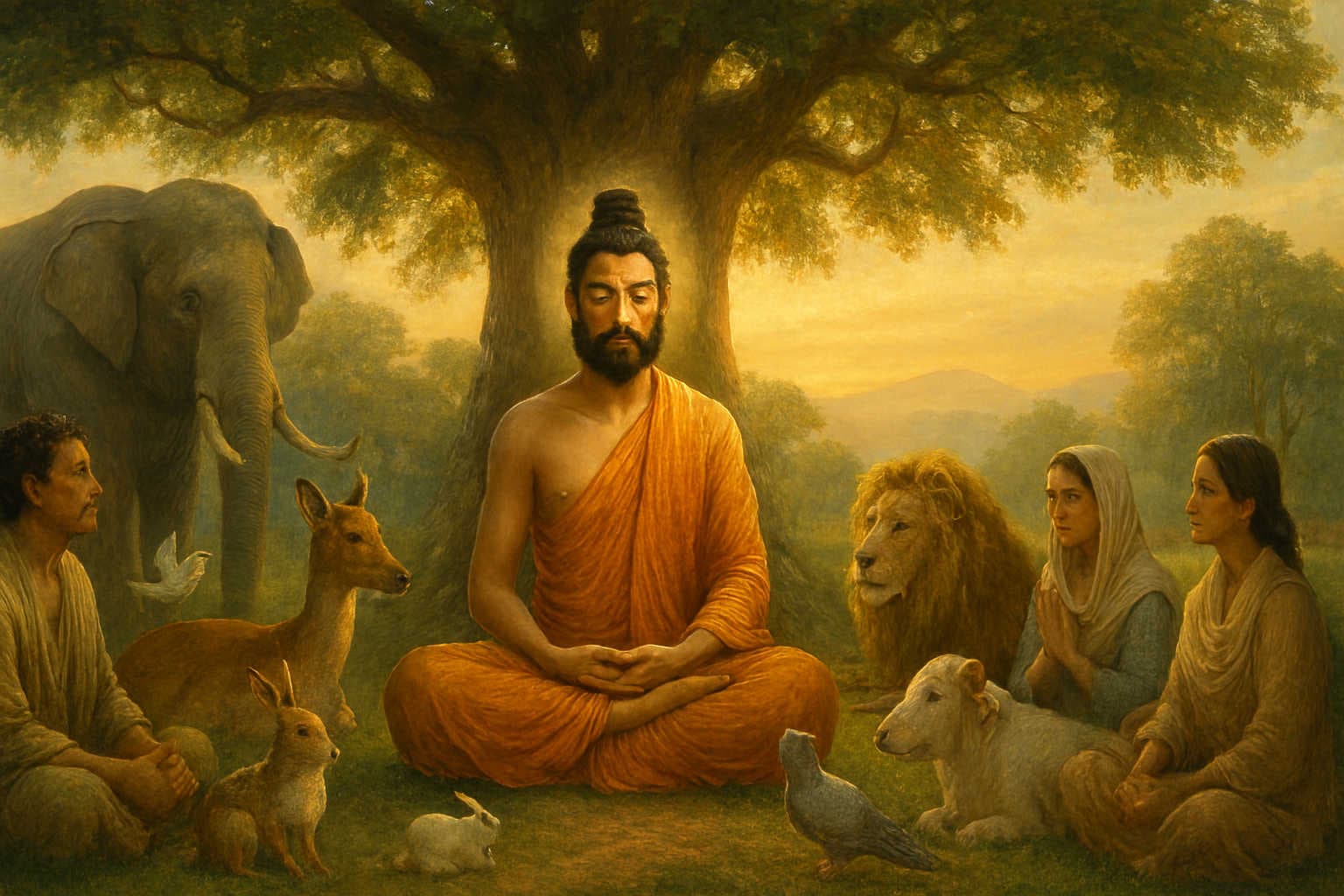
Ahimsa – Practicing Non-Violence in Daily Life
Among the timeless teachings of Indian philosophy, Ahimsa—the principle of non-violence—stands out as one of the most profound. Rooted in the Yoga Sutras of Patanjali as the first of the Yamas (restraints), Ahimsa forms the foundation for spiritual practice, moral conduct, and harmonious living. More than simply avoiding physical harm, Ahimsa extends to non-violence in thought, word, and action.
This principle has been a cornerstone of Indian traditions such as Hinduism, Jainism, and Buddhism, and has influenced great leaders like Mahatma Gandhi, who made it the guiding principle of India’s freedom struggle. In today’s world of conflict, stress, and division, Ahimsa offers a powerful reminder of how compassion and non-harming can transform our lives.
The Meaning of Ahimsa
The word Ahimsa comes from Sanskrit: a (not) + himsa (violence or harm), literally meaning “non-harming.” It is not passive avoidance of harm but an active cultivation of love, empathy, and kindness.
Ahimsa encompasses three dimensions:
-
Physical non-violence – refraining from harming people, animals, or the environment.
-
Verbal non-violence – speaking kindly, avoiding harsh words, gossip, or lies that cause pain.
-
Mental non-violence – letting go of negative thoughts like anger, jealousy, or hatred that injure oneself or others.
Ahimsa in Daily Life
Practicing Ahimsa begins with mindfulness and awareness of our choices and actions. It is not confined to spiritual aspirants but is relevant for everyone in modern life.
1. Ahimsa in Thoughts
Our inner world shapes our external behavior. A person filled with anger or resentment is more likely to express violence in words or actions. Cultivating positive thoughts through meditation, gratitude, and compassion helps prevent inner violence.
-
Replace judgment with understanding.
-
Let go of revengeful thinking.
-
Practice self-love to avoid harming yourself with negative self-talk.
2. Ahimsa in Words
Words can heal or hurt more deeply than weapons. Practicing verbal non-violence means being mindful of how we speak to others.
-
Avoid gossip, insults, or criticism.
-
Use encouraging and uplifting language.
-
Communicate disagreements respectfully.
This form of Ahimsa fosters better relationships and reduces conflict.
3. Ahimsa in Actions
The most visible form of non-violence is physical conduct. It includes refraining from hurting others, animals, or nature.
-
Avoid unnecessary harm to any living being.
-
Choose non-cruelty in lifestyle choices, such as diet or consumption.
-
Actively help and protect those in need.
In modern terms, Ahimsa also means reducing harm to the planet by adopting eco-friendly practices.
Ahimsa and Diet
One of the most well-known applications of Ahimsa is in dietary choices. Many Hindus, Jains, and Buddhists adopt vegetarianism or veganism as an expression of non-violence. By avoiding the killing of animals for food, they align their lifestyle with compassion and respect for life.
Even beyond food, Ahimsa asks us to reflect: Are our daily habits harmful to the environment or exploiting others? Ethical consumption becomes part of practicing non-violence.
Ahimsa in Relationships
Non-violence is not only about avoiding harm but also about fostering harmony in human connections. It encourages:
-
Patience in conflicts instead of aggression.
-
Forgiveness instead of holding grudges.
-
Love and empathy in families, friendships, and communities.
When practiced, Ahimsa turns relationships into sources of growth and peace rather than stress and tension.
Ahimsa and Inner Transformation
Interestingly, Ahimsa is as much about self-care as it is about others. Harming oneself through overwork, unhealthy habits, or negative thinking is also a violation of Ahimsa. Taking time to rest, nourish the body, and nurture mental health are integral parts of the practice.
By applying Ahimsa inwardly, we cultivate compassion for ourselves, which naturally extends outward to others.
Ahimsa in the Modern World
In today’s fast-paced, competitive, and often violent society, Ahimsa has immense relevance:
-
Workplace: practicing kindness, teamwork, and integrity.
-
Social Media: avoiding online hate or harmful trolling.
-
Environment: adopting sustainable habits to protect nature.
-
Global Peace: choosing dialogue and understanding over violence and conflict.
Ahimsa provides a universal framework for living harmoniously in a diverse and interconnected world.
Spiritual Significance of Ahimsa
In Patanjali’s Yoga Sutras, Ahimsa is the first Yama, showing its fundamental importance. It is said that when one is firmly established in Ahimsa, all beings around them feel safe and at peace.
Great saints and sages like Lord Mahavira, Buddha, and Gandhi demonstrated that non-violence is not weakness but the highest form of strength. It purifies the heart and brings the practitioner closer to spiritual truth.
Practical Ways to Practice Ahimsa Daily
-
Begin the day with a short prayer or intention of kindness.
-
Pause before reacting in anger or frustration.
-
Choose words that heal, not hurt.
-
Adopt a compassionate diet and eco-friendly habits.
-
Volunteer or help someone in need.
-
Practice forgiveness and let go of grudges.
-
Care for your body and mind with yoga, meditation, and rest.
Conclusion
Ahimsa is not just a moral rule but a way of life. It teaches us to live in harmony with ourselves, others, and nature. Practicing non-violence in thoughts, words, and actions can transform personal relationships, communities, and even the world.
Incorporating Ahimsa into daily life allows us to live with compassion, peace, and strength. As Gandhi beautifully showed, non-violence is the greatest power at the disposal of humanity. By practicing Ahimsa, we align with universal love and create a world rooted in harmony and respect for all beings.