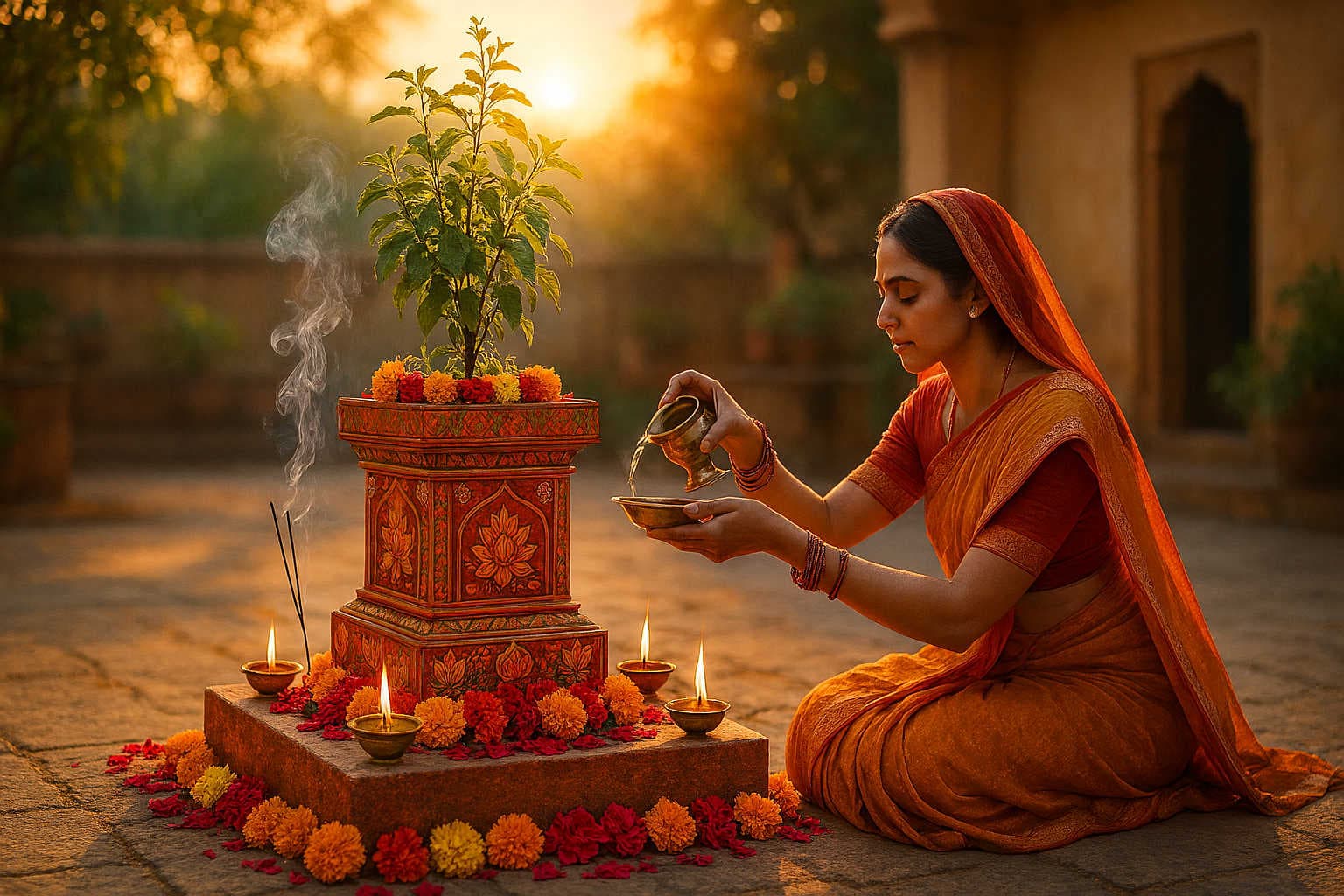
Daily Worship of Tulsi Plant – Significance and Method
In Hindu tradition, few plants hold as sacred a place as Tulsi (Holy Basil). Revered as a manifestation of Goddess Lakshmi and dear to Lord Vishnu, the Tulsi plant is not only valued for its medicinal and spiritual properties but also forms the heart of daily worship in countless Hindu households. Every morning and evening, devotees light a lamp near Tulsi, offer water, flowers, and prayers, seeking blessings of health, prosperity, and spiritual purity.
This article explores the significance of Tulsi worship and provides a step-by-step method to perform daily Tulsi puja at home.
Spiritual Significance of Tulsi
The Tulsi plant is not just a herb—it is regarded as a living goddess in Hindu belief. According to scriptures:
-
Tulsi is considered the earthly form of Goddess Vrinda, a devoted follower of Lord Vishnu.
-
Worshiping Tulsi is said to please Lord Vishnu and Lord Krishna, who are always associated with Tulsi leaves.
-
Tulsi leaves are an integral part of offerings in Vishnu and Krishna temples—no puja is considered complete without them.
Devotees believe that having a Tulsi plant at home brings divine blessings, removes negative energies, and promotes peace and prosperity.
Mythological Stories
Tulsi worship is deeply connected with mythology. The Padma Purana narrates that Tulsi was born as the goddess Vrinda, a pure devotee of Vishnu. To honor her devotion, Vishnu blessed her to be worshipped on Earth in the form of the sacred Tulsi plant.
Another story links Tulsi to the Samudra Manthan (churning of the ocean), where Tulsi emerged as one of the divine gifts. Since then, Tulsi has been considered a symbol of purity and divine grace.
These stories strengthen the cultural importance of the plant, making it more than just a ritual—it becomes an act of devotion and remembrance of the divine.
Why Worship Tulsi Daily?
Daily worship of Tulsi is believed to bring both spiritual and material benefits:
-
Spiritual Purity – Tulsi worship cleanses the environment and uplifts the mind.
-
Health Benefits – Tulsi is known for its medicinal value, boosting immunity and promoting well-being.
-
Family Harmony – Regular puja near Tulsi is said to foster peace and prosperity in the home.
-
Blessings of Vishnu – Since Tulsi is dear to Lord Vishnu, offering her daily prayers pleases the deity and brings his grace.
-
Protection from Negativity – Tulsi is believed to ward off negative energies and attract positive vibrations.
Method of Daily Tulsi Worship
Performing Tulsi puja at home is a simple yet powerful act of devotion. Here is the traditional method followed in many Hindu households:
-
Preparation – Clean the courtyard or area around the Tulsi plant. Early morning or evening is considered ideal.
-
Lighting the Lamp – Light a diya (oil lamp) near the Tulsi plant. A ghee lamp is preferred, symbolizing purity.
-
Offering Water – Pour fresh water at the base of the plant while chanting mantras like “Om Namo Bhagavate Vasudevaya” or “Om Namo Narayanaya”.
-
Flowers and Prayers – Offer flowers, incense, and sometimes rice or sandal paste.
-
Circumambulation – Devotees walk around the Tulsi Vrindavan (pedestal) five or seven times, praying for health, happiness, and peace.
-
Chanting Mantras – Recite the Tulsi Stotra or simply chant “Tulsi Devi Namostute”.
-
Evening Ritual – In many households, a lamp is lit again in the evening, and devotional songs (Tulsi Aarti) are sung.
This daily act of worship transforms the household into a temple-like atmosphere.
Special Days for Tulsi Worship
While daily worship is common, certain days hold special importance:
-
Ekadashi (11th day of the lunar cycle) – Highly auspicious for Tulsi prayers.
-
Tulsi Vivah – Celebrated after Diwali, symbolizing the ceremonial marriage of Tulsi to Lord Vishnu.
-
Kartik month (October-November) – Considered the holiest month for Tulsi worship, with lamps lit every evening.
On these occasions, devotees decorate the Tulsi Vrindavan beautifully with rangoli, flowers, and lamps.
Scientific and Environmental Benefits
Apart from religious importance, Tulsi holds immense practical value:
-
Air Purifier – Tulsi releases oxygen and absorbs toxins, keeping the air fresh.
-
Medicinal Uses – Used in Ayurveda to cure colds, respiratory problems, and boost immunity.
-
Stress Relief – Its fragrance has calming effects on the mind.
-
Eco-Balance – Planting Tulsi helps maintain ecological balance and reduces pollution.
Thus, daily worship of Tulsi is also a way of protecting health and the environment.
Tulsi in Bhakti Tradition
Tulsi is inseparable from Vaishnavite worship. Devotees of Krishna always offer Tulsi leaves to the deity. In temples, Tulsi garlands are made and placed on idols. Chanting of the Hare Krishna Mahamantra often includes offering Tulsi leaves, signifying complete surrender to God.
For householders, Tulsi worship is a daily practice that combines devotion, discipline, and natural healing.
Conclusion
The daily worship of Tulsi is not a mere ritual but a holistic practice that unites spiritual faith, cultural tradition, and ecological awareness. By offering water, flowers, and lighting a lamp near Tulsi every day, devotees invoke divine blessings, foster family harmony, and create a sacred atmosphere at home.
In today’s fast-paced world, where stress and negativity often dominate, the simple act of bowing before the Tulsi plant can reconnect us with peace, purity, and devotion.
As the scriptures say:
“Where Tulsi grows, there misery does not dwell. Where Tulsi is worshipped, the gods rejoice.”