Role of Agnihotra and Fire Rituals in Daily Life
From the earliest Vedic times, fire (Agni) has been revered as the bridge between humans and the divine. Among the many practices that continue from this tradition, Agnihotra and fire rituals (homa, yajna) hold a central place in Hindu spiritual life. Agnihotra, performed with the rising and setting sun, is a simple yet profound fire ritual believed to purify the environment, heal the atmosphere, and align human consciousness with universal rhythms.
Fire rituals are not just symbolic offerings to deities—they represent transformation, purification, and connection to the cosmic order. In daily life, these rituals offer both spiritual upliftment and practical benefits, reminding us of the timeless wisdom embedded in Vedic practices.
What is Agnihotra?
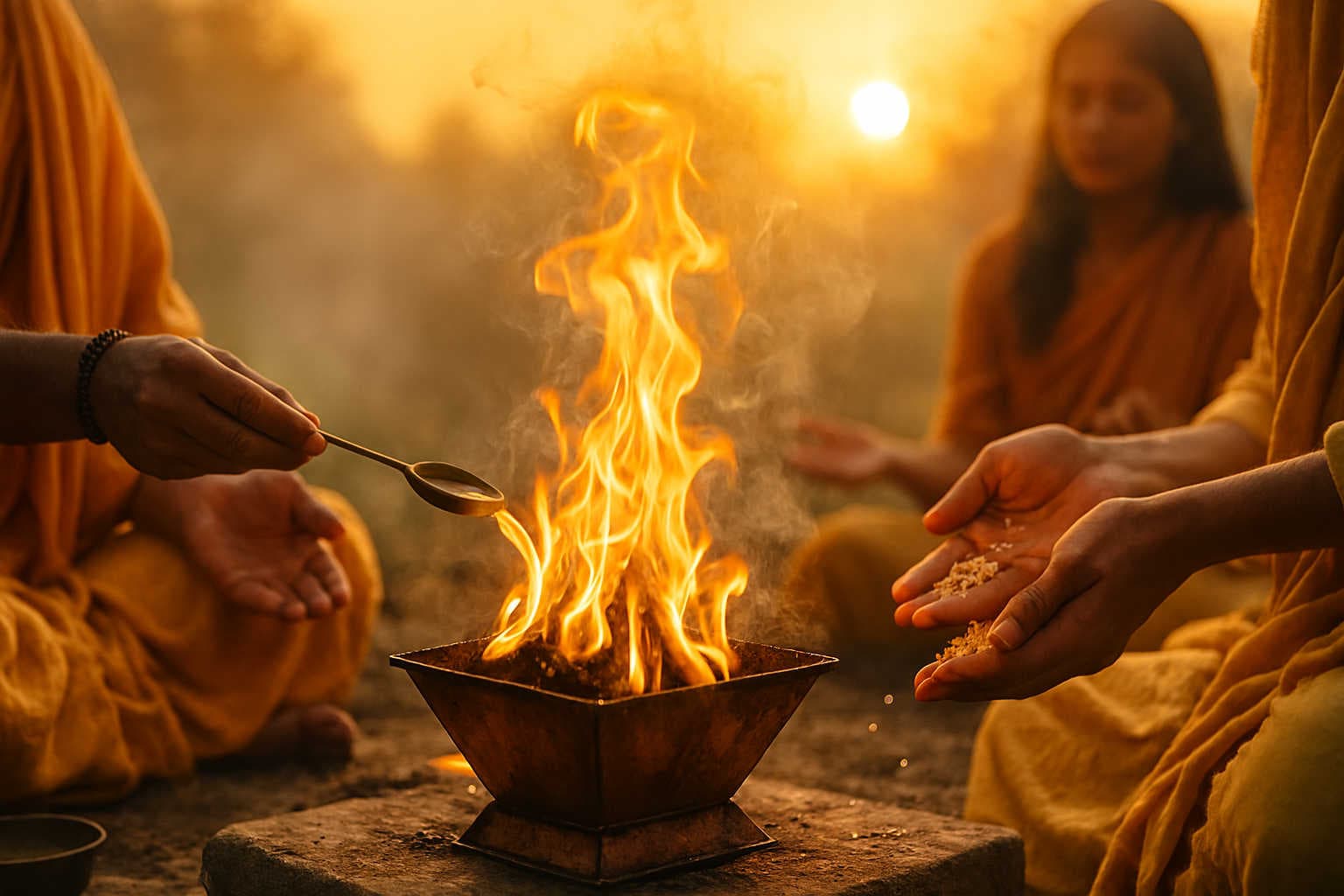
Agnihotra is a Vedic fire ritual performed at sunrise and sunset using a small copper pyramid vessel. Into this sacred fire, offerings such as dried cow dung cakes, ghee (clarified butter), and grains (usually unbroken rice) are placed while chanting specific mantras.
The ritual is synchronized with the exact timings of sunrise and sunset because these moments are considered cosmic junctions where energies are most powerful and balanced.
Agnihotra is often called the “healing fire”, not only for individuals but also for the environment.
Symbolism of Fire in Hinduism
-
Agni as Messenger: Fire is seen as the divine messenger carrying offerings from humans to the gods.
-
Purification: Fire burns impurities, symbolizing inner cleansing of negative thoughts and actions.
-
Transformation: Just as fire transforms wood into ash, it transforms worldly desires into spiritual wisdom.
-
Light and Energy: Fire represents knowledge, life force, and divine presence.
Thus, every fire ritual reflects the eternal movement from darkness to light, ignorance to wisdom.
Spiritual Benefits of Agnihotra and Fire Rituals
-
Purification of the Soul – The chanting of mantras with fire offerings uplifts consciousness and removes inner negativity.
-
Connection to Divine Forces – Agni acts as a mediator, ensuring that prayers and offerings reach the gods.
-
Discipline in Daily Life – Performing rituals at sunrise and sunset anchors one’s life in spiritual rhythm.
-
Calming the Mind – The sight of the sacred flame and the sound of mantras bring peace and focus.
-
Karmic Balance – Rituals serve as acts of devotion, gratitude, and surrender, reducing the weight of karmic bonds.
Environmental and Scientific Benefits
Modern studies and traditional wisdom suggest that Agnihotra has measurable effects on the environment and health:
-
Air Purification: The smoke from ghee and herbs in Agnihotra acts as a natural disinfectant, cleansing the air of harmful bacteria.
-
Healing Atmosphere: The energy released during the ritual is said to neutralize pollution and harmonize the surrounding space.
-
Soil Fertility: Ash from Agnihotra is considered rich in nutrients and often used as natural fertilizer in agriculture.
-
Mental Health: The rhythmic chanting and breathing during the ritual can reduce stress and increase focus, similar to meditation.
-
Biorhythmic Alignment: Performing the ritual at sunrise and sunset helps regulate circadian rhythms and enhance overall well-being.
Daily Practice of Agnihotra
Performing Agnihotra requires sincerity, discipline, and faith rather than elaborate resources.
-
Preparation:
-
A small copper pyramid vessel is essential.
-
Collect dried cow dung cakes, rice grains, and pure ghee.
-
Keep a matchstick or traditional lamp for lighting the fire.
-
-
Timing:
-
At sunrise and sunset (exact timings vary by location).
-
Facing east at sunrise and west at sunset.
-
-
Process:
-
Light the fire in the vessel using cow dung and ghee.
-
At the exact moment of sunrise or sunset, chant the Agnihotra mantra and offer two portions of rice with ghee into the fire.
-
-
After the Ritual:
-
The ash that remains is considered sacred and can be applied to the forehead, kept in the home, or used in gardens for soil nourishment.
-
Other Fire Rituals in Daily Life
While Agnihotra is a simple ritual for households, there are other Vedic fire rituals with similar significance:
-
Homa (Havan): A fire offering ritual using specific mantras and ingredients for various purposes—peace, prosperity, or protection.
-
Yajna: Larger-scale fire sacrifices performed by priests for communal or cosmic welfare.
-
Aarti Flame: Even the waving of a lamp during daily worship symbolizes the sacred power of Agni.
All these practices emphasize the role of fire as a divine purifier and transformer.
Why Fire Rituals Still Matter in Modern Life
In today’s fast-paced and polluted world, fire rituals like Agnihotra serve as a bridge between ancient wisdom and modern needs. They offer:
-
Spiritual grounding amidst daily stress.
-
Natural healing for air and environment.
-
Connection to tradition, keeping Vedic culture alive.
-
Simple mindfulness practice, accessible to all.
Even a few minutes spent before the sacred fire each day can create an aura of positivity in the home and heart.
Conclusion
The role of Agnihotra and fire rituals in daily life goes beyond religious formality. They are acts of harmony—between man and nature, individual and cosmos, body and soul. By offering grains and ghee into the sacred fire, we symbolically offer our ego, desires, and impurities, seeking transformation into higher consciousness.
Performing Agnihotra daily purifies the air we breathe, calms the mind, and enriches the spirit, making it a holistic practice for both inner and outer well-being.
In the glowing flame of Agnihotra lies a timeless truth: when we honor fire, we honor life itself.