Lighting the Diya – Daily Aarti at Home
In every Hindu household, the warm glow of a lit diya (lamp) is one of the most cherished sights. Whether during morning prayers, evening rituals, or on special occasions, lighting a diya represents a sacred act of devotion. It is not merely about lighting a flame; it is about inviting divinity into one’s home, removing darkness and ignorance, and offering gratitude to the Supreme Being. The act of lighting a diya during daily aarti is a practice that has been passed down through generations, connecting families with their cultural and spiritual roots.
Symbolism of the Diya
The diya, often made of brass or clay, holds deep spiritual meaning:
-
Light over Darkness – The flame of the diya symbolizes the victory of knowledge over ignorance and good over evil.
-
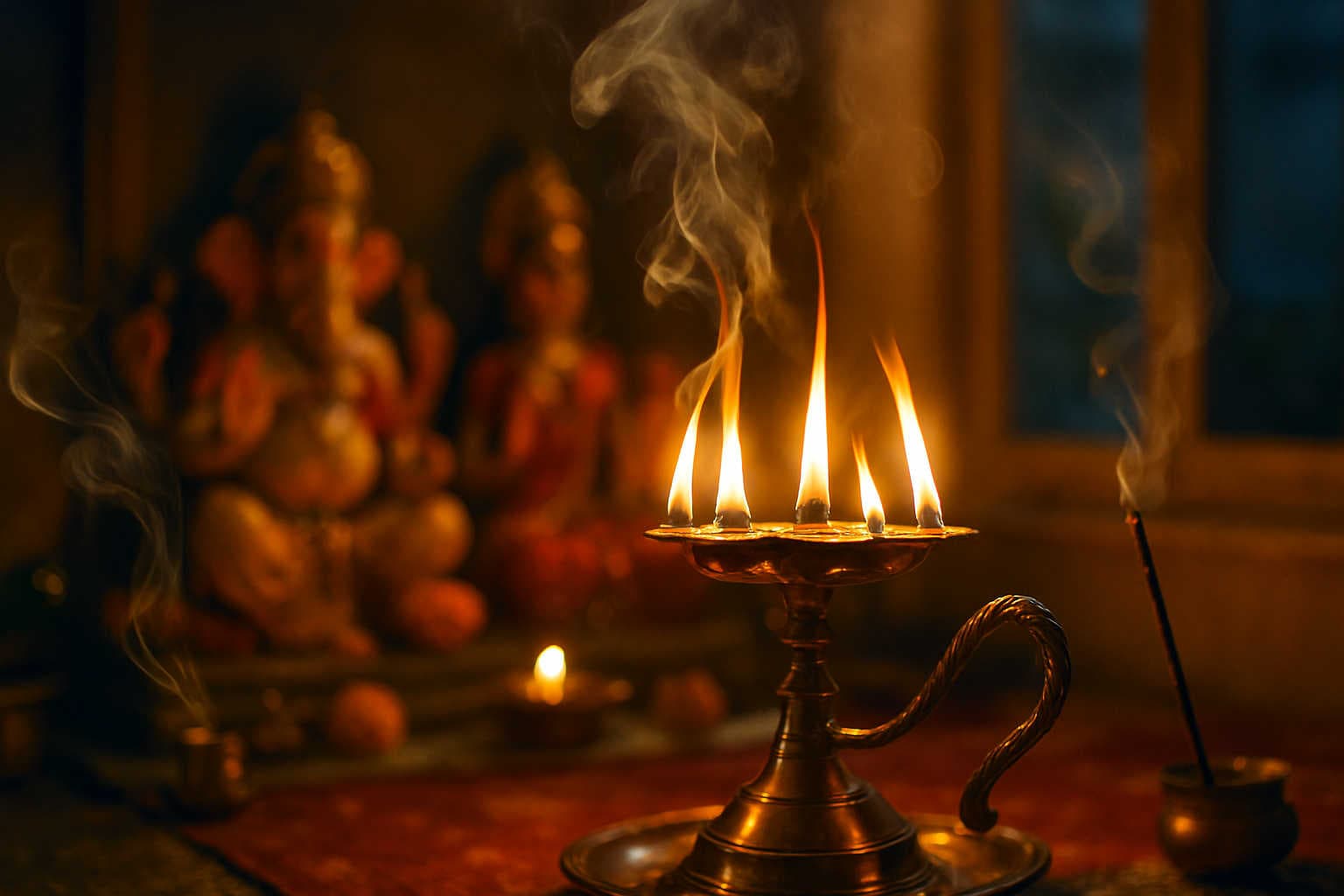
Divine Presence – Once lit, the diya becomes a vessel of sacred energy, believed to invite the gods and goddesses into the space.
-
Inner Awakening – Just as the flame burns steadily, it reminds the devotee to maintain inner stability and focus in life.
-
Offering of Self – The ghee or oil fueling the diya represents the ego, which is consumed to let the light of the soul shine forth.
The simple act of lighting a diya thus transforms a home into a sacred space.
The Ritual of Daily Aarti at Home
Daily aarti usually takes place in the morning and evening, though many families focus on the evening ritual when the household gathers after the day’s activities. The process often involves:
-
Preparation of the Space
-
The altar or pooja room is cleaned, idols are decorated with flowers, and incense is arranged.
-
-
Lighting the Diya
-
The diya is lit using ghee (clarified butter) or oil, symbolizing purity and sustenance. Cotton wicks are placed carefully to sustain the flame.
-
-
Invocation of the Divine
-
Prayers, mantras, or slokas are recited to invite the deities into the space.
-
-
The Aarti Ceremony
-
The diya is gently waved in circular motions before the deity, accompanied by devotional songs. The circles are made clockwise, signifying the offering of light to the divine.
-
-
Distribution of Blessings
-
After the aarti, the flame is offered to family members who cup their hands over it and touch their eyes or forehead, symbolizing the acceptance of divine blessings.
-
This daily practice reminds families of their faith, strengthens unity, and brings peace into the home.
Why Lighting the Diya Matters
The significance of lighting a diya extends beyond tradition. It affects the environment and the inner being of those who participate.
-
Spiritual Energy: A burning diya purifies the atmosphere and creates positive vibrations.
-
Mental Focus: Watching the flame helps calm the mind, making it easier to concentrate during prayer.
-
Discipline: The daily ritual instills consistency and devotion, bringing structure to spiritual life.
-
Connection with Ancestors: Many Hindus believe that the diya also honors ancestors and departed souls, guiding them with light.
Types of Diyas and Their Use
Different diyas are used in Hindu rituals, each carrying unique symbolism:
-
Single Wick Diya – Represents focus and simplicity, often used in daily pooja.
-
Five Wick Diya (Panchmukhi Deep) – Symbolizes the five elements (earth, water, fire, air, and ether), balancing energies in the home.
-
Akhand Jyoti – A lamp kept burning continuously, especially during festivals like Navratri, representing unwavering devotion.
-
Clay Diya – Traditionally used in festivals like Diwali, symbolizing humility and purity.
-
Brass or Silver Diya – Durable and auspicious, used in permanent pooja rooms.
The type of diya chosen often depends on the occasion and family tradition.
Lighting the Diya in Festivals and Rituals
While daily pooja keeps the flame alive in the household, festivals amplify the importance of lighting diyas.
-
Diwali – The festival of lights celebrates the triumph of good over evil, with thousands of diyas lit to welcome prosperity.
-
Navratri – An akhand jyoti is kept burning to honor Goddess Durga.
-
Kartik Purnima – Devotees light lamps to honor Vishnu and Shiva.
-
Marriage Ceremonies – Diyas are lit to bless the couple with light, prosperity, and harmony.
Each occasion enriches the spiritual and cultural symbolism of the diya.
Scientific and Yogic Perspective
Hindu rituals often blend spirituality with practical wisdom:
-
Air Purification: The ghee and camphor used in diyas release substances that purify the air.
-
Stress Reduction: Focusing on the diya flame during meditation reduces stress and anxiety.
-
Chakra Activation: The flame corresponds to the Agni (fire) element, stimulating the Manipura chakra (solar plexus) for strength and vitality.
-
Circadian Rhythm: Performing aarti at sunrise and sunset aligns the body’s rhythm with natural cycles.
Thus, lighting the diya is not just symbolic but also harmonizes the physical and mental environment.
Conclusion
Lighting the diya during daily aarti at home is a small yet powerful ritual that embodies the essence of Hindu spirituality. It is a reminder that even in the midst of worldly chaos, one can find light, clarity, and peace through devotion. The flame symbolizes the eternal soul, steady and unwavering, guiding the devotee toward truth and purity.
For families, it is a unifying practice—gathering together before the glowing lamp, offering prayers, and receiving blessings. For individuals, it is an inner journey of awakening and surrender.
The diya’s glow may seem small, but its light has the power to illuminate minds, cleanse hearts, and invite divinity into the home. Thus, every time a diya is lit, it is not just a ritual but a profound declaration of faith: that light will always conquer darkness.