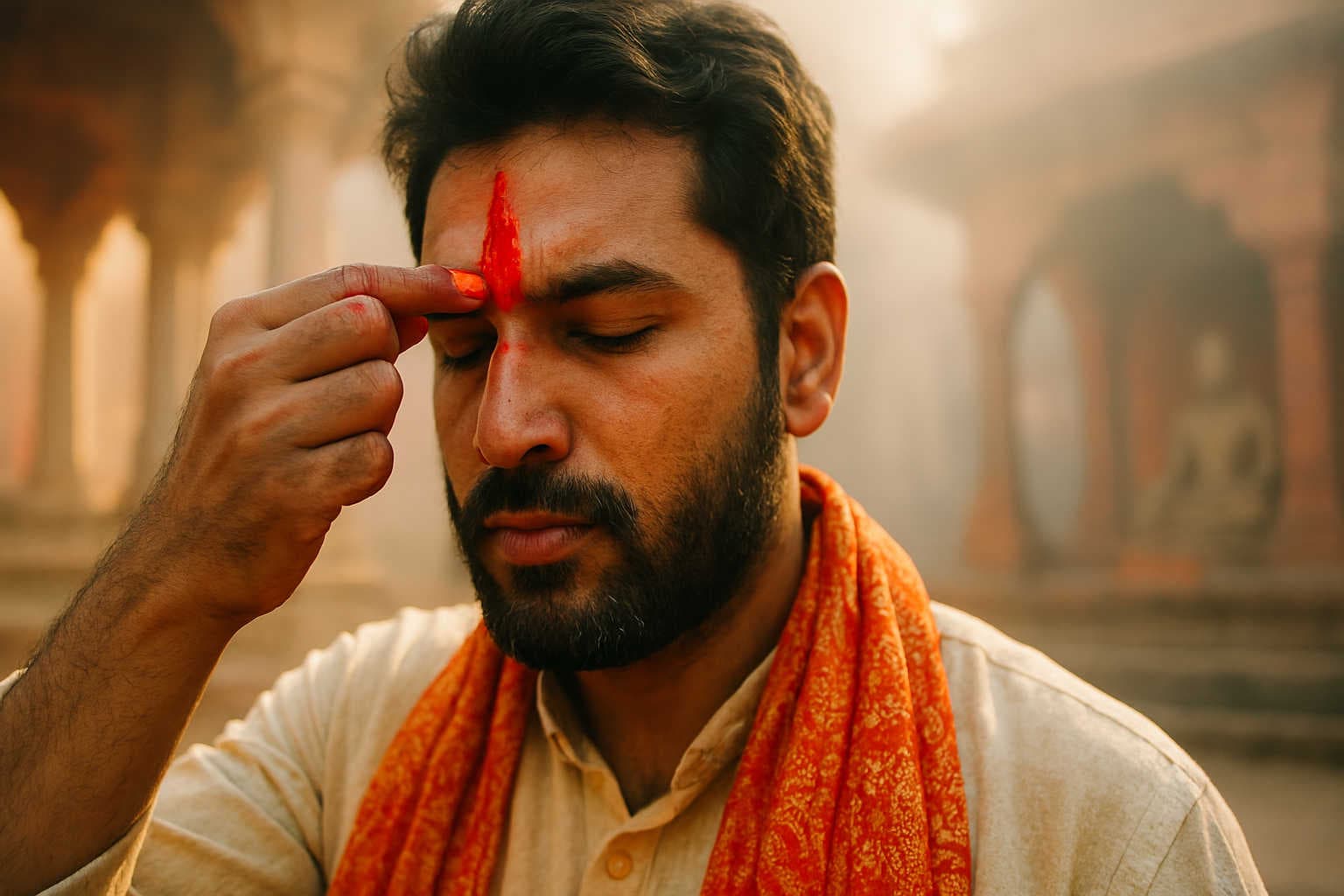
The Meaning of Applying Tilak on the Forehead
In Hinduism, symbols and rituals hold deep spiritual meaning, and among the most recognizable is the tilak, the mark applied on the forehead. Seen during daily worship, festivals, temple visits, or special ceremonies, the tilak is not just an ornamental tradition but a sacred sign of identity, purity, and divine connection. For centuries, Hindus have applied tilak as a way of honoring the gods and awakening spiritual awareness.
What is Tilak?
Tilak refers to the vertical or horizontal mark made on the forehead using sandalwood paste, turmeric, vermilion (kumkum), sacred ash (vibhuti), or clay from holy rivers. Unlike casual decoration, tilak carries religious intent. It is generally placed between the eyebrows, a spot known in yogic tradition as the Ajna Chakra or the “third eye.”
This chakra represents wisdom, inner sight, and spiritual awakening. By applying tilak here, a devotee symbolically activates divine consciousness and aligns the mind toward God.
Scriptural and Cultural References
Ancient texts like the Puranas and Agamas mention tilak as an integral part of ritual practice. The Padma Purana describes tilak as a way of marking the body as a temple of God. The Bhagavata Purana notes that wearing tilak shows one’s devotion to Vishnu, Shiva, or Shakti, depending on the style and substance used.
Saints and sages wore tilaks as a sign of renunciation, spiritual discipline, and sectarian identity. For devotees, it serves as both a personal reminder of faith and a public declaration of religious affiliation.
The Spiritual Meaning of Tilak
Applying tilak on the forehead embodies multiple layers of significance:
-
Purification of Self – Tilak cleanses and sanctifies the devotee before worship.
-
Concentration of Energy – Placed at the Ajna chakra, tilak helps focus mental energy and aids meditation.
-
Mark of Devotion – It symbolizes surrender to the divine, showing that the body and soul belong to God.
-
Protection from Negativity – Sacred substances like vibhuti and sandalwood are believed to repel evil forces.
-
Identity and Dharma – The type of tilak often identifies one’s spiritual lineage, sect, or deity preference.
Different Types of Tilak and Their Meanings
Hindu traditions vary widely, and so do the styles of tilak. Each has its own symbolic association:
-
Tripundra (Shaiva tradition)
-
Three horizontal lines of ash on the forehead.
-
Represents destruction of ego, knowledge, and purity.
-
Associated with Lord Shiva.
-
-
Urdhva Pundra (Vaishnava tradition)
-
Two vertical white lines with a red/yellow line in the center.
-
Symbolizes the lotus feet of Lord Vishnu and surrender to Him.
-
-
Kumkum Tilak (Devi worship)
-
Red dot or line made from turmeric and lime (turning vermilion).
-
Represents Shakti (divine feminine power), auspiciousness, and protection.
-
-
Chandan Tilak (Sandalwood paste)
-
Cooling, fragrant mark often used in Vishnu and Krishna worship.
-
Brings calmness, peace, and clarity of thought.
-
-
Vibhuti (Sacred Ash)
-
Applied by Shaivites as a mark of detachment and remembrance of life’s impermanence.
-
-
Trident-Shaped Tilak
-
Seen in certain sects, symbolizing Lord Vishnu or Shiva depending on style.
-
Each tilak style thus conveys not just devotion but philosophy and spiritual orientation.
Scientific and Yogic Perspective
Beyond religious meaning, applying tilak has scientific and yogic implications:
-
Cooling Effect: Substances like sandalwood and turmeric cool the forehead and reduce stress.
-
Nerve Stimulation: The spot between the eyebrows is linked to the pineal gland, which regulates hormones and circadian rhythm. Gentle pressure while applying tilak stimulates this region.
-
Mental Focus: Ritualistically applying tilak shifts attention inward, preparing the mind for meditation and pooja.
-
Positive Vibration: Ashes from yagnas, kumkum, and sandalwood are charged with sacred vibrations, believed to enhance spiritual energy.
Thus, tilak acts as both a spiritual seal and a subtle wellness practice.
Tilak in Daily and Special Practices
For many Hindus, applying tilak is part of the daily routine after bathing and before performing pooja. Priests wear elaborate sectarian tilaks during temple rituals, while householders may apply simpler forms.
During festivals like Navratri, Janmashtami, or Maha Shivaratri, tilak becomes an important ritual act symbolizing renewed devotion. In ceremonies like weddings, a tilak on the groom marks blessings and acceptance. Even in casual gatherings, tilak applied by elders to younger members conveys blessings and auspiciousness.
Social and Cultural Dimensions
Tilak also serves as a cultural identifier. Vaishnavas, Shaivas, and Shaktas often distinguish themselves by their tilak styles. Historically, it was a way for saints and devotees to recognize spiritual kinship.
In modern times, many Hindus still proudly wear tilak while attending temples, festivals, or important life events. While some urban Hindus may not apply tilak daily, the practice remains a strong symbol of cultural continuity.
Conclusion
The tilak is much more than a decorative forehead mark—it is a sacred symbol of devotion, identity, and spiritual awakening. By applying tilak, a Hindu not only honors tradition but also activates inner consciousness, aligning body, mind, and soul with divine energy.
Whether made with sandalwood, ash, or kumkum, the tilak bridges the external world with the inner spirit. It stands as a visible reminder that every devotee carries within them a divine spark waiting to be awakened.
Thus, the act of applying tilak is both an offering to God and a declaration of faith to the world—a small yet profound ritual that continues to inspire spiritual strength across generations.