Karwa Chauth – A Day of Love, Prayer, and Dedication
Karwa Chauth is one of the most emotionally significant and spiritually charged festivals celebrated by married Hindu women across India. It falls on the fourth day after the full moon (Purnima) in the month of Kartik, typically occurring in October or November. On this day, married women fast from sunrise to moonrise, praying for the long life, prosperity, and well-being of their husbands.
It is a festival rooted in love, devotion, and self-sacrifice—an act that reflects not just a ritualistic custom but the strength of the sacred marital bond.
🌸 Origin and Cultural Significance
The word "Karwa" means a small earthen pot (often used in rituals), and "Chauth" means the fourth day. The festival’s significance dates back to ancient times, especially in North India (Punjab, Rajasthan, Haryana, Uttar Pradesh), where newly-wed brides were often sent far from their parental homes. In such situations, Karwa Chauth became a symbol of connection and prayer, helping women feel spiritually and emotionally close to their husbands even when physically apart.
The festival also served as a means of social bonding, as women would gather to pray, sing songs, and share stories, reinforcing community ties and feminine strength.
📜 Mythological Roots
Karwa Chauth is steeped in many legends, some of which reinforce its sacred power:
-
The Story of Queen Veeravati: A devoted wife who fainted while fasting. Her brothers tricked her into breaking her fast before moonrise. As a result, her husband died. Deeply regretful, she prayed to the goddess, and her devotion brought him back to life.
-
The Tale of Karwa: A pious woman named Karwa saved her husband from the jaws of death through her penance and devotion. Her unwavering faith compelled even Yama, the god of death, to spare her husband’s life.
-
Savitri and Satyavan: The story of Savitri bringing her husband Satyavan back to life through intense prayer and courage also mirrors the ideals behind Karwa Chauth.
These stories emphasize the power of love, loyalty, and prayer—values that lie at the heart of Karwa Chauth.
🕯️ The Rituals of the Day
The day begins before sunrise. Married women wake up early and eat “sargi”—a meal prepared traditionally by their mother-in-law. After this, the strict fast begins—no food or water is consumed throughout the day.
Throughout the day, women dress in bright, traditional attire, often in red or maroon sarees or suits, adorn themselves with bangles, sindoor (vermilion), and mehendi (henna), symbolizing marital bliss. Many also wear their wedding jewelry and create intricate rangolis (decorative patterns) at home.
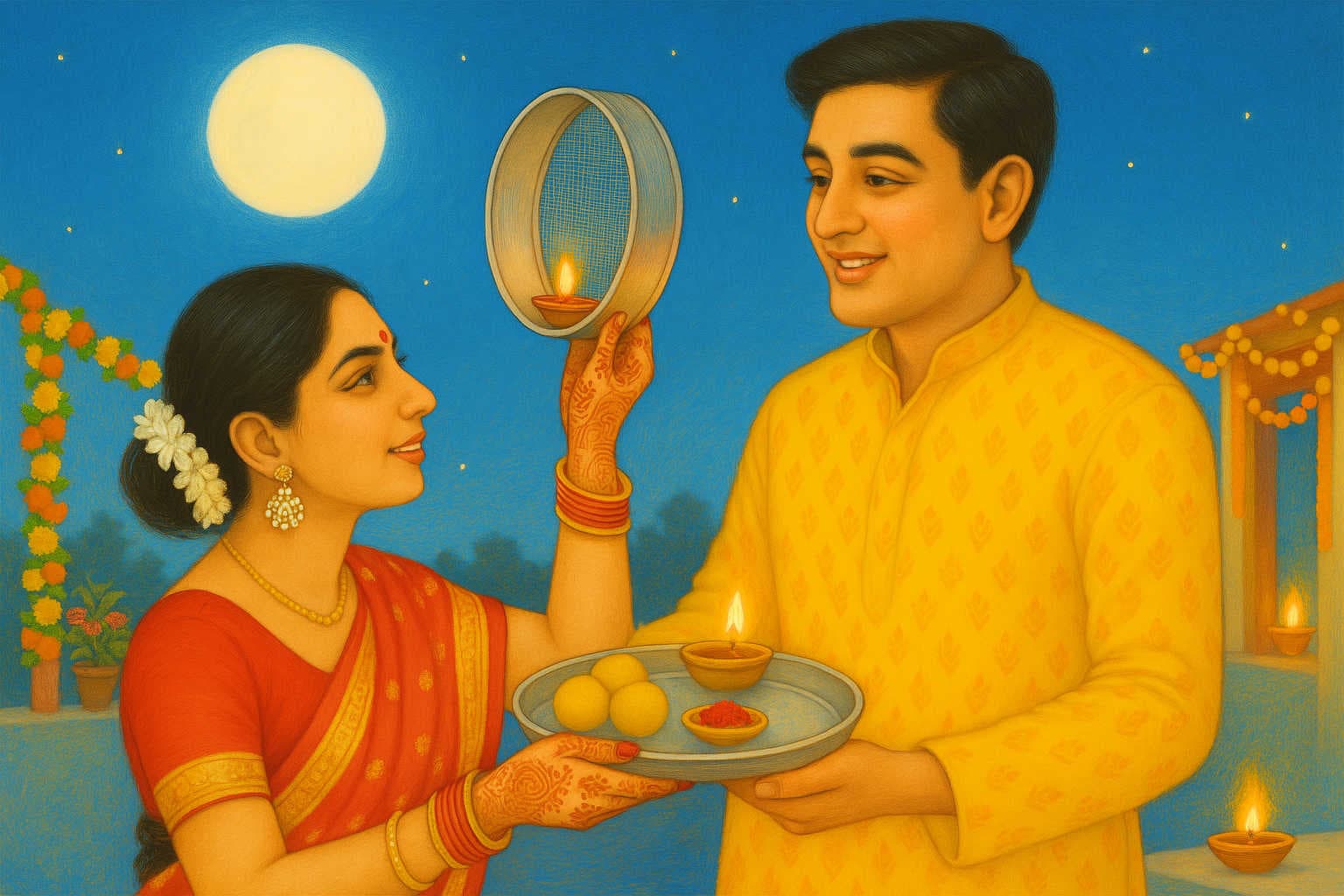
In the evening, women gather in groups to perform the Karwa Chauth puja, where they pass around the Karwa pot, sing traditional songs, and listen to the Karwa Chauth Katha (story). A decorated thali (ritual plate) holds the diya (lamp), sweets, and the sieve that plays a central role later.
🌕 The Moonrise Moment
The climax of Karwa Chauth arrives with moonrise. Women step outside, often accompanied by their husbands, to catch the first glimpse of the moon. Holding a sieve in one hand and a diya in the other, the wife looks at the moon through the sieve and then at her husband, symbolizing her devotion and prayer for his protection.
Only after offering water to the moon (Chandra Dev) and receiving blessings from her husband does the fast come to an end. The husband then lovingly offers the first sip of water or morsel of food to his wife, a deeply emotional and cherished moment that strengthens their bond.
💞 A Modern-Day Expression of Eternal Love
While Karwa Chauth is steeped in tradition, its meaning has evolved in the modern context. Today, many husbands choose to fast alongside their wives, symbolizing equality, love, and shared dedication. Couples now view the festival as a celebration of partnership and mutual care, not just sacrifice.
The festival has also become popular beyond traditional boundaries. In urban settings, couples in long-distance relationships, newlyweds, and even unmarried women observing fasts for their partners or future spouses have embraced the emotional richness of Karwa Chauth.
🎁 A Celebration of Marital Joy
Karwa Chauth is not just a ritual—it is a day of rekindled romance, emotional bonding, and spiritual alignment. Gifts play a part in this celebration, with husbands surprising their wives with jewelry, sarees, cosmetics, or personalized tokens of appreciation. It is also a time when families come together, reinforcing the importance of relationships and unity.
For many women, the act of fasting is not a burden, but a voluntary offering of love and gratitude, marking the strength and grace they bring into the institution of marriage.
🌺 Conclusion: A Festival of Love and Light
Karwa Chauth beautifully illustrates the power of faith, prayer, and unconditional love. It is a reminder that relationships are not just built on words but on silent acts of dedication, patience, and care. The sight of thousands of women waiting for the moon, dressed in their finest, glowing in the soft lamp light, and smiling with love—speaks volumes about the eternal spirit of Karwa Chauth.
Whether celebrated traditionally or adapted to the modern lifestyle, the essence remains the same: a heartfelt expression of love, prayer, and lifelong partnership.