18 Shaktipeeth Circuit Yatra
In Hinduism, the Goddess or Shakti is revered as the cosmic mother, the energy behind all creation. Among the many traditions that celebrate the Goddess, the Shaktipeethas hold an exalted place. These sacred shrines are associated with the story of Sati’s self-immolation and Lord Shiva’s grief-stricken dance of destruction (Tandava), during which Vishnu’s Sudarshan Chakra cut her body into pieces. Wherever a part of her body, ornaments, or clothing fell, a Shaktipeeth was established.
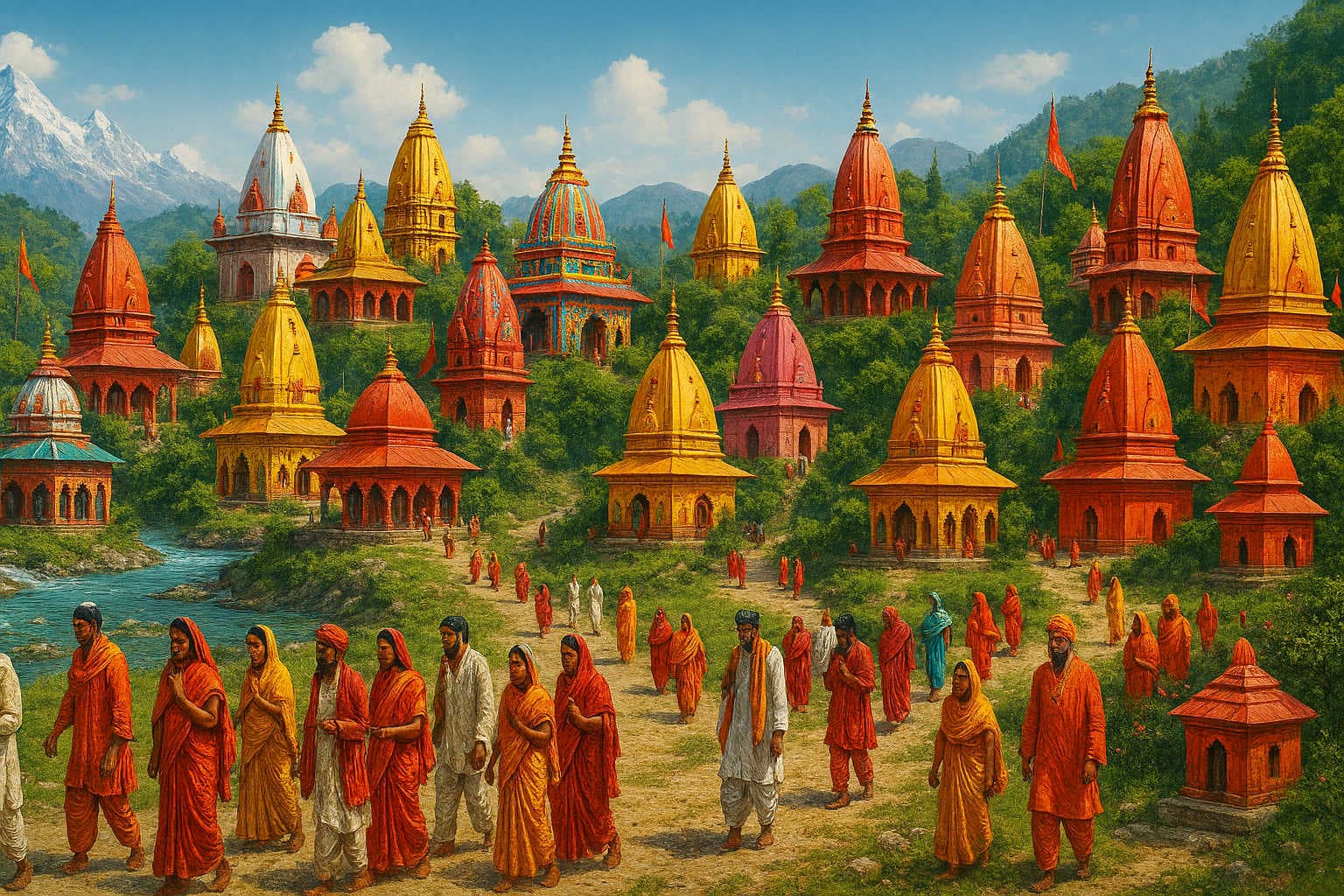
While different traditions speak of 51 or 108 Shaktipeethas, a set of 18 Shaktipeeth temples is often grouped into a special pilgrimage circuit in India and Nepal, forming the 18 Shaktipeeth Circuit Yatra. This yatra is not merely about visiting temples but about experiencing the eternal power of the Divine Mother in her many forms.
The 18 Shaktipeeths and Their Legends
-
Kamakhya Devi (Assam) – The most famous Shaktipeeth where the Goddess’s yoni is believed to have fallen, symbolizing fertility and creative energy. The Ambubachi Mela here celebrates womanhood and divine cycles.
-
Kalighat (West Bengal) – Located in Kolkata, it marks the site where Sati’s toes fell. The temple is one of the most visited shrines of Goddess Kali.
-
Tarapith (West Bengal) – Associated with the Goddess as Tara, it is said to be the place where Sati’s third eye fell. Known for Tantric practices.
-
Vimala Devi (Odisha, Jagannath Puri) – Believed to be where Sati’s feet fell. Located inside the Jagannath Temple complex, Vimala Devi is worshiped as the guardian goddess of Puri.
-
Mahalakshmi (Kolhapur, Maharashtra) – Here, the Goddess represents wealth and prosperity. This is said to be where Sati’s eyes fell.
-
Tulja Bhavani (Maharashtra) – Worshiped as Bhavani, the temple is linked with Sati’s right hand. She is revered as a fierce protector deity.
-
Renuka Devi (Maharashtra) – At Mahur, believed to be where Sati’s neck fell. Renuka Mata is regarded as the mother of Parashurama.
-
Hinglaj Mata (Balochistan, Pakistan) – This remote desert shrine marks where Sati’s head fell. Despite its location outside India, it is considered one of the most sacred Shaktipeeths.
-
Jwalamukhi (Himachal Pradesh) – Famous for its eternal flame, it marks the site of Sati’s tongue. The flame is believed to represent the Goddess’s living presence.
-
Chintpurni (Himachal Pradesh) – Here, the Goddess is worshiped as Chinnamastika, where Sati’s head or forehead fell. Devotees come seeking relief from worries (chinta).
-
Naina Devi (Himachal Pradesh) – Believed to be the site where Sati’s eyes fell. The temple overlooks the scenic Gobind Sagar Lake.
-
Vaishno Devi (Jammu & Kashmir) – Though primarily revered as Vaishnavi, this shrine is also included in the Shaktipeeth circuit. Some traditions say Sati’s skull fell here.
-
Sharda Peeth (Kashmir, now in Pakistan-occupied territory) – Associated with Sati’s right hand or neck. It was also a famous center of learning in ancient India.
-
Amarnath Cave (Jammu & Kashmir) – While known for the ice lingam of Shiva, it is also considered a Shaktipeeth where Sati’s throat fell.
-
Manasa Devi (Haridwar, Uttarakhand) – This temple is linked with the Goddess of snakes, associated with Sati’s mind.
-
Katyayani Devi (Vrindavan, Uttar Pradesh) – Said to be the place where Sati’s hair fell, Katyayani is worshiped as the sixth form of Durga.
-
Annapurna Devi (Varanasi, Uttar Pradesh) – Associated with Sati’s hands, Annapurna blesses devotees with nourishment and abundance.
-
Lalita Devi (Prayagraj, Uttar Pradesh) – Here, Sati’s fingers are believed to have fallen. The temple is situated at the sacred Sangam, the confluence of Ganga, Yamuna, and Saraswati.
Spiritual Essence of the 18 Shaktipeeth Circuit
Each Shaktipeeth holds its unique energy, mythology, and rituals. Together, they form a cosmic tapestry of the Divine Mother’s power:
-
Kamakhya and Jwalamukhi represent fertility and fiery transformation.
-
Kalighat and Tarapith emphasize the fierce, Tantric forms of Shakti.
-
Kolhapur and Annapurna highlight nurturing and prosperity.
-
Hinglaj and Sharda Peeth connect the yatra with India’s ancient cultural expanse.
Undertaking the circuit is seen as a journey through the various aspects of feminine divinity—gentle, nurturing, fierce, and protective.
Pilgrimage Practice
The 18 Shaktipeeth Yatra is often undertaken in stages, as the temples are spread across vast distances. Devotees may focus region-wise, covering clusters like:
-
Eastern Circuit – Kamakhya, Kalighat, Tarapith, Vimala Devi.
-
Western Circuit – Kolhapur, Tulja Bhavani, Renuka, Hinglaj.
-
Northern Circuit – Vaishno Devi, Naina Devi, Jwalamukhi, Chintpurni, Amarnath.
-
Central & Gangetic Circuit – Katyayani (Vrindavan), Annapurna (Varanasi), Lalita Devi (Prayagraj), Manasa Devi (Haridwar).
The journey is believed to purify karma, awaken inner strength, and grant blessings of the Goddess in all aspects of life—wealth, health, protection, and spiritual wisdom.
Conclusion
The 18 Shaktipeeth Circuit Yatra is not just a physical journey but a spiritual quest to connect with the eternal feminine power that sustains the universe. From the Himalayas to the coastal plains, from forests to deserts, each shrine radiates its own aura of divinity.
For devotees, the circuit is an opportunity to honor the Goddess in her countless manifestations and to experience the unity of Shakti across regions and traditions. By completing this pilgrimage, one embraces the wholeness of the Mother’s energy, reaffirming that the Divine Feminine is both the source and the sustainer of all creation.