Belur and Halebidu – Hoysala Temples
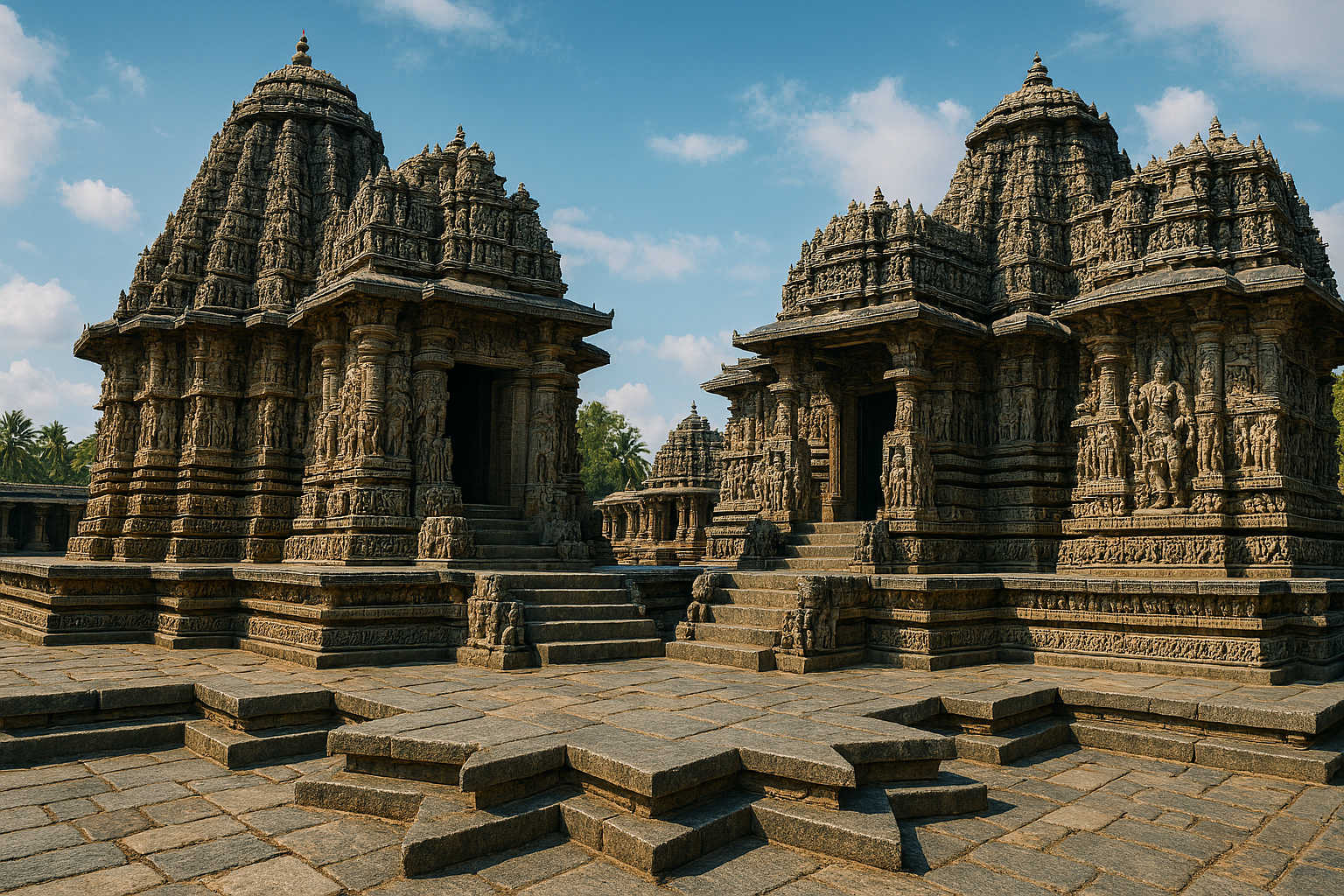
In the heart of Karnataka lie two architectural gems that continue to fascinate historians, travelers, and devotees alike — Belur and Halebidu, the twin capitals of the Hoysala dynasty. These temple towns are celebrated worldwide for their intricate stone carvings, stunning star-shaped architecture, and mythological richness. Recognized as some of the most exquisite examples of medieval Indian art, the temples at Belur and Halebidu represent the cultural zenith of the Hoysala Empire (10th–14th century CE).
Visiting Belur and Halebidu is like stepping into a stone encyclopedia, where every sculpture tells a story of gods, kings, wars, dances, and daily life.
The Hoysala Dynasty and Its Legacy
The Hoysalas were originally hill chiefs who rose to power around the 10th century CE, eventually ruling large parts of present-day Karnataka. They made Belur their early capital, followed later by Halebidu. Unlike their predecessors, the Hoysalas patronized unique architectural styles, which blended influences from Chalukya and Dravidian traditions but evolved into something distinctly their own.
Their temples are often described as “poetry in stone”, with sculptures so detailed that one can see jewelry, fabrics, and even expressions carved onto granite.
Belur – Chennakesava Temple
Belur’s pride is the Chennakesava Temple, built in 1117 CE by King Vishnuvardhana to celebrate his victory over the Cholas. Dedicated to Lord Vishnu (as Chennakesava, the Handsome One), the temple stands as a monumental work of art.
-
Star-shaped Platform: The temple is built on a raised jagati (platform), allowing devotees to perform pradakshina (circumambulation).
-
Sculptures: Over 650 intricate figures adorn its outer walls, depicting episodes from the Ramayana, Mahabharata, and Bhagavata Purana. Celestial maidens (Madanikas) carved in elegant poses are among the highlights.
-
Interior: The polished lathe-turned pillars inside, each unique in design, are marvels of craftsmanship.
-
Madanikas: Perhaps the most famous feature, these life-like female figures represent beauty, grace, and divinity, embodying the spirit of dance and art in medieval Karnataka.
The temple was not only a religious center but also a cultural hub where art, dance, and devotion blended seamlessly.
Halebidu – Hoysaleswara Temple
About 16 kilometers from Belur lies Halebidu, once the capital of the Hoysala Empire. Its name means “old capital” (from Hale-bidu), as it was ravaged by multiple invasions, particularly by the Delhi Sultanate in the 14th century. Despite the destruction, the Hoysaleswara Temple remains a staggering masterpiece.
-
Twin Temples: The shrine is dedicated to Lord Shiva, represented as Hoysaleswara and Shantaleswara (named after Queen Shantala Devi, a patron of arts and dance).
-
Outer Walls: Nearly every inch of the exterior is carved, featuring over 1,000 reliefs that narrate mythological stories, animal motifs, and scenes from daily life.
-
Epic Carvings: Ramayana, Mahabharata, and Bhagavata legends flow seamlessly across its walls, with each sculpture meticulously detailed.
-
Nandi Shrine: Facing the sanctum are two colossal Nandi statues, among the largest in India.
Even in its unfinished state, the temple at Halebidu is considered one of the greatest achievements of Indian temple architecture.
Common Features of Hoysala Architecture
The temples at Belur and Halebidu share hallmarks of Hoysala style:
-
Star-shaped platforms giving temples a unique geometry.
-
Soapstone material, soft when quarried but hardening over time, allowing intricate detailing.
-
Lathe-turned pillars with mirror-like polish.
-
Horizontal friezes depicting processions of elephants, lions, horses, and mythical creatures.
-
Focus on ornamentation, making the temples appear like sculpted jewelry boxes in stone.
These features set Hoysala temples apart from the towering gopurams of Tamil Nadu or the monolithic structures of Odisha.
Cultural and Religious Importance
-
Vaishnavism and Shaivism: While Belur’s Chennakesava is dedicated to Vishnu, Halebidu’s Hoysaleswara venerates Shiva, showcasing the dynasty’s inclusive patronage.
-
Dance and Music: The Madanikas of Belur reflect the significance of classical dance and music during the Hoysalas’ reign.
-
UNESCO Recognition: Both temples are part of the proposed UNESCO World Heritage Sites, celebrated for their universal artistic value.
Visiting Belur and Halebidu Today
-
Location: Both towns are in Hassan district, Karnataka, about 200 km from Bengaluru.
-
Best Time to Visit: October to March, when the weather is pleasant.
-
Timings: The temples are usually open from early morning till evening, with a break in the afternoon.
-
Nearby Attractions: Shravanabelagola (Jain pilgrimage), Halebidu museum, and Yagachi Dam are popular add-ons for travelers.
Pilgrims, art enthusiasts, and tourists alike marvel at the sheer artistry of these temples. Photography enthusiasts particularly enjoy capturing the minute carvings that seem to come alive under the sunlight.
Conclusion
The temples of Belur and Halebidu are not just religious monuments but timeless chronicles of art, devotion, and history. Every stone speaks of the Hoysalas’ vision — to blend faith with unmatched artistry. While invasions and centuries have weathered them, their splendor continues to draw admiration worldwide.
For those who seek to understand India’s cultural soul, Belur and Halebidu offer an unforgettable journey into a world where mythology, architecture, and devotion meet in perfect harmony.