Madurai’s Koodal Azhagar – Ancient Tamil Temple
Madurai, often called the cultural capital of Tamil Nadu, is known worldwide for the magnificent Meenakshi Amman Temple. But hidden within the city’s vibrant streets lies another jewel of Tamil spirituality and architecture – the Koodal Azhagar Temple. Dedicated to Lord Vishnu, this ancient shrine is a reminder of Madurai’s layered religious history, where Shaivism and Vaishnavism flourished side by side.
The temple is not as colossal as Meenakshi Amman, but it holds a unique charm rooted in mythology, artistry, and devotion. Revered in the Tamil Divya Prabandham and praised by the Alwars, Koodal Azhagar is among the 108 Divya Desams, the holiest Vishnu shrines.
Meaning of Koodal Azhagar
The name “Koodal” is an ancient Tamil word meaning confluence or meeting place – a fitting description of Madurai itself, where cultures, ideas, and faiths have merged for centuries. “Azhagar” means the handsome one, referring to Vishnu in his enchanting form. Thus, “Koodal Azhagar” translates to the Beautiful Lord of Madurai.
Mythology and Legends
Several legends surround this temple:
-
The Cosmic Protector: According to lore, Vishnu took the form of Koodal Azhagar to protect Madurai from demonic forces and ensure dharma prevailed in the Pandya kingdom.
-
Connection with Meenakshi’s Wedding: Mythology states that Vishnu, as the brother of Goddess Meenakshi, gave her hand in marriage to Lord Shiva during the divine wedding in Madurai. Koodal Azhagar thus holds a special place in Madurai’s sacred landscape.
-
Alwar Hymns: The temple finds mention in the works of Periyalwar, Thirumangai Alwar, and Nammalwar, who praised the deity’s beauty and benevolence.
Architecture of Koodal Azhagar Temple
The temple is a fine example of Dravidian architecture with Pandya-era roots and later additions from the Vijayanagara and Nayaka periods.
-
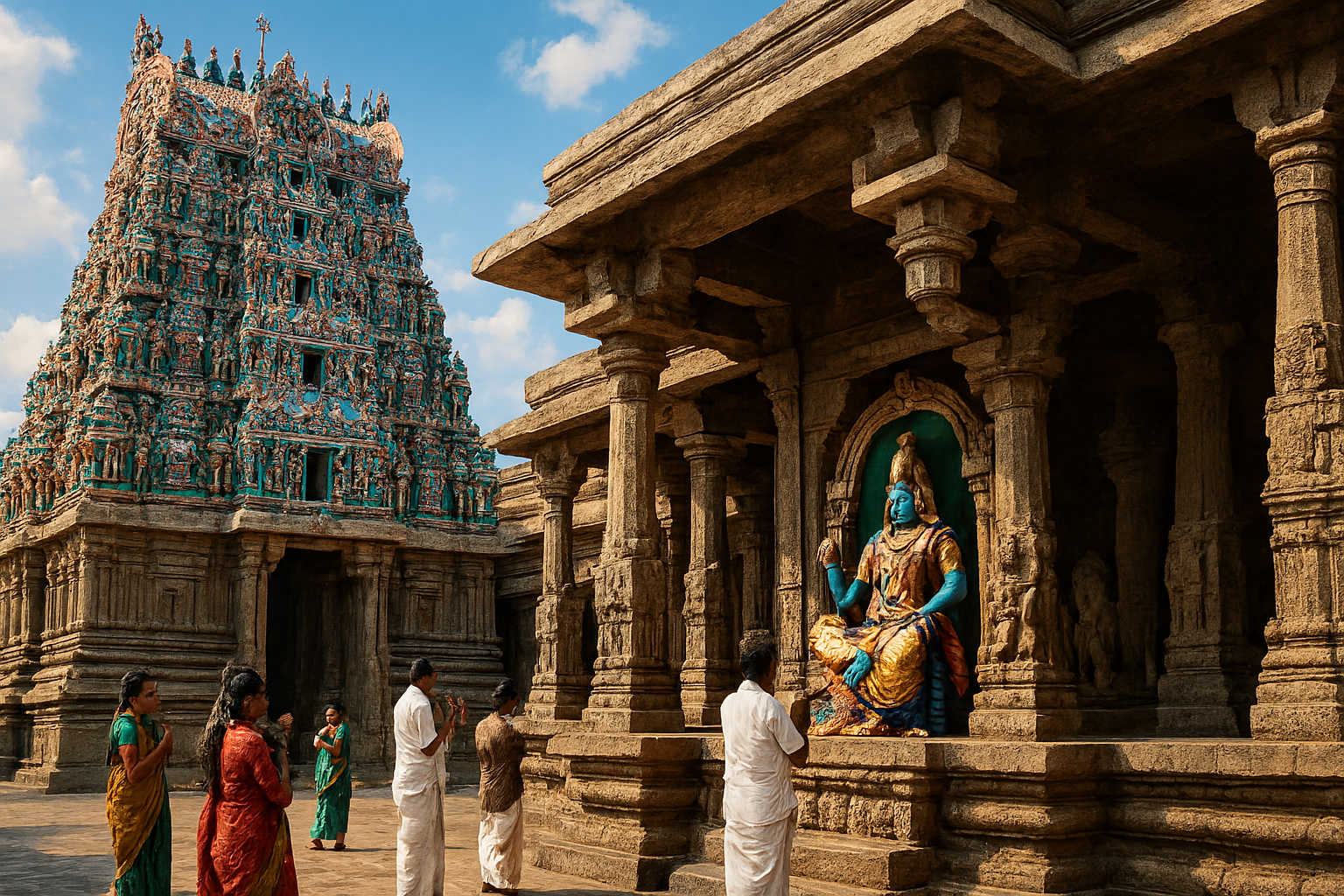
Gopuram: The five-tiered rajagopuram, covered in colorful sculptures of gods, demons, and mythical beings, rises proudly above the cityscape.
-
Mandapams: The temple has intricately carved halls with depictions of episodes from the Ramayana, Mahabharata, and stories of the Alwars.
-
Sanctum: The deity, Koodal Azhagar, is enshrined in a seated posture, radiating grace. The temple is unique as Vishnu is worshipped in three forms within the same complex – seated (Veetrirundha Azhagar), standing (Nindra Azhagar), and reclining (Kidantha Azhagar).
-
Sculptural Excellence: Stone pillars feature life-like carvings of yali (mythical creatures), dancers, and celestial beings.
Unlike some massive South Indian temples, Koodal Azhagar offers an intimacy, where devotees feel closer to the deity and the divine presence.
Religious and Cultural Importance
The temple is not just an architectural wonder but also a vital center of Tamil devotion:
-
Divya Desam Status: As one of the 108 Divya Desams, it is a must-visit for Vaishnavite pilgrims.
-
Festivals: The temple celebrates many festivals, but the most prominent is the Chithirai Festival, when Vishnu (as Azhagar) is said to ride to the Vaigai River, connecting with Meenakshi and Sundareshwarar’s wedding celebrations.
-
Daily Rituals: Priests conduct six daily poojas following the Vaikanasa Agama tradition. Offerings of flowers, butter, and tulsi leaves are made with chants and music.
The Spiritual Experience
Walking into the temple, one feels a distinct calm, away from Madurai’s bustling bazaars. The dimly lit corridors, the fragrance of camphor, and the sound of temple bells create a sacred atmosphere. The sight of the deity – majestic and compassionate – inspires devotion and inner peace.
Pilgrims often say that while Meenakshi Amman represents power and grandeur, Koodal Azhagar embodies beauty, serenity, and protection. Together, the two temples represent the balance of Shaiva and Vaishnava traditions in Tamil spirituality.
Visiting the Temple
-
Location: In the heart of Madurai city, easily accessible by road and rail.
-
Best Time: Year-round, though visiting during the Chithirai Festival (April–May) offers a grand experience.
-
Timings: Typically open from early morning (around 5 AM) till night with breaks in the afternoon.
-
Dress Code: Modest attire is recommended, as in most South Indian temples.
A visit here is often combined with other Madurai highlights, particularly the Meenakshi Amman Temple.
Cultural Heritage and Legacy
Koodal Azhagar Temple is more than a place of worship; it is a living piece of Tamil heritage:
-
Literary Mentions: Tamil Sangam literature mentions Madurai as “Koodal,” underlining the temple’s significance in early Tamil culture.
-
Music and Art: Temple festivals feature Carnatic music, devotional songs, and folk traditions that celebrate the deity.
-
Living Faith: Even today, the temple continues to draw devotees, scholars, and tourists alike, preserving centuries-old traditions.
Conclusion
The Koodal Azhagar Temple stands as a quiet but powerful reminder of Madurai’s spiritual depth. While the Meenakshi Temple dazzles with grandeur, Koodal Azhagar captivates with its intimacy and serene devotion.
It is a space where mythology meets architecture, where hymns echo through carved halls, and where Vishnu’s divine beauty shines through stone and faith. For pilgrims and seekers alike, visiting Koodal Azhagar is to witness the timeless soul of Tamil spirituality.