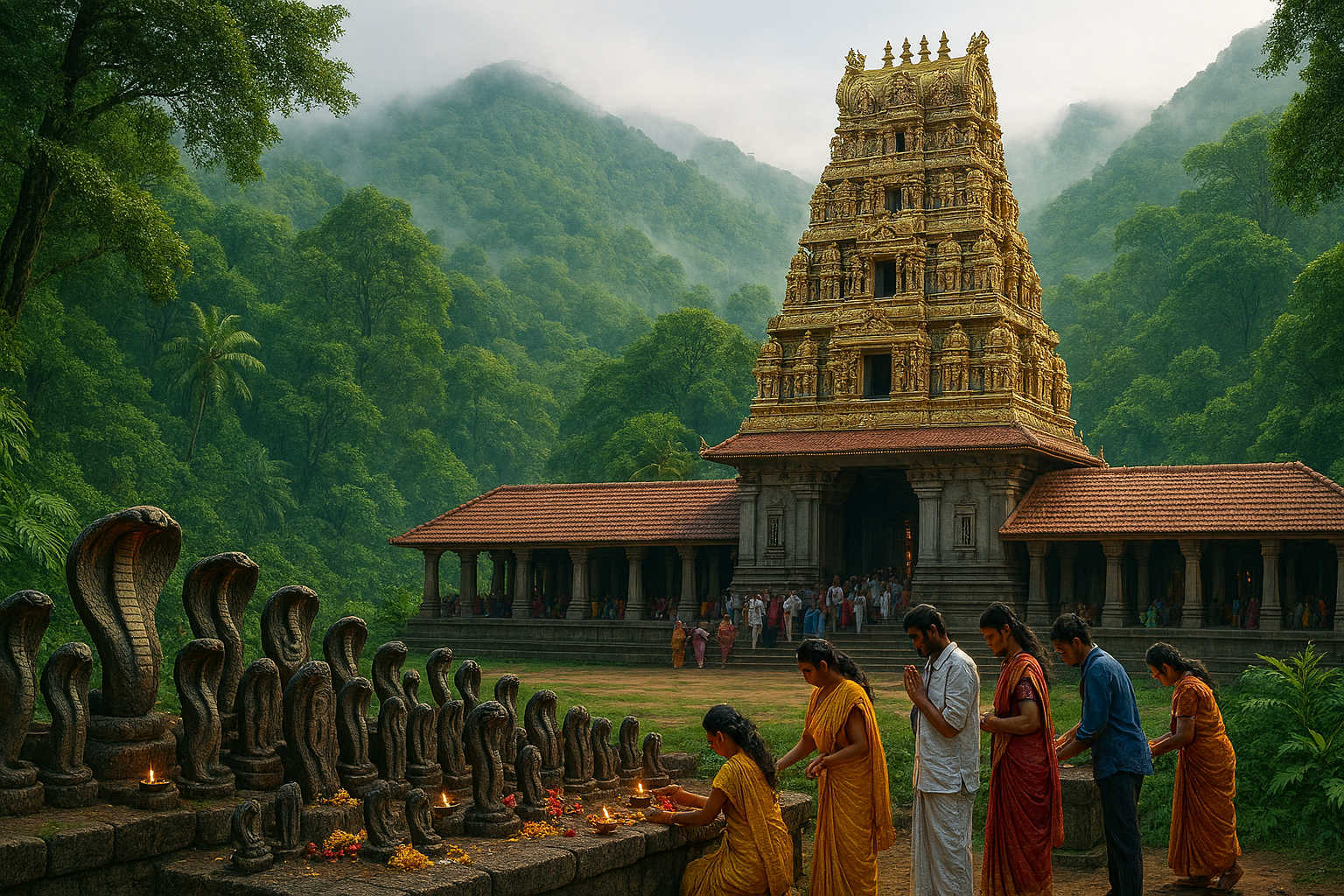
Kukke Subramanya – Serpent Worship Temple
Nestled amidst the lush greenery of the Western Ghats in Karnataka, the Kukke Subramanya Temple is one of the most revered shrines dedicated to Lord Subramanya (Kartikeya), the son of Lord Shiva and Goddess Parvati. What sets this temple apart from others is its deep association with serpent worship (Nagaradhana). Devotees believe Lord Subramanya resides here as the protector of serpents, blessing those afflicted by serpent-related curses and obstacles in life.
For centuries, Kukke Subramanya has been a sanctuary for pilgrims seeking divine relief from Naga Dosha and other karmic afflictions. Surrounded by emerald forests, rivers, and mountains, this temple blends spirituality with nature, creating an aura of serenity and mysticism.
The Legend of Kukke Subramanya
According to local mythology, after vanquishing the demon Tarakasura and his brothers, Lord Subramanya came to the forested hills of Subramanya to meditate. Here, he was welcomed by Vasuki, the king of serpents, who sought his protection from the threat of Garuda, the mighty eagle mount of Lord Vishnu.
Lord Subramanya assured Vasuki and other serpent beings of his divine protection. Since then, the temple has been regarded as the sacred abode where Lord Subramanya and Vasuki dwell together, symbolizing divine guardianship over serpents. Devotees worship both the deity and serpent idols here, seeking blessings for prosperity, fertility, and relief from serpent-related fears.
The Temple Architecture
The Kukke Subramanya Temple reflects traditional South Indian Dravidian architecture. The temple is modest yet spiritually powerful, with a tall gopuram (gateway tower) that welcomes devotees.
Inside the sanctum sanctorum, Lord Subramanya is worshipped in the form of a serpent idol, along with Vasuki. The shrine is set against the backdrop of the Kumaradhara River and the towering Kumara Parvatha hill, making the location even more divine.
The temple’s simplicity stands in contrast to its immense spiritual significance, reminding devotees that faith lies not in grandeur but in devotion.
Unique Serpent Worship
Unlike most temples where the focus is solely on the presiding deity, Kukke Subramanya emphasizes serpent worship. Thousands of devotees come here to perform rituals dedicated to serpent deities to overcome challenges like infertility, marital delays, health issues, and especially Naga Dosha (an astrological affliction caused by serpent-related curses in one’s horoscope).
Some of the significant rituals performed here include:
-
Sarpa Samskara – A powerful ritual to appease serpent deities and seek forgiveness for the harm caused to snakes knowingly or unknowingly.
-
Ashlesha Bali – Performed on Ashlesha Nakshatra days, this ritual helps mitigate serpent curses and brings harmony to family life.
-
Naga Pratishta – The installation of serpent idols to honor and worship Nagas.
These rituals make Kukke Subramanya one of the most important temples for devotees seeking remedies to serpent-related spiritual challenges.
Pilgrimage Experience
Visiting Kukke Subramanya is both a spiritual and natural journey. The temple lies in a small town surrounded by thick forests, rolling hills, and the clear waters of the Kumaradhara River. Pilgrims traditionally take a holy dip in the river before entering the temple, symbolizing purification of body and soul.
The climb up to Kumara Parvatha, one of the tallest peaks in Karnataka, is also considered sacred. Trekkers and pilgrims alike experience breathtaking views and spiritual calmness at the top, making it both an adventure and a pilgrimage.
Festivals at Kukke Subramanya
The temple celebrates several important festivals, the most significant being:
-
Subramanya Shashti – Celebrated on the sixth day of the Margashira month (November–December), this marks Lord Subramanya’s victory over the demon Tarakasura. The festival attracts thousands of devotees and is marked with grand rituals and processions.
-
Nagara Panchami – Dedicated to serpent worship, this day sees special offerings to serpent deities, reinforcing the temple’s unique identity.
These festivals fill the town with color, chants, and spiritual fervor, drawing devotees from all over India.
Cultural Significance of Serpent Worship
Serpent worship, or Nagaradhana, has been a part of Indian spiritual traditions for millennia. In Hindu belief, serpents are not just creatures of nature but powerful beings associated with fertility, rain, and cosmic energy.
At Kukke Subramanya, this worship takes a central role, symbolizing the harmony between humans and nature. It reminds devotees of the importance of respecting all living beings and seeking balance in life.
Modern-Day Importance
Despite being rooted in ancient traditions, Kukke Subramanya remains highly relevant today. In a world filled with uncertainty and stress, devotees flock here seeking solutions to personal and spiritual challenges. The rituals and beliefs of serpent worship provide them not just with hope but also with a sense of connection to nature and the divine.
Additionally, the temple town has become a hub for eco-tourism and trekking, as visitors combine spiritual journeys with explorations of the Western Ghats.
Visiting Kukke Subramanya
-
Location: Subramanya town, Dakshina Kannada district, Karnataka.
-
Nearest Railway Station: Subramanya Road (12 km from the temple).
-
Nearest Airport: Mangalore International Airport (around 115 km).
-
Best Time to Visit: October to March, when the weather is pleasant and festivals are celebrated.
Conclusion
The Kukke Subramanya Temple is more than a shrine; it is a sacred meeting point of mythology, astrology, and nature. Dedicated to Lord Subramanya as the protector of serpents, it continues to inspire millions of devotees with faith, hope, and reverence for the natural world.
By combining the worship of a warrior deity with serpent traditions, Kukke Subramanya highlights the depth and diversity of India’s spiritual heritage. Whether one visits to perform rituals, seek remedies, or simply experience the temple’s serene surroundings, the journey leaves a lasting impression of faith, healing, and divine protection.