Ayyappa Swamy of Sabarimala – Pilgrimage through the Forest
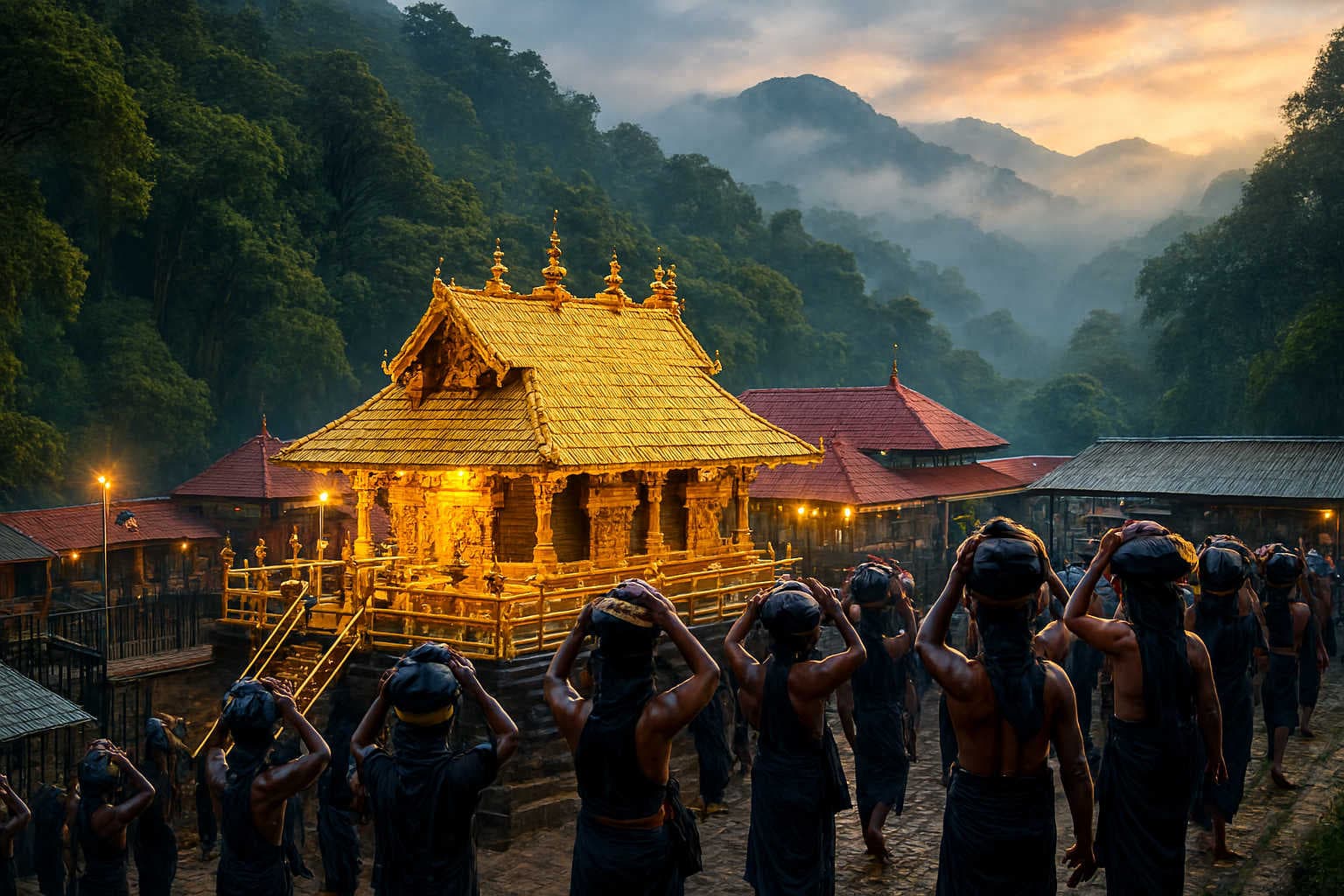
Hidden deep in the Western Ghats of Kerala, surrounded by dense forests and misty hills, lies one of India’s most sacred and unique temples — the Sabarimala Temple of Lord Ayyappa Swamy. Unlike many other shrines, Sabarimala is not just about visiting a deity; it is a spiritual journey of discipline, self-purification, and unity, attracting millions of devotees every year.
The pilgrimage to Sabarimala is often described as a test of endurance and devotion, where every step through the forests echoes the chanting of “Swamiye Saranam Ayyappa” (Oh Lord Ayyappa, I seek refuge in you).
The Legend of Ayyappa
Lord Ayyappa is revered as the son of Lord Shiva and Mohini, the feminine incarnation of Lord Vishnu. This union symbolizes the blending of divine masculine and feminine energies, making Ayyappa a unique deity embodying harmony and balance.
According to legend, Ayyappa was born to destroy the demoness Mahishi, who had received a boon that no man could kill her. As a child raised by the king of Pandalam, Ayyappa displayed extraordinary courage and wisdom. When he eventually fulfilled his destiny by slaying Mahishi, his divine mission was complete. He then chose to retreat into the forests of Sabarimala for eternal meditation, blessing devotees who seek him with discipline and faith.
The Sabarimala Pilgrimage
The pilgrimage to Sabarimala is unlike any other in India. Devotees, called Ayyappans, observe 41 days of strict penance (vratham) before embarking on the journey. This period includes:
-
Wearing only simple black or blue clothes.
-
Abstaining from alcohol, meat, and worldly pleasures.
-
Maintaining celibacy, humility, and devotion.
-
Living a life of simplicity and service.
During this time, devotees carry the Irumudi Kettu, a sacred bundle with offerings for the deity, symbolizing surrender of worldly attachments. The journey to the temple often involves trekking through thick forests, crossing rivers, and climbing steep hills, culminating in the climb of the 18 sacred steps (Pathinettam Padi) that lead to the sanctum.
The 18 Holy Steps
The Pathinettam Padi, or 18 steps, hold deep spiritual significance in Sabarimala. Only devotees carrying the Irumudi are allowed to climb them.
Each step represents different aspects of human existence and spiritual growth:
-
The first five symbolize the human senses.
-
The next eight represent the passions like anger, lust, jealousy, and pride.
-
The following three signify qualities of nature (sattva, rajas, tamas).
-
The last two steps symbolize knowledge and ignorance.
By climbing these steps, devotees symbolically overcome worldly obstacles to unite with the divine.
A Temple of Equality and Unity
One of the most remarkable aspects of Sabarimala is its message of equality. Devotees, regardless of caste, creed, or social status, dress alike, chant together, and undertake the same journey. The temple emphasizes that before Ayyappa, all are equal.
The pilgrimage also highlights communal harmony. It is common to see people from diverse faiths undertaking the journey, with many Muslim devotees joining in remembrance of Vavar Swamy, Ayyappa’s Muslim companion, who is honored with a shrine near Sabarimala.
The Forest Journey
Unlike temples located in towns or cities, Sabarimala requires devotees to undertake a challenging forest trek. Pilgrims walk barefoot through thick woods, crossing rivers like the Pampa, and braving wildlife and weather. This journey represents the struggles of life and the importance of endurance, faith, and unity.
The final stretch, where the chanting grows louder and the golden temple spire appears through the misty hills, is often described as a moment of overwhelming spiritual fulfillment.
Unique Traditions of Sabarimala
-
Seasonal Opening – The temple is open only during specific periods: Mandala season (Nov–Jan), Makaravilakku festival (Jan), and the first days of every Malayalam month.
-
Celibacy Rule – In line with Ayyappa’s eternal celibacy, women of menstruating age (10–50 years) traditionally did not enter the temple, though this has been subject to modern legal and social debates.
-
Chanting of Mantras – Devotees continuously chant “Swamiye Saranam Ayyappa”, fostering collective energy and unity.
-
Vavar Swamy Shrine – Near the temple, a shrine to Vavar Swamy signifies interfaith brotherhood.
Festivals at Sabarimala
The grandest celebration is the Makaravilakku, when a divine light is believed to appear on the distant Ponnambalamedu hill. Thousands gather to witness this mystical event, considered a blessing from Ayyappa himself.
Another important occasion is the Mandala Pooja, marking the end of the 41-day penance period. These festivals draw millions of pilgrims, making Sabarimala one of the largest annual pilgrimages in the world.
Modern-Day Relevance
Despite being an ancient pilgrimage, Sabarimala continues to thrive in modern times. Improved facilities and eco-friendly measures have been introduced to preserve the fragile forest ecosystem. Yet, the essence of the pilgrimage remains the same: a test of endurance, equality, and faith.
For devotees, the Sabarimala journey is not just about reaching the temple but about transforming the self — overcoming desires, embracing discipline, and connecting with the divine.
Visiting Sabarimala
-
Location: Pathanamthitta district, Kerala.
-
Accessibility: Nearest town is Pampa, after which a 5 km trek leads to the temple.
-
Best Season: November to January (Mandala season).
-
Preparation: Devotees must undertake 41 days of vratham before visiting.
Conclusion
The pilgrimage to Ayyappa Swamy of Sabarimala is more than a religious ritual; it is a journey of self-purification, equality, and unity. Deep in Kerala’s forests, the temple stands as a symbol of discipline and devotion, where millions gather each year to seek the blessings of the eternal celibate deity.
By blending legend, faith, and nature, Sabarimala continues to inspire devotees to walk the difficult path of life with courage, humility, and surrender — reminding them that in the heart of the forest lies not just a temple, but the essence of spiritual transformation.