Korba's Bhoramdeo – Khajuraho of Chhattisgarh
India’s cultural landscape is dotted with ancient temples, each narrating stories of devotion, architecture, and artistry. Among them, nestled in the dense forests of Chhattisgarh, lies the Bhoramdeo Temple, often hailed as the Khajuraho of Chhattisgarh. Known for its exquisite erotic sculptures, the temple is not only a marvel of stone craftsmanship but also a window into India’s tantric traditions and medieval history.
Historical Background
The Bhoramdeo Temple complex is believed to have been constructed between the 7th and 11th centuries CE, during the reign of the Nagvanshi kings, who ruled the region around Kawardha (present-day Kabirdham district, not far from Korba). It was dedicated to Lord Shiva, worshipped here in the form of Bhoramdeo, the presiding deity of local tribal communities.
This connection with tribal worship makes Bhoramdeo unique – it reflects not only mainstream Shaivism but also local traditions that flourished alongside royal patronage. The temple also demonstrates the coexistence of classical Hindu rituals with folk and tantric practices.
Architectural Brilliance
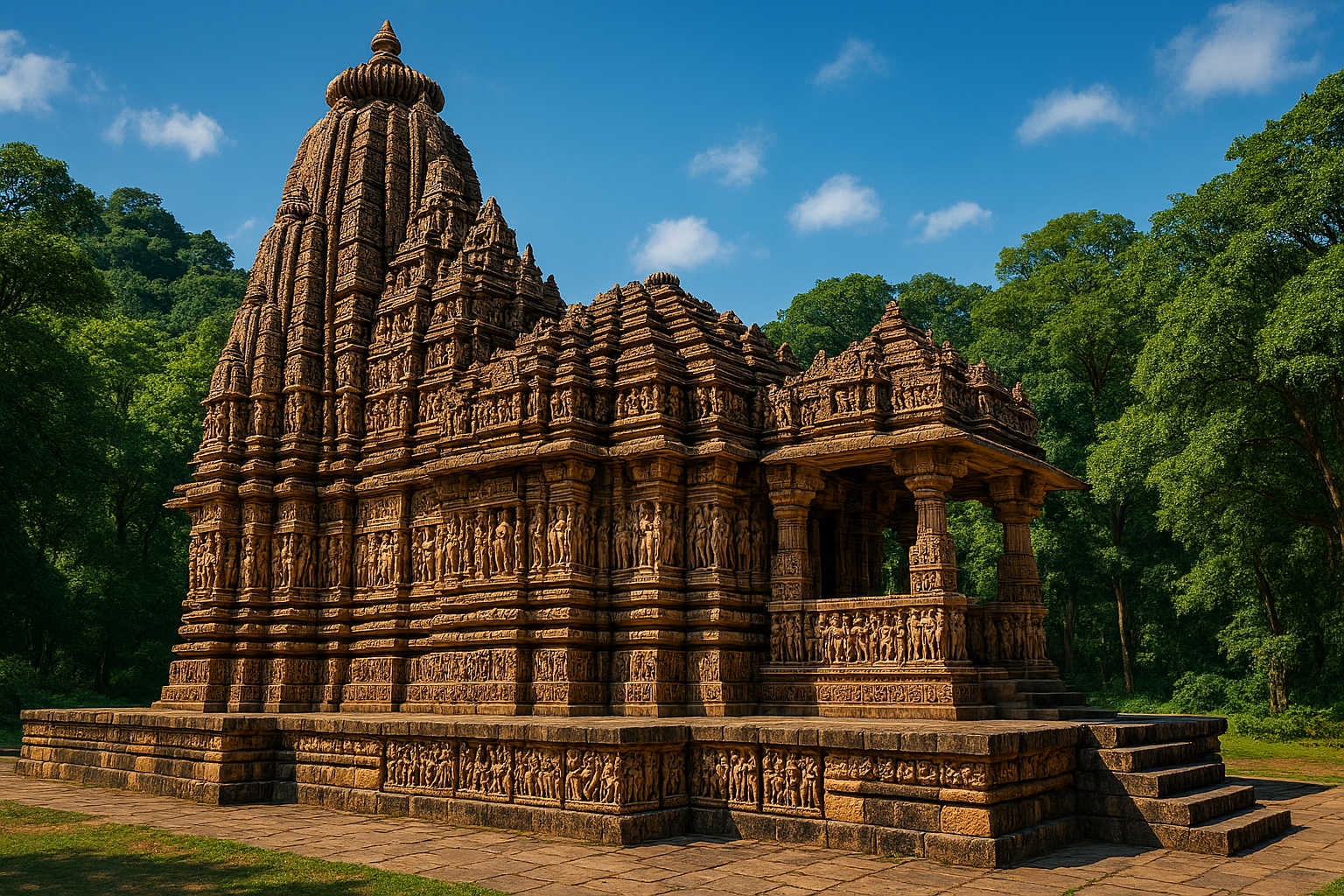
The architecture of Bhoramdeo Temple resembles the Nagara style, common in central India, but with local adaptations. The main temple stands on a raised platform, with a mandapa (pillared hall), antarala (vestibule), and garbhagriha (sanctum). The shikhara (tower) soars gracefully, adorned with detailed carvings.
-
Erotic Sculptures: The temple walls are richly carved with images of gods, goddesses, apsaras, mythical beings, and most famously, erotic scenes similar to those found in Khajuraho and Konark. These carvings are not merely decorative but reflect the tantric philosophy, which views sexuality as a path to spiritual union.
-
Tantric Symbolism: Many panels depict yogic postures, rituals, and esoteric imagery, suggesting that the temple was also a center for tantric practices.
-
Artistic Detailing: Apart from erotic imagery, the temple showcases narratives from mythology, scenes of everyday life, dancers, warriors, and musicians, making it a vivid record of medieval Chhattisgarh’s culture.
This combination of spirituality and sensuality has earned Bhoramdeo the title of Khajuraho of Chhattisgarh.
Spiritual Significance
Dedicated to Lord Shiva, Bhoramdeo remains a vibrant religious site. Devotees see the temple not just as an architectural marvel but as a sacred space where tribal faith merges with classical Hinduism.
For local communities, Bhoramdeo represents the protector and benefactor deity, worshipped for fertility, prosperity, and protection against natural forces. Rituals here often reflect a blend of Vedic chants and tribal offerings.
The erotic carvings, often misunderstood, hold deeper spiritual meaning. In tantric belief, union of male and female energies (Shiva and Shakti) is symbolic of cosmic creation. Thus, the temple embodies both worldly life and higher spiritual ideals.
Legends and Folklore
Local legends associate Bhoramdeo Temple with:
-
Tribal Deity Origins – The deity Bhoramdeo is believed to have been a local tribal god assimilated into Shaivism, hence the temple reflects a fusion of traditions.
-
Royal Patronage – The Nagvanshi kings who built the temple were known patrons of art and Shaivism. Some accounts suggest the temple was also used for tantric rituals under royal supervision.
-
Sacred Grove – Oral traditions say the surrounding forest was considered sacred, where sages and yogis practiced meditation and tantra.
The Temple Complex
The Bhoramdeo Temple complex actually comprises multiple shrines:
-
Main Bhoramdeo Temple – The most ornate structure, with its iconic erotic carvings.
-
Chherki Mahal – Believed to have been a royal court or tantric practice hall.
-
Madan Manjari Temple – Another shrine with erotic depictions, reinforcing the tantric theme.
-
Istaliq Temple – Built of brick, showcasing a different style.
Together, these structures make Bhoramdeo not just a temple but a complete religious and cultural complex.
Comparison with Khajuraho
Like the Khajuraho temples of Madhya Pradesh, Bhoramdeo highlights the integration of sensuality with spirituality. However, while Khajuraho gained global fame, Bhoramdeo remains relatively lesser known, lending it a sense of mystery and exclusivity.
What makes Bhoramdeo distinct is its tribal connection – it was not just a royal temple but also deeply rooted in the faith of local people. This blend of folk and classical traditions sets it apart from Khajuraho’s more royal and urban context.
Present-Day Significance
Today, Bhoramdeo Temple is a protected monument under the Archaeological Survey of India (ASI). It draws not only devotees but also historians, art lovers, and travelers seeking to explore Chhattisgarh’s hidden heritage.
Festivals like Mahashivaratri are celebrated here with great devotion, attracting large gatherings of pilgrims. The surrounding forests and serene landscapes also make the temple a popular tourist destination.
Bhoramdeo has recently been promoted as part of Chhattisgarh’s cultural tourism, offering visitors a chance to witness both spirituality and heritage.
Visiting Bhoramdeo
-
Location: Near Kawardha in Kabirdham district, around 125 km from Raipur and accessible from Korba.
-
Best Time to Visit: October to March, when the weather is pleasant.
-
Experience: Visitors can walk around the complex, admire the sculptures, and reflect on their meanings amidst the peaceful natural setting.
Conclusion
The Bhoramdeo Temple of Chhattisgarh, often called the Khajuraho of the region, is a testament to India’s diverse spiritual traditions and artistic genius. Its erotic sculptures, tantric symbolism, and tribal connections make it one of the most unique temples in the country.
Though lesser known than Khajuraho, Bhoramdeo embodies the same message – that life is a balance of the physical and the spiritual, the worldly and the divine. Standing quietly in the forests of Chhattisgarh, the temple continues to inspire awe, curiosity, and devotion, reminding us of the timeless union of art, faith, and philosophy.