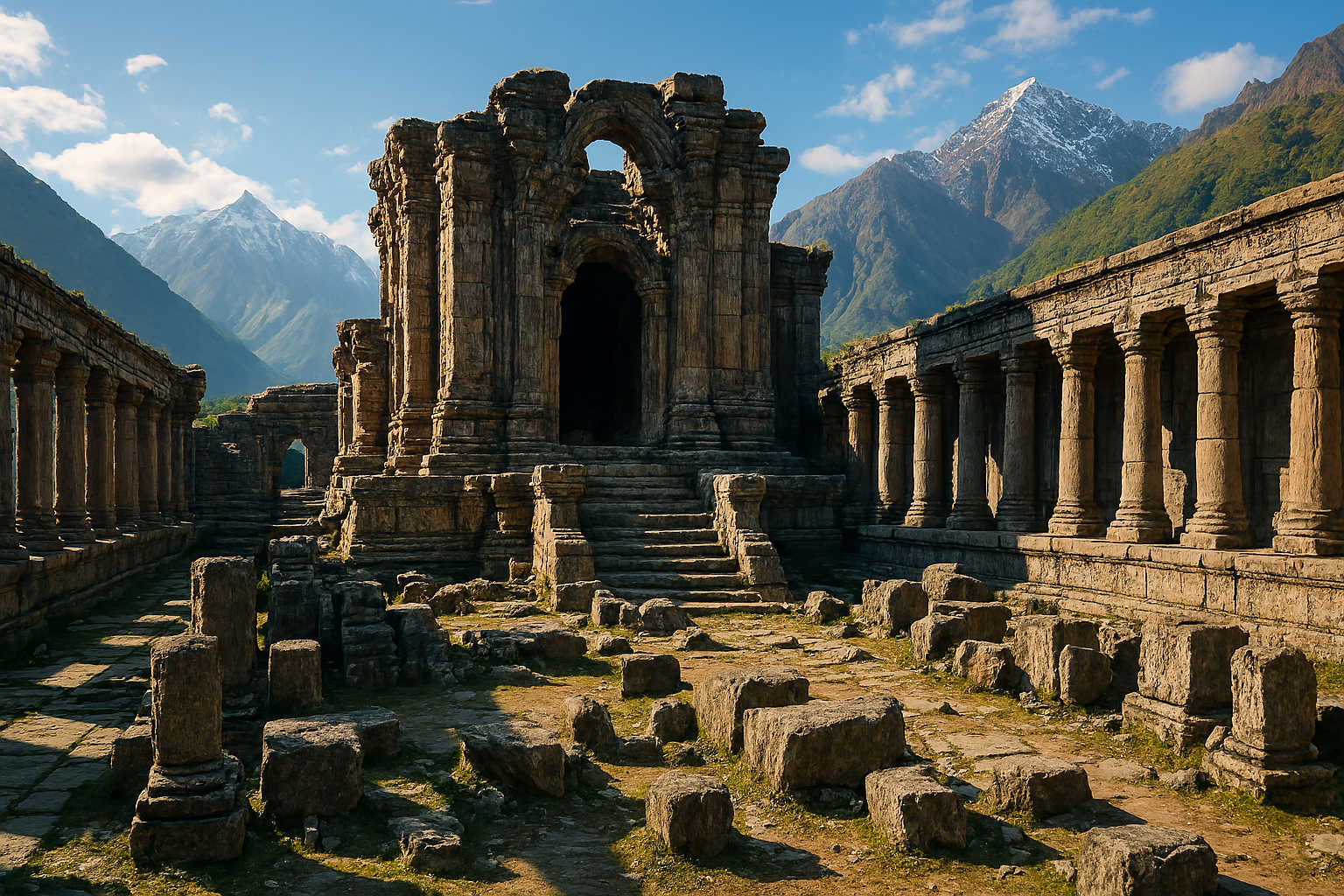
Martand Sun Temple – Ruins in Kashmir
The Kashmir Valley, often called paradise on earth, is not just about snow-capped mountains and serene lakes. Hidden amidst its breathtaking landscapes lie remnants of a glorious past that speak of ancient artistry and spiritual devotion. Among these treasures stands the Martand Sun Temple, an architectural marvel now in ruins, but once the pride of Kashmir. Dedicated to Surya, the Sun God, the temple is one of the most important monuments of early medieval India.
History of Martand Sun Temple
The Martand Sun Temple was built in the 8th century CE by Lalitaditya Muktapida, a powerful ruler of the Karkota dynasty. Lalitaditya is remembered as one of the greatest kings of Kashmir, known for expanding his empire beyond the Himalayas and patronizing art, culture, and architecture.
The name Martand itself means “sun” in Sanskrit, referring to Surya, the giver of life and energy. The temple became a grand center of worship, attracting devotees from far and wide. For nearly four centuries, it stood as one of the most magnificent temples of the Indian subcontinent.
However, in the 15th century, during the reign of Sultan Sikandar, also known as Butshikan (the idol-breaker), the temple was destroyed. Today, only its ruins remain, but even in their broken state, they exude grandeur.
Architectural Significance
The Martand Sun Temple is considered a masterpiece of Kashmiri architecture, blending Gandharan, Gupta, and indigenous Kashmiri styles.
-
Main Shrine: The central sanctum once housed the idol of Surya, depicted riding his chariot with seven horses.
-
Colonnaded Courtyard: A rectangular courtyard surrounded by 84 smaller shrines symbolized different aspects of Hindu cosmology.
-
Stone Craftsmanship: The temple was built of limestone and featured intricate carvings that reflected both aesthetic elegance and spiritual symbolism.
-
Western Entrance: The grand gateway opened to the valley, allowing sunlight to directly illuminate the shrine, emphasizing the temple’s solar dedication.
Despite centuries of weathering and destruction, the temple’s layout and towering ruins continue to astonish historians, archaeologists, and travelers alike.
Spiritual Importance
The temple was not only an architectural wonder but also a deeply spiritual site. In Hindu tradition, the Sun God is considered the source of life, health, and prosperity. Temples dedicated to Surya are rare, with only a few prominent examples across India such as Konark in Odisha and Modhera in Gujarat.
Martand stood as the northernmost jewel among Sun temples. Devotees believed that offering prayers here would bring blessings of vitality, wisdom, and illumination. The temple also symbolized Kashmir’s role as a spiritual and cultural center of India.
Legends and Myths
Several legends surround the Martand Temple:
-
Blessings of Surya – Locals believe that Lalitaditya built the temple to honor Surya for his victories and prosperity during his reign.
-
Sage Kashyapa’s Land – Some stories link the temple to the legend of Sage Kashyapa, after whom Kashmir is named. According to mythology, after draining the great lake to create Kashmir, Kashyapa invoked Surya to bless the land with fertility and life.
-
Eternal Light – It is said that at certain times of the year, the sunlight would fall directly on the sanctum, creating a divine radiance symbolic of Surya’s eternal presence.
The Temple in Modern Times
Today, the Martand Sun Temple is protected under the Archaeological Survey of India (ASI). Though the temple lies in ruins, its remains still command respect and admiration. The tall stone pillars, broken walls, and open courtyard offer a glimpse of what once was a vibrant center of devotion.
The site also provides panoramic views of the Kashmir Valley, with snow-covered mountains in the distance, making it one of the most scenic archaeological sites in India.
Filmmakers and artists have often drawn inspiration from the temple. The Bollywood film Haider (2014) featured scenes shot here, reintroducing the monument to modern audiences.
Visiting the Temple
-
Location: The temple is situated in Anantnag district, around 8 km from Anantnag town and about 60 km from Srinagar.
-
Accessibility: It can be reached by road, offering travelers a scenic drive through the valley.
-
Best Time to Visit: Summer and autumn months (May–October) provide the most comfortable climate for exploring the ruins.
-
Experience: Walking through the temple ruins, one feels both awe and melancholy – awe at its ancient grandeur, and melancholy for its lost glory.
Symbolism of the Ruins
The Martand Sun Temple is more than a historical site; it is a symbol of resilience. Despite destruction, it stands tall as a reminder of Kashmir’s glorious past. The ruins also speak of the cycles of time – creation, destruction, and endurance – mirroring the philosophy of Hindu cosmology itself.
For many visitors, the temple is not just an archaeological wonder but also a place of reflection, where the silence of the ruins seems to echo stories of faith, devotion, and impermanence.
Conclusion
The Martand Sun Temple of Kashmir may lie in ruins today, but its spirit endures. As one of India’s rare and grand Sun temples, it reflects the genius of Kashmiri architecture and the devotion of ancient rulers like Lalitaditya.
Standing amidst the valley’s breathtaking beauty, the temple is a silent witness to centuries of glory and turmoil. To visit Martand is to step into history, to witness both the fragility and strength of human creation, and to connect with the eternal light of Surya that once illuminated its sanctum.
Even as ruins, the Martand Sun Temple continues to shine – a timeless reminder of faith, art, and the enduring spirit of Kashmir.