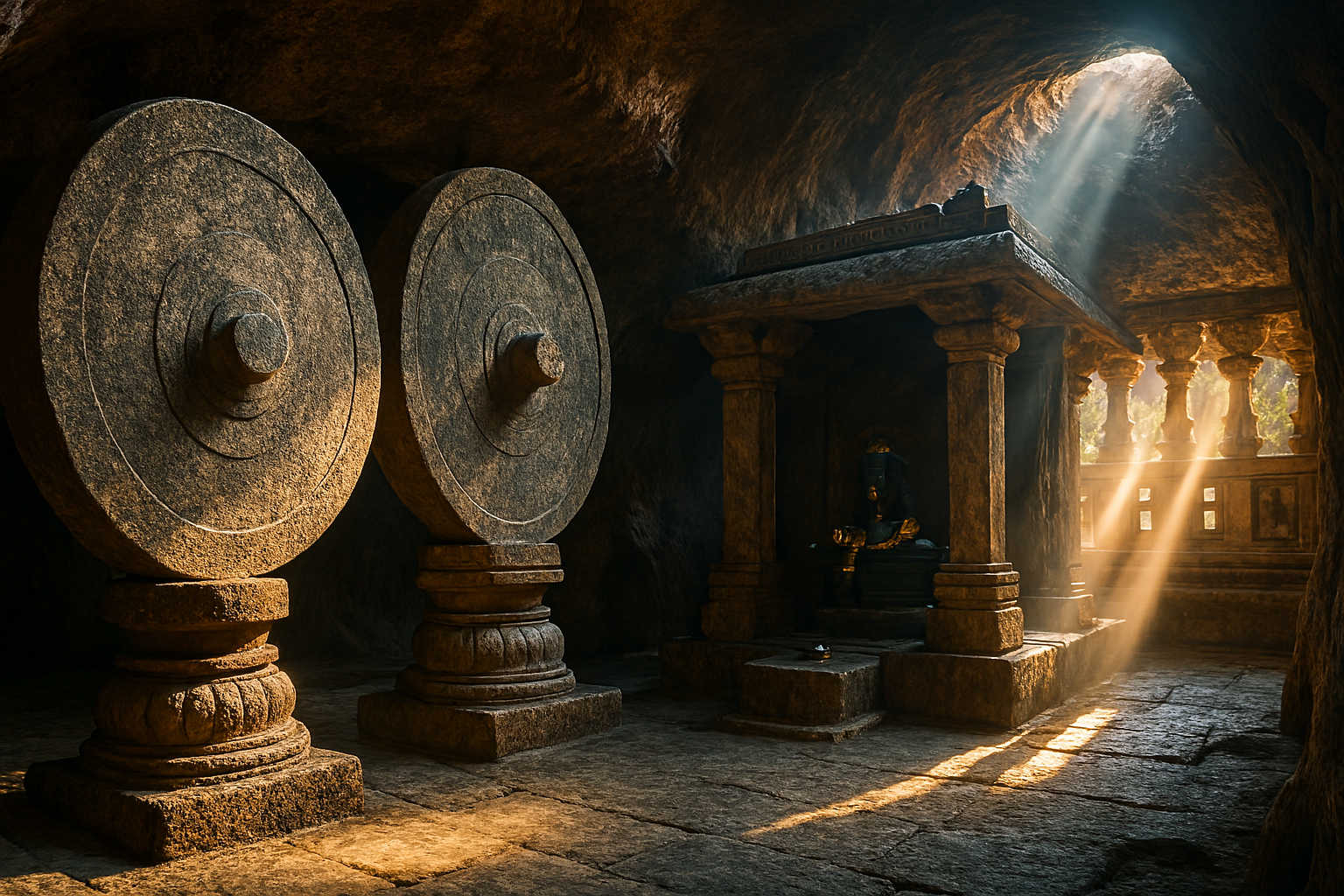
Temple with No Shadow – Gavi Gangadhareshwara
In the bustling city of Bengaluru, amidst modern buildings and constant traffic, lies a temple that defies conventional architecture and carries an air of mystery—the Gavi Gangadhareshwara Temple. Carved out of a single rock and dedicated to Lord Shiva, this temple is not only one of the oldest shrines in the region but also famous as the “temple with no shadow.”
Its unique design, astronomical alignments, and legends surrounding its origin have fascinated devotees, historians, and scientists alike.
Historical Background
The Gavi Gangadhareshwara Temple dates back to the 9th century and was further renovated in the 16th century by the great Vijayanagara ruler Kempe Gowda I, the founder of Bengaluru. According to inscriptions and folklore, Kempe Gowda built this shrine after being released from prison, as a thanksgiving to Lord Shiva.
The temple is also associated with yogic traditions and is believed to have been a meditation site for sages. The name “Gavi” means cave, and “Gangadhareshwara” refers to Shiva bearing the Ganga in his locks.
Unique Architecture
Unlike typical South Indian temples with gopurams and expansive courtyards, the Gavi Gangadhareshwara Temple is entirely rock-cut, carved into a monolithic stone hill.
-
Cave Sanctum
-
The innermost sanctum houses a Shiva Linga, worshipped as Gangadhareshwara.
-
The sanctum’s cave-like atmosphere creates an aura of mysticism and deep spirituality.
-
-
Stone Discs and Monoliths
-
The temple courtyard features massive stone discs, symbolic of the sun and moon.
-
There are also monolithic structures representing trishul (trident), damaru (drum), and other Shaivite symbols.
-
-
No Shadow Phenomenon
-
Perhaps the most intriguing feature is that the main shrine’s Shiva Linga never casts a shadow inside the sanctum, no matter the time of day or the position of the sun.
-
This mysterious architectural mastery continues to baffle visitors.
-
Astronomical Significance
The Gavi Gangadhareshwara Temple is world-renowned for its solar alignment during Makar Sankranti (around January 14th).
-
On this day, the setting sun’s rays pass precisely through the temple’s stone windows and illuminate the Shiva Linga in the sanctum.
-
This event lasts only a few minutes and draws thousands of devotees who gather to witness the divine spectacle.
-
The precision of this alignment demonstrates the advanced astronomical and engineering knowledge of the temple’s builders.
This rare phenomenon links the temple to other ancient Indian structures known for solar alignments, such as Konark Sun Temple and the megalithic observatories of central India.
Spiritual Importance
The Gavi Gangadhareshwara Temple is considered a highly sacred site in Karnataka. Devotees believe that worshipping here grants good health, removes obstacles, and provides inner strength.
-
Lord Shiva here is worshipped as Gangadhareshwara, symbolizing the divine force that controlled the descent of River Ganga from the heavens to Earth.
-
The temple also houses shrines dedicated to Goddess Parvati, Lord Ganesha, and the Navagrahas (nine planets).
On special occasions, especially Makar Sankranti and Maha Shivaratri, the temple becomes a vibrant hub of devotion, rituals, and spiritual gatherings.
Legends and Mysteries
Several legends surround this temple, adding to its aura of mystique:
-
Shiva and Ganga – It is said that Lord Shiva revealed himself here as Gangadhareshwara, holding River Ganga in his locks to protect Earth from her mighty force.
-
Kempe Gowda’s Vision – According to folklore, Kempe Gowda had a divine vision of Shiva in this cave, inspiring him to renovate and dedicate the temple.
-
Shadowless Shrine – The temple’s design ensures that the linga remains free of shadows, symbolizing the eternal, unchanging nature of divinity.
Temple Experience Today
Despite being surrounded by the urban sprawl of Bengaluru, stepping into the Gavi Gangadhareshwara Temple feels like entering another world. The dimly lit cave sanctum, the cool stone walls, and the mystical alignment of sunlight create a powerful spiritual atmosphere.
-
Location: Gavipuram, Bengaluru, Karnataka.
-
Best Time to Visit: Makar Sankranti (January 14th) to witness the solar phenomenon.
-
Temple Timings: Generally open from morning to evening, with special darshans on festivals.
The temple remains a blend of history, science, and spirituality, attracting not only pilgrims but also architects and astronomers.
Cultural and Heritage Value
The Gavi Gangadhareshwara Temple is recognized as a protected monument and a symbol of Bengaluru’s rich cultural past. It stands as a reminder that even centuries ago, Indian temple builders mastered astronomy, engineering, and aesthetics in ways that continue to amaze the modern world.
For locals, it is not just a heritage site but also a living temple where age-old traditions of worship continue.
Conclusion
The Gavi Gangadhareshwara Temple is more than an ancient rock-cut shrine—it is a mystery carved in stone. Known as the temple with no shadow, it exemplifies India’s mastery in blending faith, science, and art.
Its solar alignment, shadowless sanctum, and unique cave architecture make it one of the most extraordinary temples in the country. Whether you visit as a devotee or as a seeker of heritage and mysteries, the temple offers an experience that is both deeply spiritual and intellectually fascinating.