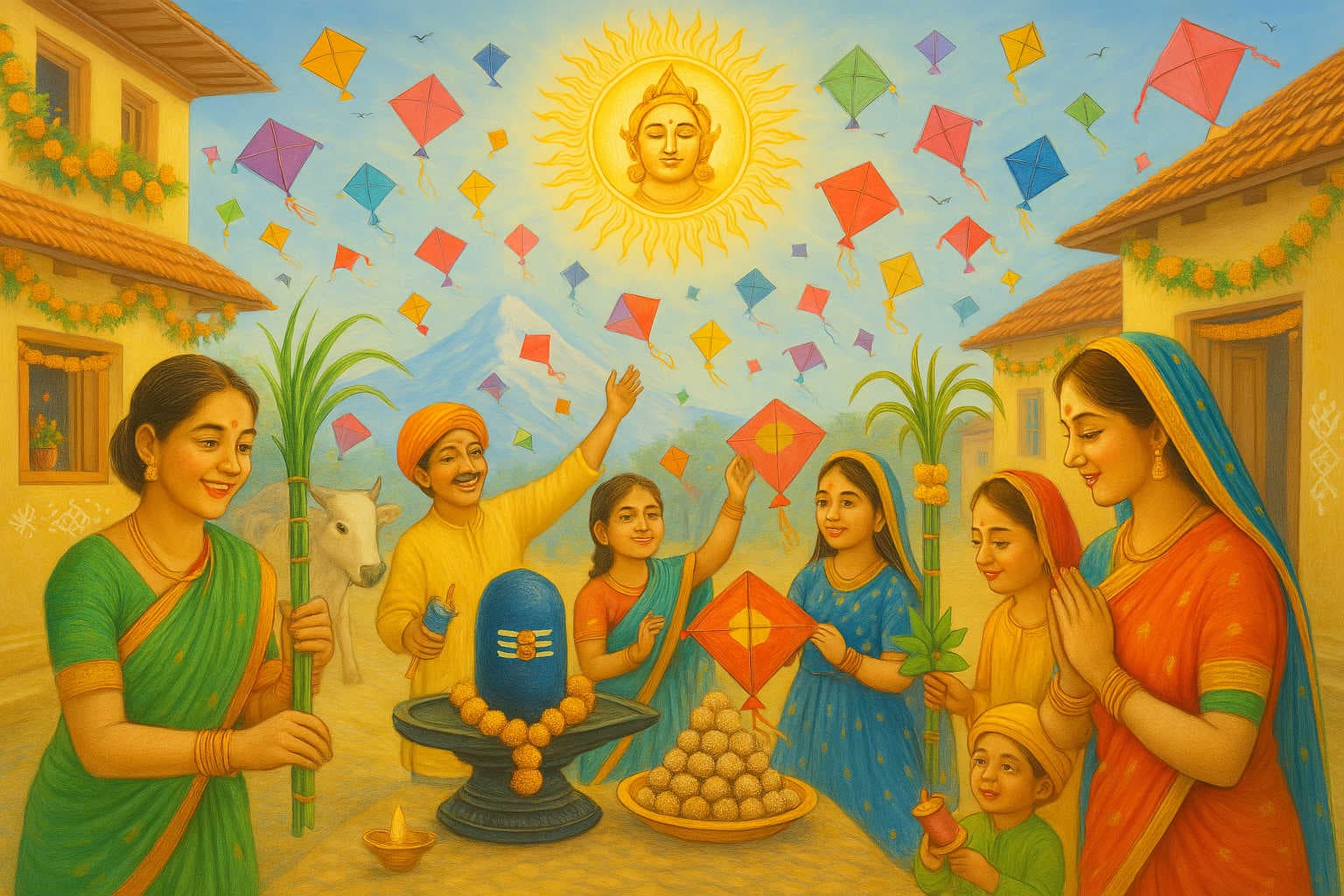
Makar Sankranti – The Festival of Harvest and Surya Dev
Makar Sankranti is one of the most celebrated and spiritually significant festivals in India. It marks the transition of the Sun into the zodiac sign of Makara (Capricorn) and the beginning of Uttarayan, the northward journey of the Sun. Unlike most Hindu festivals that follow the lunar calendar, Makar Sankranti is based on the solar calendar, and it typically falls on January 14th every year, though occasionally it lands on the 15th.
At its heart, Makar Sankranti is a festival of light, harvest, gratitude, and new beginnings. As the Sun begins its journey toward the northern hemisphere, days start to get longer, symbolizing the victory of light over darkness, wisdom over ignorance, and truth over untruth.
🪔 Surya Dev – The Radiant Deity
Surya Dev, the Sun God, is the central figure of Makar Sankranti. In Vedic tradition, the Sun is a symbol of vitality, strength, and divine illumination. Devotees rise before dawn, take holy baths in rivers like the Ganga, Yamuna, Godavari, and Krishna, and offer water (Arghya) to Surya Dev while chanting mantras and prayers.
The festival teaches us to honor the energy that sustains life on Earth, and to let go of ego, pride, and negativity—just as we surrender to the Sun's warm embrace.
🪁 A Festival Celebrated Across India
Makar Sankranti is unique because it’s celebrated pan-India under different names, each with rich regional flavor:
-
In Gujarat and Rajasthan, the sky is dotted with colorful kites as people participate in massive kite flying competitions. The “patang” festival is symbolic of aiming higher in life and lifting our spirits.
-
In Punjab, it’s preceded by Lohri, celebrated with bonfires, folk songs, and revdi, popcorn, and peanuts. It marks the harvesting of sugarcane and wheat.
-
In Tamil Nadu, it becomes the four-day festival of Pongal, with the preparation of sweet rice (pongal) in clay pots as a mark of abundance.
-
In Maharashtra and Karnataka, people exchange til-gul (sesame-jaggery) sweets, saying “Til gul ghya, god god bola” – Take sweet, speak sweet. This gesture promotes harmony and reconciliation.
-
In Bihar and Uttar Pradesh, it is called Khichdi, and the day is spent eating khichdi made of rice and lentils, taking holy dips, and giving alms.
🍚 Traditional Foods of Gratitude
Food is central to Makar Sankranti, especially ingredients like til (sesame seeds) and gur (jaggery). These not only have warming and detoxifying properties for winter, but also carry symbolic meaning: sesame represents purity, and jaggery denotes sweetness in speech and actions.
Other popular Makar Sankranti foods include:
-
Pongal – a rice and jaggery preparation in Tamil Nadu.
-
Til laddoos and chikki – across North India and Maharashtra.
-
Patishapta and pitha – in Bengal.
-
Khichdi – in Bihar and eastern UP.
These dishes use seasonal produce, honoring Mother Earth and expressing gratitude for her bounty.
🕉️ Spiritual and Philosophical Significance
Beyond celebration and food, Makar Sankranti carries a deep spiritual message.
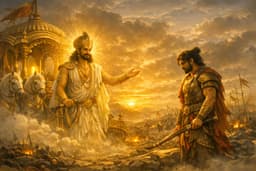
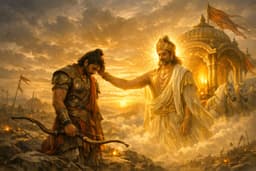
The change in the Sun's direction is a call to rise above personal darkness and walk the path of dharma, truth, and light. It is believed that those who die during the Uttarayan period attain moksha (liberation), which is why Bhishma Pitamah in the Mahabharata chose to leave his body only after the Sun began its northward journey.
People are encouraged to:
-
Let go of old grudges and negative tendencies.
-
Begin new ventures or spiritual practices.
-
Perform charity and help the less fortunate.
Taking a dip in holy rivers, especially during the Ganga Sagar Mela in West Bengal or Kumbh Mela, is said to purify the soul and bring immense blessings.
🪁 A Celebration of Joy, Unity, and Nature
At its core, Makar Sankranti is a festival of community and connection – with nature, with the divine, and with each other.
From soaring kites in the skies to sacred offerings at sunrise, from sweet exchanges to boiling pots of Pongal, the festival blends joy with reverence. It teaches that life is a cycle of giving and receiving, and that we are all nourished by the same sun, the same earth, and the same universal truth.
Whether you celebrate with khichdi or laddoos, kites or bonfires, Makar Sankranti reminds us to live with gratitude, rise with the sun, and shine with the light of inner awareness.