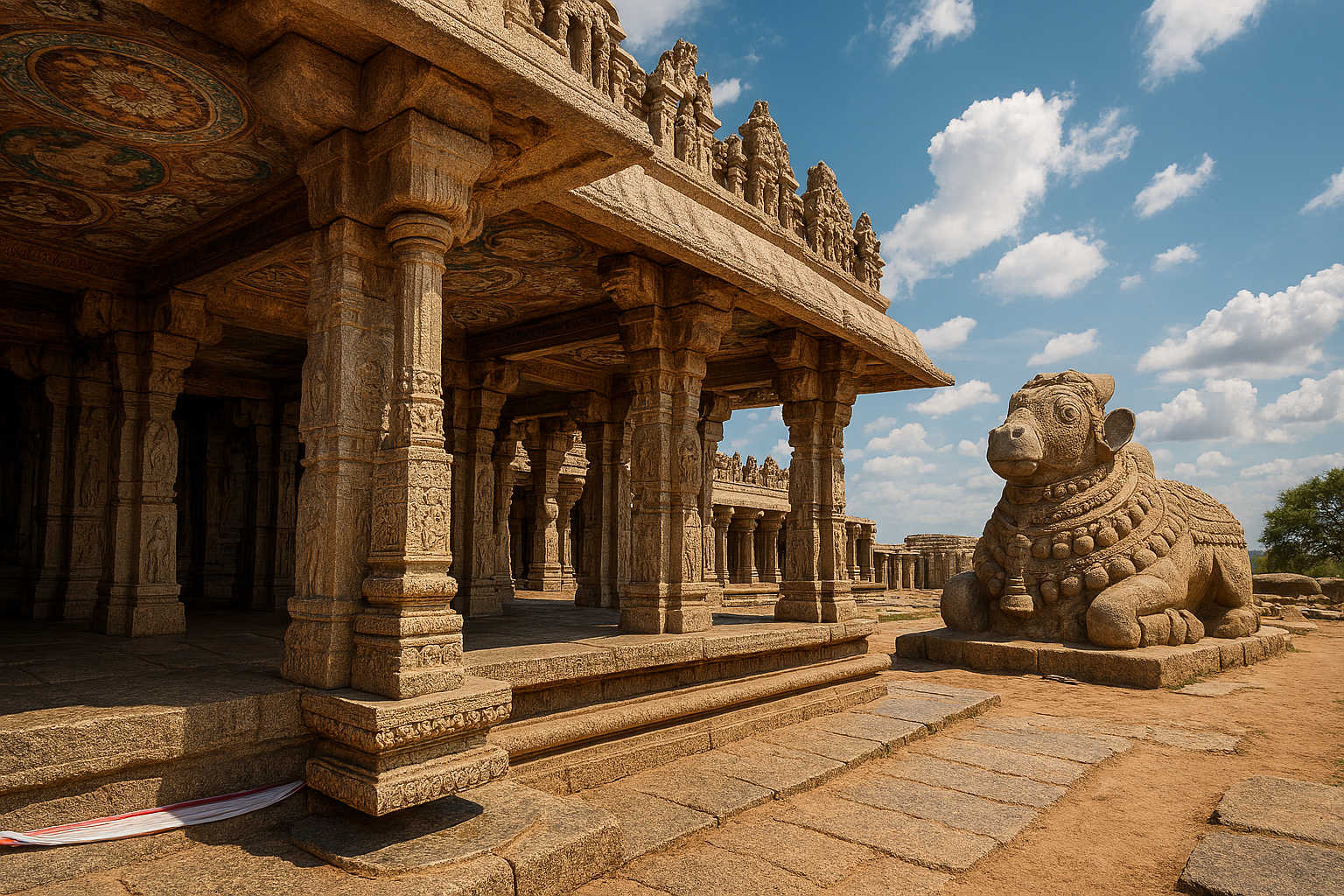
Lepakshi Temple – Hanging Pillar Mystery
Nestled in the small town of Lepakshi, Andhra Pradesh, lies one of India’s most intriguing architectural marvels—the Veerabhadra Temple, popularly known as the Lepakshi Temple. Famous for its hanging pillar that defies gravity, the temple blends mystery, mythology, and magnificent Vijayanagara artistry.
Dedicated to Veerabhadra Swamy, a fierce form of Lord Shiva, this temple is not just a place of worship but also a repository of art, engineering brilliance, and legends from the Ramayana and Mahabharata.
The Legend of Lepakshi
The word Lepakshi is believed to derive from “Le Pakshi”, meaning “Rise, O Bird,” a phrase said to have been uttered by Lord Rama. According to legend, when the mighty bird Jatayu fought Ravana to rescue Sita, he fell wounded in this very region. Rama, upon seeing the bird, blessed him with these words, and thus the town came to be known as Lepakshi.
This divine association makes the temple not just a wonder of architecture but also a sacred land tied to the Ramayana.
The Hanging Pillar – A Marvel of Engineering
The most remarkable feature of Lepakshi Temple is the hanging pillar. Among the 70 stone pillars inside the hall, one pillar does not rest on the ground—it hangs suspended, leaving a small gap at the base.
Devotees and visitors often pass a cloth or paper beneath it to prove the mystery and receive blessings.
Engineers and archaeologists who studied the structure believe that the pillar is not a mistake but a deliberate architectural feat, showcasing the mastery of Vijayanagara builders (16th century). The pillar continues to baffle modern architects, as it provides support to the ceiling despite not touching the floor.
History and Construction
The Veerabhadra Temple was built in 1530 CE during the reign of the Vijayanagara kings by brothers Virupanna and Viranna, governors under King Achyutaraya.
Highlights of its architecture include:
-
Mandapas (halls) adorned with intricate carvings.
-
Murals painted in natural pigments, depicting episodes from the Puranas, Mahabharata, and Ramayana.
-
Sculptures of gods, saints, dancers, and celestial beings.
-
The Kalyana Mandapa, an unfinished wedding hall believed to be dedicated to the celestial wedding of Shiva and Parvati.
The Murals of Lepakshi
One of the greatest treasures of the temple lies above—the ceiling murals. Painted with vibrant natural dyes, these artworks span large sections of the ceilings, covering themes such as:
-
The wedding of Lord Shiva and Parvati.
-
Depictions of the Trimurti (Brahma, Vishnu, and Shiva).
-
Episodes from the Mahabharata and Ramayana.
These murals, some of the largest in India, represent the high point of Vijayanagara painting traditions and are a window into 16th-century artistic brilliance.
The Giant Nandi of Lepakshi
Located about 200 meters from the temple is a colossal monolithic statue of Nandi (the bull, vehicle of Shiva). Measuring 27 feet long and 15 feet high, it is one of the largest Nandi statues in India.
Carved from a single granite rock, the statue faces the temple and adds grandeur to Lepakshi’s sacred landscape.
Legends of the Builders
According to folklore, the temple’s construction ended in tragedy. The treasurer Virupanna, accused of misusing royal funds for the temple’s building, was punished with blinding. In grief and devotion, he is believed to have plucked out his own eyes, leading to one part of the temple being called “Lata Mandapam” (Hall of Lamentation).
This story adds an aura of sacrifice and devotion to the already mystical ambiance of Lepakshi.
Spiritual and Cultural Significance
The temple is not only sacred to Shaivites but also revered by Vaishnavites and Shaktas due to the presence of shrines dedicated to multiple deities including Vishnu, Ganesha, Bhadrakali, and Nagas.
For devotees, the hanging pillar is not just an architectural wonder but a symbol of faith overcoming logic. Passing a cloth under it is believed to bring good fortune.
For art lovers and historians, Lepakshi represents the pinnacle of Vijayanagara art and architecture, comparable to Hampi and other great sites of the era.
Nearby Attractions
A visit to Lepakshi can be paired with:
-
Hindupur – The nearest town for access and facilities.
-
Penukonda Fort – A historic fort of the Vijayanagara rulers.
-
Hampi – About 3–4 hours away, another UNESCO World Heritage Site with Vijayanagara ruins.
The Enduring Mystery
Despite centuries of study, the hanging pillar remains an unsolved enigma. How did builders achieve such precision that one pillar could remain suspended without compromising the structure’s stability? Was it a demonstration of skill, or was there a deeper symbolic meaning?
The mystery continues to draw visitors—pilgrims, historians, engineers, and tourists alike—each leaving with awe and reverence.
Conclusion
The Lepakshi Temple is not just a place of worship; it is a living museum of mythology, devotion, and genius. From the legend of Jatayu to the marvel of the hanging pillar, from the vibrant murals to the majestic Nandi, every element of the temple tells a story that blends history and divinity.
For those who visit, Lepakshi is a reminder that some mysteries transcend logic, standing as timeless testaments to the spiritual and artistic grandeur of India.