Karni Mata – Temple of Sacred Rats
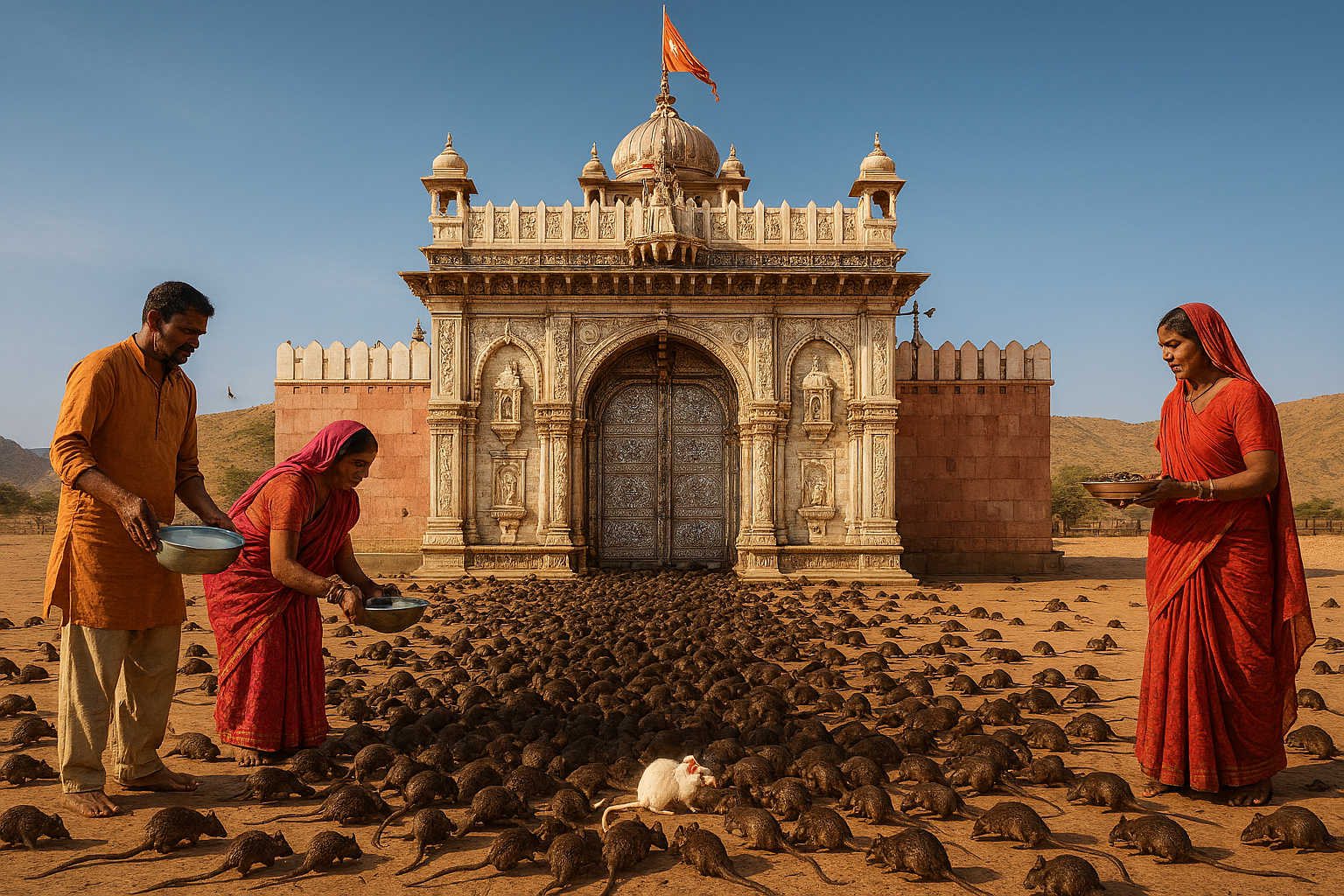
India is home to some of the most extraordinary temples in the world, and among them, the Karni Mata Temple in Deshnok, Rajasthan, stands out for its sheer uniqueness. Known as the “Temple of Rats”, it is one of the rare shrines where animals—in this case, thousands of rats—are revered as sacred beings.
Dedicated to Karni Mata, a 14th-century mystic and incarnation of Goddess Durga, the temple attracts pilgrims and tourists from across the world. The sight of thousands of rats, called “kabbas”, running freely, sharing food with devotees, and even being fed with milk, makes this temple a living testimony to India’s diversity of faith.
Who Was Karni Mata?
Karni Mata was a revered female mystic and saint who lived in the 14th and 15th centuries. Born in 1387 in Suwap village of Rajasthan, she was regarded as an incarnation of Goddess Durga. Renouncing worldly life at an early age, Karni Mata dedicated herself to serving people and animals, spreading the message of compassion and protection.
She is believed to have played a significant role in establishing the kingdoms of Jodhpur and Bikaner, blessing rulers of the Rathore dynasty. Several forts and palaces in Rajasthan bear marks of her guidance and protection.
For her followers, Karni Mata is not just a saint but a manifestation of Shakti (divine feminine power), embodying fearlessness, justice, and grace.
The Legend of the Rats
The temple’s most famous aspect—the thousands of sacred rats—comes from a fascinating legend. According to tradition, Karni Mata’s stepson died suddenly. When she requested Yama, the God of Death, to restore his life, he refused. Unyielding, Karni Mata declared that from then on, members of her family and followers would be reborn as rats, bypassing Yama’s authority, until they could be reincarnated again as humans.
Thus, the rats became revered as the souls of devotees, living in close proximity to the Goddess. Killing or harming them is considered a grave sin. In fact, if a rat dies accidentally, devotees replace it with a silver or gold idol.
Among the thousands of black rats, the sight of a white rat is considered especially auspicious—a divine blessing from the Goddess herself.
Architecture of the Temple
The Karni Mata Temple in Deshnok is an architectural gem in itself. Built in the Mughal style with Rajput influences, it is adorned with:
-
Grand marble façade with intricate carvings.
-
Silver doors depicting scenes from mythology.
-
Marble floors and domes, polished smooth by centuries of visitors.
-
Rat sanctuaries, where the rodents move freely, feed, and rest.
The temple’s sanctum houses the idol of Karni Mata holding a trident, surrounded by her sacred rats. Devotees bow before her and often leave offerings of food that are later shared by the rats, making it blessed “prasad.”
The Daily Life of the Rats
The rats of the temple, numbering over 25,000, live in complete harmony with the devotees. Far from being considered pests, they are lovingly protected, fed, and even celebrated.
-
Diet: The rats are fed daily with milk, grains, sweets, and coconuts. Devotees consider it a blessing to eat food nibbled by the rats.
-
Freedom: They roam everywhere—on the floors, railings, and even on people—but are never harmed.
-
Sacred White Rats: Out of thousands, spotting one of the rare white rats is believed to bring immense good fortune.
The temple priests ensure the rodents are cared for, maintaining a bond of mutual trust between humans and animals.
Festivals at Karni Mata Temple
The temple witnesses a surge of pilgrims during festivals and fairs, when special rituals are conducted.
-
Navratri (Chaitra and Sharad): The temple is beautifully decorated, and thousands gather to worship Karni Mata as an incarnation of Durga.
-
Karni Mata Fair: Held twice a year, it honors the Goddess and brings together communities from across Rajasthan.
-
Diwali: Devotees flock to the temple to seek blessings for prosperity and protection.
Spiritual Significance
The Karni Mata Temple symbolizes faith beyond appearances. While rats may be viewed with fear or disgust elsewhere, here they represent eternal souls under divine care. The temple teaches values of compassion, respect for life, and belief in reincarnation.
For devotees, feeding the rats or simply walking barefoot amidst them is an act of sanctity, believed to bring health, prosperity, and spiritual blessings.
The Pilgrimage Experience
Visiting the temple is a one-of-a-kind experience. As pilgrims enter the marble courtyard, they are greeted by the sight of thousands of rats scurrying across the floors, climbing up the walls, or sipping from bowls of milk.
At first, the experience may be overwhelming, but soon it transforms into a sense of awe. Devotees bow before the Goddess, make offerings, and watch the rats eat—believing that the blessings flow through these sacred creatures.
Many visitors try to catch a glimpse of the elusive white rat, considering it the highlight of the journey.
Nearby Attractions
Deshnok, located about 30 km from Bikaner, is often visited as part of Rajasthan pilgrimages. Nearby attractions include:
-
Junagarh Fort, Bikaner – A majestic fort showcasing Rajput architecture.
-
Camel Research Centre – Famous for Rajasthan’s “ship of the desert.”
-
Other Karni Mata shrines in Udaipur and around Rajasthan.
Why Visit Karni Mata Temple?
The Karni Mata Temple is more than just a tourist attraction—it is a spiritual phenomenon. For believers, it is a place where the veil between human and animal, life and death, is lifted. It reminds us of the eternal cycle of rebirth and the presence of divinity in every living being.
Even for skeptics, the temple offers a profound cultural experience—where devotion transforms rats into sacred messengers of the Goddess.
Conclusion
The Karni Mata Temple in Deshnok stands as a symbol of India’s spiritual diversity and inclusivity. It challenges conventional notions of worship, teaching that divinity resides in all forms of life.
Whether you come seeking blessings, experiencing the extraordinary sight of thousands of sacred rats, or simply understanding the depth of Hindu traditions, a visit to this temple is unforgettable.
Here, amidst the marble walls and scurrying kabbas, one finds a story of faith, compassion, and the eternal cycle of rebirth—presided over by the fearless Karni Mata.